












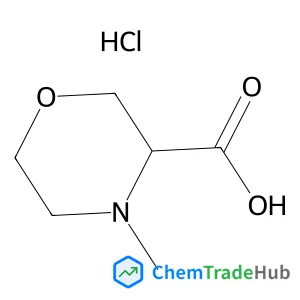
4-Methyl-3-morpholinecarboxylic acid hydrochloride (1:1)
CAS Number:
1240518-90-4
Molecular Formula:
C6H12ClNO3
Ozcan Altintas, Joshua C. Speros, Frank S. Bates, Marc A. Hillmyer
We report the synthesis and characterization of well-defined polystyrene-block-poly(vinyl alcohol) (PS-b-PVA) polymers and the corresponding polystyrene-block-poly(vinyl acetate) (PS-b-PVAc) precursors using a combination of atom transfer radical polymerization (ATRP), copper-catalyzed azide alkyne cycloaddition reaction, and reversible addition–fragmentation chain transfer (RAFT) polymerization. Bromine end-functional polystyrene was first prepared using activators regenerated by electron transfer ATRP. A xanthate mediated macro chain transfer agent carrying a triazole-based R-group was achieved by the CuAAC reaction between the corresponding azide-functional polystyrene and an alkyne functional O-ethyl S-prop-2-ynyl carbonodithioate. PS-b-PVAc diblock polymers were synthesized by RAFT polymerization using the triazole-based macro-CTA. The formation of well-defined PS-b-PVA diblock polymers was followed by 1H nuclear magnetic resonance spectroscopy, infrared spectroscopy and size-exclusion chromatography. Thermal properties of the diblock polymer were analyzed by thermal gravimetric analysis and differential scanning calorimetry. The PVAc segments were hydrolyzed to give the corresponding PS-b-PVA block polymers. The morphology of the polymers was investigated by grazing-incidence small-angle scattering as well as atomic force microscopy.
Pengfei Zhang, Jin Qi, Ran Zhang, Yifan Zhao, Jingyu Yan, Yajuan Gong, Xiaoming Liu, Binbin Zhang, Xiao Wu, Xiuping Wu, Cheng Zhang, Bing Zhao, Bing Li
DOI: 10.1039/D3BM01795H
I. Álvarez-Freire, P. Cabarcos-Fernández, N. C. Rubio, A. Moreda-Piñeiro, M. J. Tabernero-Duque, I. Sánchez-Sellero, P. Bermejo-Barrera, A. M. Bermejo-Barrera
DOI: 10.1039/D3AY01298K
Xinghu Fu, Xiqing Cao, Zizhen Fu, Zhexu Huang, Wa Jin, Guangwei Fu, Weihong Bi
DOI: 10.1039/D3AY01631E
Qiuyi Liu, Yulian Yang, Yuemeng Zou, Luchun Wang, Zhu Li, Mingyue Wang, Lingling Li, Meng Tian, Dandan Wang, Die Gao
DOI: 10.1039/D3AY01166F
Xue Chen, Puze Li, Shiqiang Xie
DOI: 10.1039/D3BM01227A
Ana Sonzogni, Guadalupe Rivero, Verónica Gonzalez, Gustavo Abraham, Roque Minari
DOI: 10.1039/D3BM01422C
DOI: 10.1039/D3AY01627G
Chang Liu, Zhenni Qian, Zhengbo Chen
DOI: 10.1039/D3AY01748F
Jiahao Shen, Junli Liu, Xiuyi Fan, Hui Liu, Yan Bao, AiPing Hui, Hafiz Akif Munir
DOI: 10.1039/D3BM01030A
4-Nitrophenyl phosphate disodium salt hexahydrate is primarily used as a substra...
2-(Trifluoromethyl)-1,3-oxazole-4-carboxylic Acid (CAS: 1060816-01-4) is widely ...
2-Fluoro-4-biphenylcarboxylic acid should be stored in a cool, dry place at room...
Prednisolone-21-Carboxylic Acid is primarily used in the pharmaceutical industry...
4-(Hydrazinomethyl)-1,2,3-benzenetriol (CAS: 3614-72-0) should be stored in a co...
4-Amino-1-methyl-1H-pyrazole-5-carboxylic acid hydrochloride (CAS: 92534-70-8) i...
Dehydropachymic acid (CAS: 77012-31-8) is regulated by various agencies. It fall...
The market and research trends for 6-[(2,2-Dimethylpropanoyl)amino]nicotinic aci...
1,10-Phenanthroline-2,9-dicarbaldehyde should be stored in a cool, dry place awa...
5-Carbamoyl-11-oxo-10,11-dihydro-5H-dibenzo[b,f]azepin-10-yl acetate can be synt...

Polymer Chemistry welcomes submissions in all areas of polymer science that have a strong focus on macromolecular chemistry. Manuscripts may cover a broad range of fields, yet no direct application focus is required.
phosphoryl}methyl 4-methylbenzenesulfonate structure](https://static.chemtradehub.com/structs/864/864068-45-1-ba7c.webp "{[3-(Hexadecyloxy)propoxy](hydroxy)phosphoryl}methyl 4-methylbenzenesulfonate structure")






