












Force-induced cleavage of a labile bond for enhanced mechanochemical crosslinking
Literature Information
Publication Date
2017-10-03
DOI
10.1039/C7PY01431G
Impact Factor
5.582
Authors
Shu Wang, Grant A. Knappe, Norman J. Wagner
View Original
Abstract
We introduce a simple, yet powerful approach towards force-induced healing polymers. While most synthetic polymers fail in response to stress and have no recovery mechanism, we demonstrate that polymers containing a thiocarbonylthio group exhibit amplified mechanochemical activity. In the presence of a crosslinker, the radicals generated from homolytic cleavage are exploited to trigger a ‘healing’ response within minutes.
Related Literature
Near-unity electrochemical conversion of nitrate to ammonia on crystalline nickel porphyrin-based covalent organic frameworks
Mingzi Sun
2022-11-23
Paper
DOI: 10.1039/D2EE02647C
CNT-based bifacial perovskite solar cells toward highly efficient 4-terminal tandem photovoltaics
Min Chen, Fan Fu, Hongwei Zhu, Thomas Feurer, Wenming Tian, Chao Zhu, Ke Zhou, Shengye Jin, Shaik Mohammed Zakeeruddin, Ayodhya N. Tiwari, Nitin P. Padture, Michael Grätzel, Yantao Shi
2022-02-08
Paper
DOI: 10.1039/D1EE04008A
Co-doped MoS2 nanosheet: a stable and pH-universal electrocatalyst for an efficient hydrogen evolution reaction
Xiaojie Tan, Depeng Zhao, Yuchen Sun, Zhongxin Duan, Xiaowei Wang
2022-08-24
Paper
DOI: 10.1039/D2CE00951J
Water-in-salt electrolytes – molecular insights to the high solubility of lithium-ion salts
Aleksandar Tot, Lars Kloo
2022-08-01
Communication
DOI: 10.1039/D2CC03062D
The first crystal structure of a monomeric phenoxyl radical: 2,4,6-tri-tert-butylphenoxyl radical
Virginia W. Manner, Todd F. Markle, John H. Freudenthal, Justine P. Roth, James M. Mayer
2007-11-05
Communication
DOI: 10.1039/B712872J
Synthesis of glycerol 1,2-carbonate by transesterification of glycerol with dimethyl carbonate using triethylamine as a facile separable homogeneous catalyst
Olga Gómez-Jiménez-Aberasturi, Camilo Ramírez-López, Belén Maestro-Madurga
2012-10-02
Paper
DOI: 10.1039/C2GC35992H
Studying manganese carbonyl photochemistry in a permanently porous metal–organic framework
Michael T. Huxley, Lingjun Wu, Jack Hart, James O'Shea, Christian J. Doonan, Christopher J. Sumby
2023-08-15
Edge Article
DOI: 10.1039/D3SC03553K
Nanocomposites of bacterial cellulose nanofibers and chitin nanocrystals: fabrication, characterization and bactericidal activity
Núria Butchosa, Christian Brown, Lars A. Berglund, Vincent Bulone
2013-09-17
Paper
DOI: 10.1039/C3GC41700J
Efficient electrocatalytic hydrogenation of cinnamaldehyde to value-added chemicals
Henan Chen, Baiyao Liang, Dingyi Zhang, Guanwu Lian, Chenxin Yang, Yun Zhang, Wei Zhao
2022-04-13
Communication
DOI: 10.1039/D1GC04777A
Low quantum efficiency of μ-oxo iron bisporphyrin photocatalysts explained with femtosecond M-edge XANES
Kori M. Sye, Clare A. Leahy, Josh Vura-Weis
2022-09-02
Paper
DOI: 10.1039/D2CY01081J
You might also like
Compound Q&A
What are the main uses of 4-Nitrophenyl phosphate disodium salt hexahydrate (CAS: 333338-18-4)?
4-Nitrophenyl phosphate disodium salt hexahydrate is primarily used as a substra...
333338-18-44-Nitrophenyl phosph...
Compound Q&A
What are the main uses of 2-(Trifluoromethyl)-1,3-oxazole-4-carboxylic Acid (CAS: 1060816-01-4)?
2-(Trifluoromethyl)-1,3-oxazole-4-carboxylic Acid (CAS: 1060816-01-4) is widely ...
1060816-01-42-(Trifluoromethyl)-...
Compound Q&A
How should 2-Fluoro-4-biphenylcarboxylic acid (CAS: 137045-30-8) be stored?
2-Fluoro-4-biphenylcarboxylic acid should be stored in a cool, dry place at room...
137045-30-82-Fluoro-4-biphenylc...
Compound Q&A
What industries use Prednisolone-21-Carboxylic Acid (CAS: 61549-70-0)?
Prednisolone-21-Carboxylic Acid is primarily used in the pharmaceutical industry...
61549-70-0Prednisolone-21-Carb...
Compound Q&A
How should 4-(Hydrazinomethyl)-1,2,3-benzenetriol (CAS: 3614-72-0) be stored?
4-(Hydrazinomethyl)-1,2,3-benzenetriol (CAS: 3614-72-0) should be stored in a co...
3614-72-04-(Hydrazinomethyl)-...
Compound Q&A
What industries use 4-Amino-1-methyl-1H-pyrazole-5-carboxylic acid hydrochloride (CAS: 92534-70-8)?
4-Amino-1-methyl-1H-pyrazole-5-carboxylic acid hydrochloride (CAS: 92534-70-8) i...
92534-70-84-Amino-1-methyl-1H-...
Compound Q&A
What regulatory guidelines apply to dehydropachymic acid (CAS: 77012-31-8)?
Dehydropachymic acid (CAS: 77012-31-8) is regulated by various agencies. It fall...
77012-31-8Dehydropachymic acid
Compound Q&A
What is the market or research trend for 6-[(2,2-Dimethylpropanoyl)amino]nicotinic acid (CAS: 898561-66-5)?
The market and research trends for 6-[(2,2-Dimethylpropanoyl)amino]nicotinic aci...
898561-66-56-[(2,2-Dimethylprop...
Compound Q&A
How should 1,10-Phenanthroline-2,9-dicarbaldehyde (CAS: 57709-62-3) be stored?
1,10-Phenanthroline-2,9-dicarbaldehyde should be stored in a cool, dry place awa...
57709-62-31,10-Phenanthroline-...
Compound Q&A
How is 5-Carbamoyl-11-oxo-10,11-dihydro-5H-dibenzo[b,f]azepin-10-yl acetate (CAS: 113952-21-9) typically synthesized?
5-Carbamoyl-11-oxo-10,11-dihydro-5H-dibenzo[b,f]azepin-10-yl acetate can be synt...
113952-21-95-Carbamoyl-11-oxo-1...
Source Journal
Polymer Chemistry

CiteScore:
8.6
Self-citation Rate:
7.3%
Articles per Year:
457
Polymer Chemistry welcomes submissions in all areas of polymer science that have a strong focus on macromolecular chemistry. Manuscripts may cover a broad range of fields, yet no direct application focus is required.
Recommended Compounds
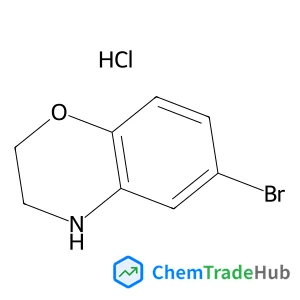
6-Bromo-3,4-dihydro-2H-1,4-benzoxazine hydrochloride (1:1)
CAS Number:
1260803-10-8
Molecular Formula:
C8H9BrClNO
![S-[2,3-Bis(palmitoyloxy)propyl]-N-[(9H-fluoren-9-ylmethoxy)(hydroxy)methylene]cysteine structure](https://static.chemtradehub.com/structs/210/210532-98-2-f6a7.webp "S-[2,3-Bis(palmitoyloxy)propyl]-N-[(9H-fluoren-9-ylmethoxy)(hydroxy)methylene]cysteine structure")
S-[2,3-Bis(palmitoyloxy)propyl]-N-[(9H-fluoren-9-ylmethoxy)(hydroxy)methylene]cysteine
CAS Number:
210532-98-2
Molecular Formula:
C53H83NO8S
Recommended Suppliers





Disclaimer
This page provides academic journal information for reference and research purposes only. We are not affiliated with any journal publishers and do not handle publication submissions. For publication-related inquiries, please contact the respective journal publishers directly.
If you notice any inaccuracies in the information displayed, please contact us at support@chemtradehub.com. We will promptly review and address your concerns.