












![Bis(N,N''-dimethylpiperazine)tetra[copper(I) iodide] structure](https://static.chemtradehub.com/structs/140/1401708-91-5-2b86.webp "Bis(N,N''-dimethylpiperazine)tetra[copper(I) iodide] structure")
Bis(N,N''-dimethylpiperazine)tetra[copper(I) iodide]
CAS Number:
1401708-91-5
Molecular Formula:
C12H28Cu4I4N4
Yuanhao Tang, Hua Zhang, Louis G. Hector, Jr., Chuying Ouyang, Hong Li, Liquan Chen
Transition metal atom M (M = Cu, Ag, Au) adsorption on CeO2(110), a technologically important catalytic support surface, is investigated with density-functional theory within the DFT+U formalism. A set of model configurations was generated by placing M at three surface sites, viz., on top of an O, an O bridge site, and a Ce bridge site. Prior to DFT optimization, small distortions in selected Ce–O distances were imposed to explore the energetics associated with reduction of Ce4+ to Ce3+ due to charge transfer to Ce during M adsorption. Charge redistribution is confirmed with spin density isosurfaces and site projected density of states. We demonstrate that Cu and Au atoms can be oxidized to Cu2+ and Au2+, although the adsorption energy, Eads, of Au2+ is less favorable and, unlike Cu2+, it has not been experimentally observed. Oxidation of Ag always results in Ag+. For M adsorption at an O bridge site, Eads(2NN) > Eads(3NN) > Eads(1NN) where NN denotes the nearest neighbor Ce3+ site relative to M. Alternatively, for M adsorption at a Ce bridge site, Eads(3NN) > Eads(2NN) > Eads(1NN). The adsorption behavior of M on CeO2 (110) is compared with M adsorption on CeO2(111).
Yuri Matsuo
DOI: 10.1039/C7PY01948C
Thomas Blin, Antoine Niederberger, Lazhar Benyahia, Jérôme Fresnais, Véronique Montembault, Laurent Fontaine
DOI: 10.1039/C8PY01006D
Yangchun Tao, Siwei Liu, Yi Zhang, Zhenguo Chi, Jiarui Xu
DOI: 10.1039/C7PY02108A
Brady T. Worrell, Sudheendran Mavila, Chen Wang, Taylor M. Kontour, Chern-Hooi Lim, Matthew K. McBride, Charles B. Musgrave, Richard Shoemaker
DOI: 10.1039/C8PY01031E
Chunyan Wu, Chunhua Hu, Yuzhou Liu
DOI: 10.1039/C7PY01177F
Rashin Namivandi-Zangeneh, Rebecca J. Kwan, Thuy-Khanh Nguyen, Jonathan Yeow, Frances L. Byrne, Edgar H. H. Wong, Cyrille Boyer
DOI: 10.1039/C7PY01069A
(3.beta.)-3-Hydroxy-N,N-dimethyl-chol-5-en-24-amide (CAS: 79066-03-8) is primari...
5-(Aminomethyl)-2-methoxyphenol (CAS: 89702-89-6) is classified under GHS as a s...
Thieno[2,3-c]pyridin-7(6H)-one (CAS: 28981-13-7) is a heterocyclic organic compo...
1-[(6-Methoxy-3-pyridinyl)methyl]-4-piperidinamine dihydrochloride is generally ...
[(2E)-3-Phenyl-2-propen-1-yl]phosphonic acid (CAS: 146404-58-2) is regulated und...
6-Bromo-7-methoxyquinoline (CAS: 1620515-86-7) falls under the scope of the Glob...
This compound is primarily used in the pharmaceutical industry for the developme...
1-Ethyl-7-[2-methyl-6-(4H-1,2,4-triazol-3-yl)-3-pyridinyl]-3,5-dihydropyrazino[2...
Alternative reagents such as 2-[(dimethylamino)methyl]phenylboronic acid or rela...
3-(Piperidin-4-yloxy)pyridine (CAS: 310881-48-2) is an organic compound with the...

Physical Chemistry Chemical Physics (PCCP) is an international journal co-owned by 19 physical chemistry and physics societies from around the world. This journal publishes original, cutting-edge research in physical chemistry, chemical physics and biophysical chemistry. To be suitable for publication in PCCP, articles must include significant innovation and/or insight into physical chemistry; this is the most important criterion that reviewers and Editors will judge against when evaluating submissions. The journal has a broad scope and welcomes contributions spanning experiment, theory, computation and data science. Topical coverage includes spectroscopy, dynamics, kinetics, statistical mechanics, thermodynamics, electrochemistry, catalysis, surface science, quantum mechanics, quantum computing and machine learning. Interdisciplinary research areas such as polymers and soft matter, materials, nanoscience, energy, surfaces/interfaces, and biophysical chemistry are welcomed if they demonstrate significant innovation and/or insight into physical chemistry. Joined experimental/theoretical studies are particularly appreciated when complementary and based on up-to-date approaches.
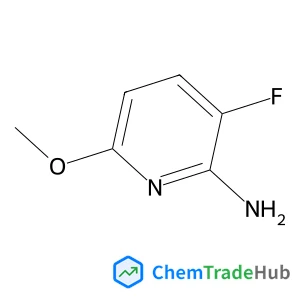
![7-Bromo-5-chloro-1H-pyrazolo[4,3-b]pyridine structure](https://static.chemtradehub.com/structs/135/1351813-70-1-a716.webp "7-Bromo-5-chloro-1H-pyrazolo[4,3-b]pyridine structure")
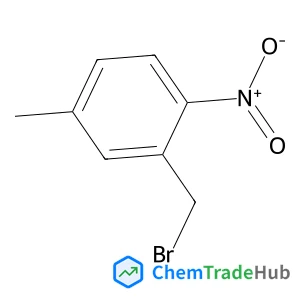
![4,4-Difluoro-2-methyl-1-{[(2-methyl-2-propanyl)oxy]carbonyl}-L-proline structure](https://static.chemtradehub.com/structs/119/1194032-23-9-f426.webp "4,4-Difluoro-2-methyl-1-{[(2-methyl-2-propanyl)oxy]carbonyl}-L-proline structure")




