












![[(1S,2S,3R,4S,7R,9S,10S,12R,15S)-4,12-Diacetyloxy-15-[(2R,3S)-3-benzamido-3-phenyl-2-(2,2,2-trichloroethoxycarbonyloxy)propanoyl]oxy-1,9-dihydroxy-10,14,17,17-tetramethyl-11-oxo-6-oxatetracyclo[11.3.1.03,10.04,7]heptadec-13-en-2-yl] benzoate structure](https://static.chemtradehub.com/structs/100/100431-55-8-7104.webp "[(1S,2S,3R,4S,7R,9S,10S,12R,15S)-4,12-Diacetyloxy-15-[(2R,3S)-3-benzamido-3-phenyl-2-(2,2,2-trichloroethoxycarbonyloxy)propanoyl]oxy-1,9-dihydroxy-10,14,17,17-tetramethyl-11-oxo-6-oxatetracyclo[11.3.1.03,10.04,7]heptadec-13-en-2-yl] benzoate structure")
Thermoresponsive hybrid double-crosslinked networks using magnetic iron oxide nanoparticles as crossing points
Literature Information
Publication Date
2018-08-14
DOI
10.1039/C8PY01006D
Impact Factor
5.582
Authors
Thomas Blin, Antoine Niederberger, Lazhar Benyahia, Jérôme Fresnais, Véronique Montembault, Laurent Fontaine
View Original
Abstract
Double-crosslinked networks are a class of polymer materials that have recently started attracting attention. Herein, we report the successful fabrication of thermoresponsive hybrid double-crosslinked polymer networks which are able to rearrange under stimulation owing to the thermoreversibility of the Diels–Alder (DA) reaction. This new class of magneto-responsive networks is based on iron oxide nanoparticles (IONPs) as the nano-crosslinkers and difuran-functionalized poly(ethylene oxide) (PEO) as the diene partner for the thermoreversible DA reaction. The chemical and mechanical properties of the resultant networks were characterized. The rheological properties of 3D networks with and without IONPs were compared; the presence of IONPs in the network ensured that a gel-like structure was maintained after the retro Diels–Alder reaction (rDA). We attribute these characteristics to the establishment of a secondary network through covalently integrated IONPs. These synthetic materials may prove beneficial for the design and applications of polymer networks double-crosslinked with IONPs as magneto-responsive 3D networks for nanobiotechnology and nanomedicine.
Related Literature
Conversion of glucose and cellulose into value-added products in water and ionic liquids
Jinliang Song, Honglei Fan, Jun Ma, Buxing Han
2013-07-31
Tutorial Review
DOI: 10.1039/C3GC41141A
Dispersion of PM and VOC pollutants from open burning of municipal solid wastes on host communities: emission inventory estimation and dispersion modelling study
Adewemimo Oluwakunmi Popoola, Lukuman Adekilekun Jimoda, Olusesan Abel Olu-Arotiowa, Oyetola Ogunkunle, Opeyeolu Timothy Laseinde, Sunday Adekunle Adebanjo, Wuraola Abake Raji
2023-06-02
Paper
DOI: 10.1039/D3EA00041A
Efficient electrocatalytic hydrogenation of cinnamaldehyde to value-added chemicals
Henan Chen, Baiyao Liang, Dingyi Zhang, Guanwu Lian, Chenxin Yang, Yun Zhang, Wei Zhao
2022-04-13
Communication
DOI: 10.1039/D1GC04777A
Aza-Michael versus aminolysis reactions of glycerol carbonate acrylate
Nohra Bassam, Candy Laure, Blanco Jean-François, Raoul Yann, Mouloungui Zephirin
2013-04-19
Paper
DOI: 10.1039/C3GC37054B
Bifunctional thioacetamide-mediated synthesis of few-layered MoOSx nanosheet-modified CdS hollow spheres for efficient photocatalytic H2 production
Siqin Tao, Wei Zhong, Yuxiao Chen, Feng Chen, Ping Wang
2022-08-18
Paper
DOI: 10.1039/D2CY01315K
An autocatalytic CO hydrogenation approach for the fabrication of stable Fe-based superhydrophobic surfaces
Yingying Xue, Shengyang Duan, Zihao Liu, Miaomiao Cui, Zhanghui Xiong, Zengchen Liu, Jiangang Chen
2022-07-04
Communication
DOI: 10.1039/D2CC03113B
Synthesis and unexpectedly facile dimerisation of 1-methoxycarbonylpyrrolizin-3-one
Paper
DOI: 10.1039/CC9960001083
Nanocomposites of bacterial cellulose nanofibers and chitin nanocrystals: fabrication, characterization and bactericidal activity
Núria Butchosa, Christian Brown, Lars A. Berglund, Vincent Bulone
2013-09-17
Paper
DOI: 10.1039/C3GC41700J
Co-doped MoS2 nanosheet: a stable and pH-universal electrocatalyst for an efficient hydrogen evolution reaction
Xiaojie Tan, Depeng Zhao, Yuchen Sun, Zhongxin Duan, Xiaowei Wang
2022-08-24
Paper
DOI: 10.1039/D2CE00951J
You might also like
Compound Q&A
What are the main uses of 4-Nitrophenyl phosphate disodium salt hexahydrate (CAS: 333338-18-4)?
4-Nitrophenyl phosphate disodium salt hexahydrate is primarily used as a substra...
333338-18-44-Nitrophenyl phosph...
Compound Q&A
What are the main uses of 2-(Trifluoromethyl)-1,3-oxazole-4-carboxylic Acid (CAS: 1060816-01-4)?
2-(Trifluoromethyl)-1,3-oxazole-4-carboxylic Acid (CAS: 1060816-01-4) is widely ...
1060816-01-42-(Trifluoromethyl)-...
Compound Q&A
How should 2-Fluoro-4-biphenylcarboxylic acid (CAS: 137045-30-8) be stored?
2-Fluoro-4-biphenylcarboxylic acid should be stored in a cool, dry place at room...
137045-30-82-Fluoro-4-biphenylc...
Compound Q&A
What industries use Prednisolone-21-Carboxylic Acid (CAS: 61549-70-0)?
Prednisolone-21-Carboxylic Acid is primarily used in the pharmaceutical industry...
61549-70-0Prednisolone-21-Carb...
Compound Q&A
How should 4-(Hydrazinomethyl)-1,2,3-benzenetriol (CAS: 3614-72-0) be stored?
4-(Hydrazinomethyl)-1,2,3-benzenetriol (CAS: 3614-72-0) should be stored in a co...
3614-72-04-(Hydrazinomethyl)-...
Compound Q&A
What industries use 4-Amino-1-methyl-1H-pyrazole-5-carboxylic acid hydrochloride (CAS: 92534-70-8)?
4-Amino-1-methyl-1H-pyrazole-5-carboxylic acid hydrochloride (CAS: 92534-70-8) i...
92534-70-84-Amino-1-methyl-1H-...
Compound Q&A
What regulatory guidelines apply to dehydropachymic acid (CAS: 77012-31-8)?
Dehydropachymic acid (CAS: 77012-31-8) is regulated by various agencies. It fall...
77012-31-8Dehydropachymic acid
Compound Q&A
What is the market or research trend for 6-[(2,2-Dimethylpropanoyl)amino]nicotinic acid (CAS: 898561-66-5)?
The market and research trends for 6-[(2,2-Dimethylpropanoyl)amino]nicotinic aci...
898561-66-56-[(2,2-Dimethylprop...
Compound Q&A
How should 1,10-Phenanthroline-2,9-dicarbaldehyde (CAS: 57709-62-3) be stored?
1,10-Phenanthroline-2,9-dicarbaldehyde should be stored in a cool, dry place awa...
57709-62-31,10-Phenanthroline-...
Compound Q&A
How is 5-Carbamoyl-11-oxo-10,11-dihydro-5H-dibenzo[b,f]azepin-10-yl acetate (CAS: 113952-21-9) typically synthesized?
5-Carbamoyl-11-oxo-10,11-dihydro-5H-dibenzo[b,f]azepin-10-yl acetate can be synt...
113952-21-95-Carbamoyl-11-oxo-1...
Source Journal
Polymer Chemistry

CiteScore:
8.6
Self-citation Rate:
7.3%
Articles per Year:
457
Polymer Chemistry welcomes submissions in all areas of polymer science that have a strong focus on macromolecular chemistry. Manuscripts may cover a broad range of fields, yet no direct application focus is required.
Recommended Compounds
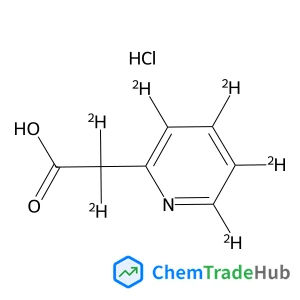
2,2-dideuterio-2-(3,4,5,6-tetradeuterio-2-pyridyl)acetic acid;hydrochloride
CAS Number:
1329799-67-8
Molecular Formula:
C7H2ClD6NO2
![1-[(4-Methylphenyl)sulfonyl]-3-(4,4,5,5-tetramethyl-1,3,2-dioxaborolan-2-yl)-1H-pyrrolo[2,3-b]pyridine-5-carbonitrile structure](https://static.chemtradehub.com/structs/143/1434747-57-5-fc0d.webp "1-[(4-Methylphenyl)sulfonyl]-3-(4,4,5,5-tetramethyl-1,3,2-dioxaborolan-2-yl)-1H-pyrrolo[2,3-b]pyridine-5-carbonitrile structure")
1-[(4-Methylphenyl)sulfonyl]-3-(4,4,5,5-tetramethyl-1,3,2-dioxaborolan-2-yl)-1H-pyrrolo[2,3-b]pyridine-5-carbonitrile
CAS Number:
1434747-57-5
Molecular Formula:
C21H22BN3O4S
Recommended Suppliers





Disclaimer
This page provides academic journal information for reference and research purposes only. We are not affiliated with any journal publishers and do not handle publication submissions. For publication-related inquiries, please contact the respective journal publishers directly.
If you notice any inaccuracies in the information displayed, please contact us at support@chemtradehub.com. We will promptly review and address your concerns.