












Hyperbranched polysiloxane with highly constrained rings and the effect of the attached arms on the assembly behavior
Literature Information
Publication Date
2017-10-06
DOI
10.1039/C7PY01177F
Impact Factor
5.582
Authors
Chunyan Wu, Chunhua Hu, Yuzhou Liu
View Original
Abstract
The preparation of hyperbranched polymers with incompatible arms and narrow molecular dispersity is appealing but is hindered by the lack of control of intramolecular cyclization, which usually leads to the formation of inert loops. We succeeded in deliberately directing the intramolecular cyclization into the formation of highly constrained and thus reactive rings, which are then used for arm attachment. In this way, a simple and efficient synthesis of a hyperbranched tri-block polymer with incompatible arms is realized and its potential application in self-assembly is demonstrated with the formation of interesting giant toroid structures.
Related Literature
Composition space of PtIrPdRhRu high entropy alloy nanoparticles synthesized by solvothermal reactions
Andreas Dueholm Bertelsen, Alexander Reinhardt Hansen, Nils Lau Nyborg Broge, Aref Mamakhel, Martin Bondesgaard, Bo Brummerstedt Iversen
2022-10-14
Communication
DOI: 10.1039/D2CC04827B
High coke deposition resistance by Cr loading on zeolite defects: reduced regeneration in cracking reactions
Shinya Kokuryo, Kazuya Tamura, Koji Miyake, Yoshiaki Uchida, Manabu Miyamoto, Yasunori Oumi, Atsushi Mizusawa, Tadashi Kubo, Norikazu Nishiyama
2022-10-17
Communication
DOI: 10.1039/D2CY00506A
Interphase control for high performance lithium metal batteries using ether aided ionic liquid electrolyte
Urbi Pal, Bingyu Lu, Baharak Sayahpour, Binayak Roy
2022-02-21
Paper
DOI: 10.1039/D1EE02929K
Aza-Michael versus aminolysis reactions of glycerol carbonate acrylate
Nohra Bassam, Candy Laure, Blanco Jean-François, Raoul Yann, Mouloungui Zephirin
2013-04-19
Paper
DOI: 10.1039/C3GC37054B
Novel fluorene-based functional ‘click polymers’ for quasi-solid-state dye-sensitized solar cells
Md. Anwarul Karim, Yong-Rae Cho, Jin Su Park, Sung Chul Kim, Hee Joo Kim, Jae Wook Lee, Yeong-Soon Gal, Sung-Ho Jin
2008-03-06
Communication
DOI: 10.1039/B800032H
Single crystal growth and intrinsic anomalous Hall effect of Cr2.70Se0.60Te3.40 ferromagnetic crystals
Muhammad Younis, Hao Wu, Li Yang, Luji Li, Gaojie Zhang, Wen Jin, Hasan Raza, Shahid Atiq, Wenfeng Zhang
2023-06-01
Paper
DOI: 10.1039/D3CE00203A
Metal directed assembly of ditopic containers and their complexes with alkylammonium salts
Edoardo Menozzi, Julius Rebek Jr.
2005-10-11
Communication
DOI: 10.1039/B509189F
Arsonium ylides (with some mention also of arsinimines, stibonium and bismuthonium ylides)
Review Article
DOI: 10.1039/CS9871600045
Potential application of metallacarboranes as an internal reference: an electrochemical comparative study to ferrocene
Jewel Ann Maria Xavier, Clara Viñas, Francesc Teixidor
2022-03-04
Communication
DOI: 10.1039/D2CC00424K
You might also like
Compound Q&A
What are the main uses of 4-Nitrophenyl phosphate disodium salt hexahydrate (CAS: 333338-18-4)?
4-Nitrophenyl phosphate disodium salt hexahydrate is primarily used as a substra...
333338-18-44-Nitrophenyl phosph...
Compound Q&A
What are the main uses of 2-(Trifluoromethyl)-1,3-oxazole-4-carboxylic Acid (CAS: 1060816-01-4)?
2-(Trifluoromethyl)-1,3-oxazole-4-carboxylic Acid (CAS: 1060816-01-4) is widely ...
1060816-01-42-(Trifluoromethyl)-...
Compound Q&A
How should 2-Fluoro-4-biphenylcarboxylic acid (CAS: 137045-30-8) be stored?
2-Fluoro-4-biphenylcarboxylic acid should be stored in a cool, dry place at room...
137045-30-82-Fluoro-4-biphenylc...
Compound Q&A
What industries use Prednisolone-21-Carboxylic Acid (CAS: 61549-70-0)?
Prednisolone-21-Carboxylic Acid is primarily used in the pharmaceutical industry...
61549-70-0Prednisolone-21-Carb...
Compound Q&A
How should 4-(Hydrazinomethyl)-1,2,3-benzenetriol (CAS: 3614-72-0) be stored?
4-(Hydrazinomethyl)-1,2,3-benzenetriol (CAS: 3614-72-0) should be stored in a co...
3614-72-04-(Hydrazinomethyl)-...
Compound Q&A
What industries use 4-Amino-1-methyl-1H-pyrazole-5-carboxylic acid hydrochloride (CAS: 92534-70-8)?
4-Amino-1-methyl-1H-pyrazole-5-carboxylic acid hydrochloride (CAS: 92534-70-8) i...
92534-70-84-Amino-1-methyl-1H-...
Compound Q&A
What regulatory guidelines apply to dehydropachymic acid (CAS: 77012-31-8)?
Dehydropachymic acid (CAS: 77012-31-8) is regulated by various agencies. It fall...
77012-31-8Dehydropachymic acid
Compound Q&A
What is the market or research trend for 6-[(2,2-Dimethylpropanoyl)amino]nicotinic acid (CAS: 898561-66-5)?
The market and research trends for 6-[(2,2-Dimethylpropanoyl)amino]nicotinic aci...
898561-66-56-[(2,2-Dimethylprop...
Compound Q&A
How should 1,10-Phenanthroline-2,9-dicarbaldehyde (CAS: 57709-62-3) be stored?
1,10-Phenanthroline-2,9-dicarbaldehyde should be stored in a cool, dry place awa...
57709-62-31,10-Phenanthroline-...
Compound Q&A
How is 5-Carbamoyl-11-oxo-10,11-dihydro-5H-dibenzo[b,f]azepin-10-yl acetate (CAS: 113952-21-9) typically synthesized?
5-Carbamoyl-11-oxo-10,11-dihydro-5H-dibenzo[b,f]azepin-10-yl acetate can be synt...
113952-21-95-Carbamoyl-11-oxo-1...
Source Journal
Polymer Chemistry

CiteScore:
8.6
Self-citation Rate:
7.3%
Articles per Year:
457
Polymer Chemistry welcomes submissions in all areas of polymer science that have a strong focus on macromolecular chemistry. Manuscripts may cover a broad range of fields, yet no direct application focus is required.
Recommended Compounds

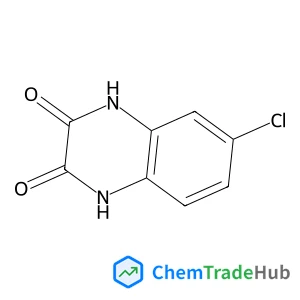
6-CHLORO-2,3-DIOXO-1,2,3,4-TETRAHYDROQUINOXALINE, 97
CAS Number:
169-14-2
Molecular Formula:
C8H5ClN2O2
![1-[(4-Methylphenyl)sulfonyl]-3-(4,4,5,5-tetramethyl-1,3,2-dioxaborolan-2-yl)-1H-pyrrolo[2,3-b]pyridine-5-carbonitrile structure](https://static.chemtradehub.com/structs/143/1434747-57-5-fc0d.webp "1-[(4-Methylphenyl)sulfonyl]-3-(4,4,5,5-tetramethyl-1,3,2-dioxaborolan-2-yl)-1H-pyrrolo[2,3-b]pyridine-5-carbonitrile structure")
1-[(4-Methylphenyl)sulfonyl]-3-(4,4,5,5-tetramethyl-1,3,2-dioxaborolan-2-yl)-1H-pyrrolo[2,3-b]pyridine-5-carbonitrile
CAS Number:
1434747-57-5
Molecular Formula:
C21H22BN3O4S
Recommended Suppliers



Disclaimer
This page provides academic journal information for reference and research purposes only. We are not affiliated with any journal publishers and do not handle publication submissions. For publication-related inquiries, please contact the respective journal publishers directly.
If you notice any inaccuracies in the information displayed, please contact us at support@chemtradehub.com. We will promptly review and address your concerns.