












A pH-responsive polymer based on dynamic imine bonds as a drug delivery material with pseudo target release behavior
Literature Information
Publication Date
2018-01-19
DOI
10.1039/C7PY02108A
Impact Factor
5.582
Authors
Yangchun Tao, Siwei Liu, Yi Zhang, Zhenguo Chi, Jiarui Xu
View Original
Abstract
In this study, pentaerythritol tetra(3-mercaptopropionate)-allylurea-poly(ethylene glycol) (PETMP-AU-PEG), produced by the Schiff-base reaction between terminal-aldehyded PEG and PETMP-AU, was used to prepare doxorubicin (DOX)-loaded polymers for triggered release. The DOX-loaded PETMP-AU-PEG polymers had sizes of about 200 nm, non-toxicity and highly pH-sensitive properties. An in vitro release study confirmed that the polymer could release DOX rapidly by cleavage of acid-labile imine bonds of the polymer. The release of DOX at neutral pH was very slow. However, in a weakly acidic environment (pH 6.8 and pH 6.0), it released much faster within the first 2 h. Fluorescence microscopy further verified that DOX released from PETMP-AU-PEG polymers could be pH sensitive. According to the results of cytotoxicity determination and microscopy imaging of U2OS cells (human osteosarcoma, tumor cells) and MC3T3-E1 Subclone 14 cells (normal tissue cells), the DOX-loaded polymers could maintain high stability in the neutral environment while they release DOX rapidly in response to the very weakly acidic environment. Moreover, it is more important that the U2OS could be inactivated in the micro-acidic environment produced by its own growth, even in a neutral environment, without any chemical reagent addition.
Related Literature
PVA-based bulk microneedles capable of high insulin loading and pH-triggered degradation for multi-responsive and sustained hypoglycemic therapy
Yuhong Ma, Wei Wang, Mujiao He, Yunzhu Liu, Caihua Li, Yinan Zhong, Quanmin Bu, Dechun Huang, Hongliang Qian, Wei Chen
2023-12-01
Paper
DOI: 10.1039/D3BM01760E
Size-dependent therapeutic efficiency of 223Ra-labeled calcium carbonate carriers for internal radionuclide therapy of breast cancer
Arina S. Ivkina, Mikhail V. Zyuzin, Sergei A. Shipilovskikh
2023-11-23
Paper
DOI: 10.1039/D3BM01651J
Method development for forensic oil identification by direct analysis in real time time-of-flight mass spectrometry
Krishnaja Tikkisetty, Taylor Filewood, Jeffrey Yan, Honoria Kwok, Pamela Brunswick, Robert Cody, Dayue Shang
2023-11-02
Paper
DOI: 10.1039/D3AY01282D
An adaptive extended Gaussian peak derivative reweighted penalised least squares method for baseline correction
Xiaoshan Li, Xiaojun Tang, Bin Wang, Youshui Lu, Houqing Chen
2023-10-19
Paper
DOI: 10.1039/D3AY01389H
Oxygen vacancy healing boosts the piezoelectricity of bone scaffolds
Fangwei Qi, Huixing Li, Xiuwen Gao, Yifeng Wang, Hongyi Qian, Wei Li, Shuling Liu, Huarui Zhou, Shuping Peng
2023-12-04
Paper
DOI: 10.1039/D3BM01283B
Low-cost electronic-nose (LC-e-nose) systems for the evaluation of plantation and fruit crops: recent advances and future trends
Jose Lucena Barbosa, Jr, Mohammed Kamruzzaman, Douglas Fernandes Barbin
2023-10-18
Critical Review
DOI: 10.1039/D3AY01192E
Capsulation of EBTAC into ZIF-8 for the development of a signal-on fluorescent biosensor to detect alkaline phosphatase
Shanshan Liu, Nian Wang, Li Li
2023-10-24
Paper
DOI: 10.1039/D3AY01558K
You might also like
Compound Q&A
What are the main uses of 4-Nitrophenyl phosphate disodium salt hexahydrate (CAS: 333338-18-4)?
4-Nitrophenyl phosphate disodium salt hexahydrate is primarily used as a substra...
333338-18-44-Nitrophenyl phosph...
Compound Q&A
What are the main uses of 2-(Trifluoromethyl)-1,3-oxazole-4-carboxylic Acid (CAS: 1060816-01-4)?
2-(Trifluoromethyl)-1,3-oxazole-4-carboxylic Acid (CAS: 1060816-01-4) is widely ...
1060816-01-42-(Trifluoromethyl)-...
Compound Q&A
How should 2-Fluoro-4-biphenylcarboxylic acid (CAS: 137045-30-8) be stored?
2-Fluoro-4-biphenylcarboxylic acid should be stored in a cool, dry place at room...
137045-30-82-Fluoro-4-biphenylc...
Compound Q&A
What industries use Prednisolone-21-Carboxylic Acid (CAS: 61549-70-0)?
Prednisolone-21-Carboxylic Acid is primarily used in the pharmaceutical industry...
61549-70-0Prednisolone-21-Carb...
Compound Q&A
How should 4-(Hydrazinomethyl)-1,2,3-benzenetriol (CAS: 3614-72-0) be stored?
4-(Hydrazinomethyl)-1,2,3-benzenetriol (CAS: 3614-72-0) should be stored in a co...
3614-72-04-(Hydrazinomethyl)-...
Compound Q&A
What industries use 4-Amino-1-methyl-1H-pyrazole-5-carboxylic acid hydrochloride (CAS: 92534-70-8)?
4-Amino-1-methyl-1H-pyrazole-5-carboxylic acid hydrochloride (CAS: 92534-70-8) i...
92534-70-84-Amino-1-methyl-1H-...
Compound Q&A
What regulatory guidelines apply to dehydropachymic acid (CAS: 77012-31-8)?
Dehydropachymic acid (CAS: 77012-31-8) is regulated by various agencies. It fall...
77012-31-8Dehydropachymic acid
Compound Q&A
What is the market or research trend for 6-[(2,2-Dimethylpropanoyl)amino]nicotinic acid (CAS: 898561-66-5)?
The market and research trends for 6-[(2,2-Dimethylpropanoyl)amino]nicotinic aci...
898561-66-56-[(2,2-Dimethylprop...
Compound Q&A
How should 1,10-Phenanthroline-2,9-dicarbaldehyde (CAS: 57709-62-3) be stored?
1,10-Phenanthroline-2,9-dicarbaldehyde should be stored in a cool, dry place awa...
57709-62-31,10-Phenanthroline-...
Compound Q&A
How is 5-Carbamoyl-11-oxo-10,11-dihydro-5H-dibenzo[b,f]azepin-10-yl acetate (CAS: 113952-21-9) typically synthesized?
5-Carbamoyl-11-oxo-10,11-dihydro-5H-dibenzo[b,f]azepin-10-yl acetate can be synt...
113952-21-95-Carbamoyl-11-oxo-1...
Source Journal
Polymer Chemistry

CiteScore:
8.6
Self-citation Rate:
7.3%
Articles per Year:
457
Polymer Chemistry welcomes submissions in all areas of polymer science that have a strong focus on macromolecular chemistry. Manuscripts may cover a broad range of fields, yet no direct application focus is required.
Recommended Compounds
![[(1S,2S,3R,4S,7R,9S,10S,12R,15S)-4,12-Diacetyloxy-15-[(2R,3S)-3-benzamido-3-phenyl-2-(2,2,2-trichloroethoxycarbonyloxy)propanoyl]oxy-1,9-dihydroxy-10,14,17,17-tetramethyl-11-oxo-6-oxatetracyclo[11.3.1.03,10.04,7]heptadec-13-en-2-yl] benzoate structure](https://static.chemtradehub.com/structs/100/100431-55-8-7104.webp "[(1S,2S,3R,4S,7R,9S,10S,12R,15S)-4,12-Diacetyloxy-15-[(2R,3S)-3-benzamido-3-phenyl-2-(2,2,2-trichloroethoxycarbonyloxy)propanoyl]oxy-1,9-dihydroxy-10,14,17,17-tetramethyl-11-oxo-6-oxatetracyclo[11.3.1.03,10.04,7]heptadec-13-en-2-yl] benzoate structure")

cis-3-Amino-1-(trifluoromethyl)cyclobutanol hydrochloride (1:1)
CAS Number:
1408075-16-0
Molecular Formula:
C5H9ClF3NO
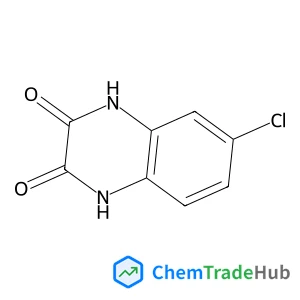
6-CHLORO-2,3-DIOXO-1,2,3,4-TETRAHYDROQUINOXALINE, 97
CAS Number:
169-14-2
Molecular Formula:
C8H5ClN2O2
Recommended Suppliers




Disclaimer
This page provides academic journal information for reference and research purposes only. We are not affiliated with any journal publishers and do not handle publication submissions. For publication-related inquiries, please contact the respective journal publishers directly.
If you notice any inaccuracies in the information displayed, please contact us at support@chemtradehub.com. We will promptly review and address your concerns.