












Fluorescent chitosan complex nanosphere diazeniumdiolates as donors and sensitive real-time probes of nitric oxide
Literature Information
Publication Date
2012-11-19
DOI
10.1039/C2AN36548K
Impact Factor
4.616
Authors
Lianjiang Tan, Ajun Wan, Huili Li
View Original
Abstract
A new CuFL (2-{2-chloro-6-hydroxy-5-[(2-methyl-quinolin-8-ylamino)-methyl]-3-oxo-3H-xanthen-9-yl}-benzoic acid)–CS (chitosan) NS diazeniumdiolates system consisting of NO donors and highly-sensitive NO probes is reported. FL–CS NS diazeniumdiolates were synthesized by incorporating the fluorescent molecule FL with chitosan (CS) and reacting the resultant FL–CS complex with pressurized NO and dimethyl sulfate (DMS). Then the FL–CS NS diazeniumdiolates were reacted with copper chloride (CuCl2) to generate non-fluorescent CuFL–CS NS diazeniumdiolates. The CuFL–CS NS diazeniumdiolates have a spherical outline with a dimension of ca. 250 nm. They have high selectivity for NO over other related substances. The results of in vitro and in vivo experiments indicate that the CuFL–CS NS diazeniumdiolates can release NO under physiological conditions and meanwhile detect the released NO based on the considerable fluorescence increase of the otherwise non-fluorescent system caused by the NO. The good fluorescence stability of the NO–FL–CS NS provides prospects for the CuFL–CS NS diazeniumdiolates in biomedical applications.
Recommended Journals
Related Literature
Identification of intrinsic catalytic activity for electrochemical reduction of water molecules to generate hydrogen
Tatsuya Shinagawa, Kazuhiro Takanabe
2015-05-15
Communication
DOI: 10.1039/C5CP02330K
Enhanced photocurrent density of hematite thin films on FTO substrates: effect of post-annealing temperature
Eun Soo Cho, Myung Jong Kang, Young Soo Kang
2015-05-26
Paper
DOI: 10.1039/C5CP01823D
Structure and segregation of dopant–defect complexes at grain boundaries in nanocrystalline doped ceria
Pratik P. Dholabhai, Jeffery A. Aguiar, Longjia Wu, Terry G. Holesinger, Toshihiro Aoki, Ricardo H. R. Castro, Blas P. Uberuaga
2015-05-11
Paper
DOI: 10.1039/C5CP02200B
Origin of enhanced visible light driven water splitting by (Rh, Sb)-SrTiO3
Brindaban Modak, Swapan K. Ghosh
2015-05-06
Paper
DOI: 10.1039/C5CP01374G
Carrier concentration dependent optical and electrical properties of Ga doped ZnO hexagonal nanocrystals
Manas Saha, Sirshendu Ghosh, Vishal Dev Ashok, S. K. De
2015-05-22
Paper
DOI: 10.1039/C4CP05480F
Structural effects on the photophysical properties of mono-β-diketonate and bis-β-diketonate EuIII complexes
Tianyu Zhu, Peng Chen, Hongfeng Li, Wenbin Sun, Ting Gao, Pengfei Yan
2015-05-18
Paper
DOI: 10.1039/C5CP01392E
The solid state conversion reaction of epitaxial FeF2(110) thin films with lithium studied by angle-resolved X-ray photoelectron spectroscopy
Ryan Thorpe, Sylvie Rangan, Ryan Whitcomb, Ali C. Basaran, Thomas Saerbeck, Ivan K. Schuller, Robert A. Bartynski
2015-05-11
Paper
DOI: 10.1039/C5CP01150G
Controlling the thermoelectric properties of polymers: application to PEDOT and polypyrrole
Mario Culebras, Belén Uriol, Clara M. Gómez, Andrés Cantarero
2015-04-28
Paper
DOI: 10.1039/C5CP01940K
An impurity intermediate band due to Pb doping induced promising thermoelectric performance of Ca5In2Sb6
Zhenzhen Feng, Yuli Yan, Guangbiao Zhang, Jueming Yang, Chao Wang
2015-05-13
Paper
DOI: 10.1039/C5CP00972C
You might also like
Compound Q&A
What are the main uses of (5-Sulfamoyl-3-pyridinyl)boronic acid (CAS: 951233-61-7)?
(5-Sulfamoyl-3-pyridinyl)boronic acid is primarily used in chemical synthesis, p...
951233-61-7(5-Sulfamoyl-3-pyrid...
Compound Q&A
How is Benzyl 2-methyl-2-(methylsulfonyl)-4-pentenoate (CAS: 1942858-50-5) typically synthesized?
Benzyl 2-methyl-2-(methylsulfonyl)-4-pentenoate is typically synthesized via est...
1942858-50-5Benzyl 2-methyl-2-(m...
Compound Q&A
What precautions should be taken when handling 8-Fluoroquinolin-6-ol (CAS: 209353-22-0)?
When handling 8-Fluoroquinolin-6-ol (CAS: 209353-22-0), it is important to use p...
209353-22-08-Fluoroquinolin-6-o...
Compound Q&A
What are the physical and chemical properties of 1,3-Dibromo-5-(2-methyl-2-propanyl)benzene (CAS: 129316-09-2)?
1,3-Dibromo-5-(2-methyl-2-propanyl)benzene (CAS: 129316-09-2) is a crystalline c...
129316-09-21,3-Dibromo-5-(2-met...
Compound Q&A
What industries use Ethyl 7-chloro-4-oxo-1-(1,3-thiazol-2-yl)-1,4-dihydro-1,8-naphthyridine-3-carboxylate (CAS: 174726-87-5)?
Ethyl 7-chloro-4-oxo-1-(1,3-thiazol-2-yl)-1,4-dihydro-1,8-naphthyridine-3-carbox...
174726-87-5Ethyl 7-chloro-4-oxo...
Compound Q&A
What precautions should be taken when handling Delta-7-Avenasterol (CAS: 23290-26-8)?
When handling Delta-7-Avenasterol (CAS: 23290-26-8), it is important to wear app...
23290-26-8Delta-7-Avenasterol
Compound Q&A
What precautions should be taken when handling N-({(5R)-3-[3-Fluoro-4-(4-morpholinyl)phenyl]-2-oxo-1,3-oxazolidin-5-yl}methyl)acetamide (CAS: 872992-20-6)?
Proper handling involves the use of personal protective equipment such as gloves...
872992-20-6N-({(5R)-3-[3-Fluoro...
Compound Q&A
What precautions should be taken when handling 2-Methyl-2-proanyl 4-[(2-aminophenyl)amino]-1-piperidinecarboxylate (CAS: 79099-00-6)?
When handling 2-Methyl-2-proanyl 4-[(2-aminophenyl)amino]-1-piperidinecarboxylat...
79099-00-62-Methyl-2-propanyl ...
Compound Q&A
What is N-Methyl-4-chlorobenzylamine hydrochloride (CAS: 65542-24-7)?
N-Methyl-4-chlorobenzylamine hydrochloride (CAS: 65542-24-7) is a organic compou...
65542-24-7N-Methyl-4-chloroben...
Compound Q&A
Is [2-(Dodecyloxy)ethoxy]acetic acid (CAS: 27306-90-7) safe?
[2-(Dodecyloxy)ethoxy]acetic acid (CAS: 27306-90-7) is generally considered safe...
27306-90-7[2-(Dodecyloxy)ethox...
Source Journal
Analyst

CiteScore:
7.8
Self-citation Rate:
5.6%
Articles per Year:
653
Analyst publishes analytical and bioanalytical research that reports premier fundamental discoveries and inventions, and the applications of those discoveries, unconfined by traditional discipline barriers.
Recommended Compounds
![(4-Methyl-1H-benzo[d]imidazol-2-yl)methanamine structure](https://static.chemtradehub.com/structs/933/933756-31-1-7b0b.webp "(4-Methyl-1H-benzo[d]imidazol-2-yl)methanamine structure")
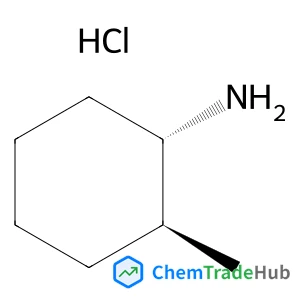
(1R,2R)-2-Methylcyclohexanamine hydrochloride (1:1)
CAS Number:
39558-31-1
Molecular Formula:
C7H16ClN
Recommended Suppliers





Disclaimer
This page provides academic journal information for reference and research purposes only. We are not affiliated with any journal publishers and do not handle publication submissions. For publication-related inquiries, please contact the respective journal publishers directly.
If you notice any inaccuracies in the information displayed, please contact us at support@chemtradehub.com. We will promptly review and address your concerns.