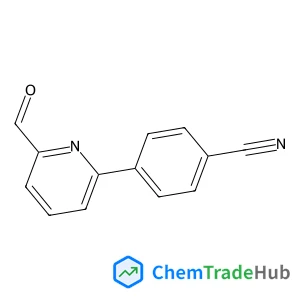
![Ethyl 2-[(3-bromo-4-pyridinyl)sulfanyl]-2-methylpropanoate structure](https://static.chemtradehub.com/structs/135/1352794-86-5-a8aa.webp "Ethyl 2-[(3-bromo-4-pyridinyl)sulfanyl]-2-methylpropanoate structure")
Ethyl 2-[(3-bromo-4-pyridinyl)sulfanyl]-2-methylpropanoate
CAS Number:
1352794-86-5
Molecular Formula:
C11H14BrNO2S
Kotaro Satoh, Masami Kamigaito
A series of random copolymers of styrene and diene derivatives prepared by living anionic copolymerization, using tetrahydrofuran (THF) as a randomizer, were treated with various Brönsted and Lewis acids to cationically cyclize the adjacent diene–styrene units into tetrahydronaphthyl bicyclic main-chain structures via intramolecular Friedel–Crafts alkylation. This reaction produced high-performance plastics with a high glass transition temperature and robust mechanical properties. Of the various Friedel–Crafts catalysts, CF3SO3H and BF3·2AcOH/benzyl chloride proved to be the most efficient in terms of their reactivity and product selectivity. All of the random styrene–diene-based copolymers, including styrene–isoprene (r-SIR), styrene–butadiene (r-SBR), p-methylstyrene–isoprene (r-pMSIR), and styrene–isoprene–butadiene (r-SIBR) copolymers, underwent efficient intramolecular cyclization by CF3SO3H despite the different monomer units and microstructures of the diene units, and yielded high-performance plastics (Tg ≥ 130 °C). The Tg value of the cyclized r-SBR was slightly lower than the Tg values observed for r-SIR and r-pMSIR. The cyclized random copolymers exhibited relatively high flexural moduli and more strength than the polystyrenehomopolymer. Thus, the styrene–diene-based random copolymer provides a novel platform for the production of high-performance thermoplastics that can be easily prepared from commercially available styrene and diene derivatives via living anionic polymerization followed by Friedel–Crafts alkylation.

Journal of Asian Natural Products Research

Atomization and Sprays

Acta Metallurgica Sinica-English Letters

Bioorganic & Medicinal Chemistry Letters

Main Group Chemistry

Journal of the Indian Institute of Science

Electroanalysis

NDT & E International

Bioorganic & Medicinal Chemistry

Critical Reviews in Solid State and Materials Sciences
Ping-Ping Sun, Quan-Song Li, Li-Na Yang, Zhu-Zhu Sun, Ze-Sheng Li
DOI: 10.1039/C4CP02951H
Divya Nayar, Charusita Chakravarty
DOI: 10.1039/C3CP55147D
Wei Guo, Xingqiang Lu, Xinlin Wang, Hongbin Yao
DOI: 10.1039/C4CP02258K
Swaminathan Angeline Vedha, Rajadurai Vijay Solomon, Ponnambalam Venuvanalingam
DOI: 10.1039/C4CP00526K
Feng Gao, Olle Inganäs
DOI: 10.1039/C4CP01814A
Yong-Lei Wang, Zhong-Yuan Lu
DOI: 10.1039/C4CP02843K
Samuel L. Smith, Alex W. Chin
DOI: 10.1039/C4CP01791A
J. M. Flores, G. Adler, H. J. Lee, L. Segev, J. Laskin, A. Laskin, S. A. Nizkorodov, S. S. Brown, Y. Rudich
DOI: 10.1039/C4CP01009D
Valeria Tagliazucca, Matteo Leoni, Claudia Weidenthaler
DOI: 10.1039/C4CP90131B
4-(4-tert-Butylphenyl)-1H-pyrazol-3-amine finds applications in various industri...
H3TATAB is used in the pharmaceutical industry for the synthesis of certain orga...
1-Ethyl-3-fluorobenzene (CAS: 696-39-9) is primarily used as a precursor in the ...
1-(tert-Butoxycarbonyl)-4-(4-methoxyphenyl)pyrrolidine-3-carboxylic acid is prim...
1-Cyclobutyl-4-piperidinone (CAS: 359880-05-0) is a colorless or white crystalli...
Pyridine-2,6-dicarboxylic acid mono-tert-butyl ester (CAS: 575433-76-0) is a che...
The market for 2,3-Difluorophenylalanine (CAS: 236754-62-4) is growing with incr...
(2-Hydroxy-1-naphthyl)boronic acid can be synthesized through the reduction of 2...
This compound is a crystalline solid with a molecular weight of approximately 52...
While 5,7-Dihydroxy-4-oxo-2-(3,4,5-trihydroxyphenyl)-4H-chromen-3-yl beta-D-gluc...

Polymer Chemistry welcomes submissions in all areas of polymer science that have a strong focus on macromolecular chemistry. Manuscripts may cover a broad range of fields, yet no direct application focus is required.
![6-[2-(Trifluoromethoxy)phenyl]-2-pyridinecarboxylic acid structure](https://static.chemtradehub.com/structs/887/887983-48-4-f6ac.webp "6-[2-(Trifluoromethoxy)phenyl]-2-pyridinecarboxylic acid structure")
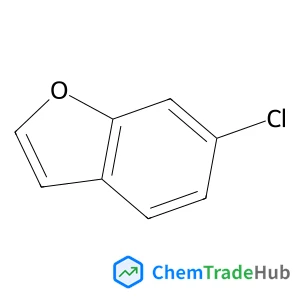
![7-Amino-5-methyl-5,7-dihydro-6H-dibenzo[b,d]azepin-6-one hydrochloride (1:1) structure](https://static.chemtradehub.com/structs/209/209984-32-7-9912.webp "7-Amino-5-methyl-5,7-dihydro-6H-dibenzo[b,d]azepin-6-one hydrochloride (1:1) structure")