


Controlled synthesis of branched poly(vinyl acetate)s by xanthate-mediated RAFT self-condensing vinyl (co)polymerization
Literature Information
Publication Date
2011-07-27
DOI
10.1039/C1PY00231G
Impact Factor
5.582
Authors
Nicolas Blanchard
View Original
Abstract
An original xanthate possessing a vinyl ester polymerizable function, namely vinyl 2-[(ethoxycarbonothioyl)sulfanyl]propanoate (Xa2), was synthesized. It was implemented as a chain transfer agent (CTA) to design branched polymers based on vinyl acetate (VAc) by self-condensing vinyl copolymerization (SCVC) by reversible addition–fragmentation chain transfer (RAFT). The branching density as well as the length of the branches were efficiently tuned by adjusting the total initial concentration of polymerizable functions C0 = [VAc]0 + [Xa2]0 and the ratio C0/[Xa2]0. Additionally, Xa2 was also homopolymerized to provide hyperbranched oligomers. These precursors were used as multifunctional CTAs to control a subsequent polymerization of VAc, affording starlike poly(vinyl acetate)s (PVAcs). All the products were characterized by 1H NMR spectroscopy, quadruple detection size exclusion chromatography and differential scanning calorimetry. Reference samples consisted of linear PVAcs which were synthesized using a homologue non-polymerizable xanthate. As expected, the intrinsic viscosity and the glass transition temperature increased when either the number of branches or their length increased.
Recommended Journals

Advanced Engineering Materials

Physical Chemistry Chemical Physics

Molecular Diversity

Coloration Technology

Photochemical & Photobiological Sciences

Journal of Medical Biochemistry

Current Pharmaceutical Biotechnology

Nature Reviews Drug Discovery

Journal of Enzyme inhibition and Medicinal Chemistry

Faraday Discussions
Related Literature
Deformation mechanism of a metal–organic framework glass under indentation
Theany To, Malwina Stepniewska, Haizheng Tao, Laurent Calvez, Xianghua Zhang, Morten M. Smedskjaer, Yuanzheng Yue
2021-07-26
Paper
DOI: 10.1039/D1CP02213J
Identification of beryllium fluoride complexes in mechanically distorted gels using quadrupolar split 9Be NMR spectra resolved with solution-state selective cross-polarization
Konstantin Romanenko, Stuart J. Elliott, Aleksandr A. Shubin, Philip W. Kuchel
2021-07-17
Paper
DOI: 10.1039/D1CP02515E
Excited states of modified oxygen-deficient centers and Si quantum dots in Gd-implanted silica glasses: emission dynamics and lifetime distributions
A. F. Zatsepin, Yu. A. Kuznetsova, E. S. Trofimova, V. A. Pustovarov
2021-09-24
Paper
DOI: 10.1039/D1CP03826E
AromTool: predicting aromatic stacking energy using an atomic neural network model
Wengan He, Danhong Liang, Hongjuan Diao, Ruibo Wu
2021-06-29
Paper
DOI: 10.1039/D1CP01954F
A theoretical study on the excited-state deactivation paths for the A–5FU dimer
Xue-fang Yu, Ting-he Fu, Bo Xiao, Hong-yuan Yu, Qingzhong Li
2021-06-28
Paper
DOI: 10.1039/D1CP00030F
Regression and clustering algorithms for AgCu nanoalloys: from mixing energy predictions to structure recognition
Cesare Roncaglia, Daniele Rapetti, Riccardo Ferrando
2021-10-11
Paper
DOI: 10.1039/D1CP02143E
Experimental studies on combined production of CH4 and safe long-term storage of CO2 in the form of solid hydrate in sediment
Navid Saeidi, Bjørn Kvamme, Yu-Chien Chien
2021-10-11
Paper
DOI: 10.1039/D1CP03239A
Theoretical study of spodium bonding in the active site of three Zn-proteins and several model systems
Rosa Llull, Gaizca Montalbán, Ivan Vidal, Rosa M. Gomila, Antonio Bauzá, Antonio Frontera
2021-07-13
Paper
DOI: 10.1039/D1CP02150H
Single sheets of graphene for fabrication of fibers with enhanced mechanical properties
Muhammad G. Salim, Luke A. Thimons, Min A. Kim, Brennan Carr, Michelle Montgomery, Nathan Tolman, Tevis D. B. Jacobs, Haitao Liu
2021-09-20
Paper
DOI: 10.1039/D1CP03238K
Formation of dimethyl carbonate via direct esterification of CO2 with methanol on reduced or stoichiometric CeO2(111) and (110) surfaces
Jian Jiang, Chris M. Marin, Avinash Kumar Both, Chin Li Cheung, Lei Li, Xiao Cheng Zeng
2021-07-19
Paper
DOI: 10.1039/D1CP02152D
You might also like
Compound Q&A
What is 3-Fluoro-2-methylbenzylamine (CAS: 771573-36-5)?
3-Fluoro-2-methylbenzylamine is an organic compound with the CAS number 771573-3...
771573-36-53-Fluoro-2-methylben...
Compound Q&A
Is Tert-butyl 2-(oxetan-3-ylidene)acetate (CAS: 1207175-03-8) safe?
Tert-butyl 2-(oxetan-3-ylidene)acetate is considered safe for its intended uses ...
1207175-03-8Tert-butyl 2-(oxetan...
Compound Q&A
What precautions should be taken when handling 4-Acetyl-2-fluorobenzonitrile (CAS: 214760-18-6)?
Proper personal protective equipment (PPE) such as gloves, goggles, and a lab co...
214760-18-64-Acetyl-2-fluoroben...
Compound Q&A
How is 2-Ethyl-4-methyl-1,3-thiazole (CAS: 15679-12-6) typically synthesized?
2-Ethyl-4-methyl-1,3-thiazole is commonly synthesized via the reaction of thiour...
15679-12-62-Ethyl-4-methyl-1,3...
Compound Q&A
How should 5',5''-([2,2'-Bithiophene]-5,5'-diyl)bis(([1,1':3',1''-terphenyl]-4,4''-dicarboxylic acid)) (CAS: 1227780-71-3) be stored?
This compound should be stored in a cool, dry place away from direct sunlight an...
1227780-71-35',5''''-([2,2'-Bith...
Compound Q&A
What regulatory guidelines apply to L-Lysine Acetate Salt (CAS: 52315-92-1)?
L-Lysine Acetate Salt (CAS: 52315-92-1) is subject to various regulatory guideli...
52315-92-1L-LYSINE ACETATE SAL...
Compound Q&A
Is 6-Fluoro-3-hydroxy-2-pyrazinecarboxamide (CAS: 259793-96-9) safe?
6-Fluoro-3-hydroxy-2-pyrazinecarboxamide (CAS: 259793-96-9) is generally conside...
259793-96-96-Fluoro-3-hydroxy-2...
Compound Q&A
What are the physical and chemical properties of 1,1'-Sulfonylbis(1H-imidazole) (CAS: 7189-69-7)?
1,1'-Sulfonylbis(1H-imidazole) is a crystalline solid with a molecular weight of...
7189-69-71,1'-Sulfonylbis(1H-...
Compound Q&A
What industries use 4-methyl-7-nitro-1H-indole-3-carbonitrile (CAS: 289483-82-5)?
4-Methyl-7-nitro-1H-indole-3-carbonitrile (CAS: 289483-82-5) is primarily used i...
289483-82-54-methyl-7-nitro-1H-...
Compound Q&A
How should waste containing 5-Bromo-3-indolyl-beta-galactoside (CAS: 97753-82-7) be handled?
Waste containing 5-Bromo-3-indolyl-beta-galactoside (CAS: 97753-82-7) should be ...
97753-82-75-Bromo-3-indolyl-be...
Source Journal
Polymer Chemistry

CiteScore:
8.6
Self-citation Rate:
7.3%
Articles per Year:
457
Polymer Chemistry welcomes submissions in all areas of polymer science that have a strong focus on macromolecular chemistry. Manuscripts may cover a broad range of fields, yet no direct application focus is required.
Recommended Compounds
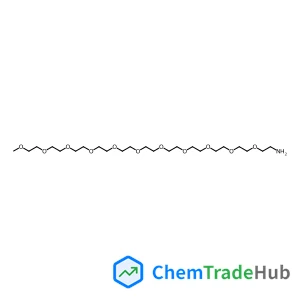
2,5,8,11,14,17,20,23,26,29,32-Undecaoxatetratriacontan-34-amine
CAS Number:
854601-60-8
Molecular Formula:
C23H49NO11
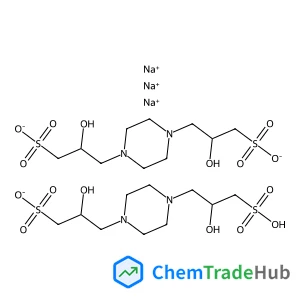
3,3'-(Piperazine-1,4-diyl)bis(2-hydroxypropane-1-sulfonic acid) Sodium Salt
CAS Number:
108321-08-0
Molecular Formula:
C20H41N4Na3O16S4
Recommended Suppliers





Disclaimer
This page provides academic journal information for reference and research purposes only. We are not affiliated with any journal publishers and do not handle publication submissions. For publication-related inquiries, please contact the respective journal publishers directly.
If you notice any inaccuracies in the information displayed, please contact us at support@chemtradehub.com. We will promptly review and address your concerns.