












Deformation mechanism of a metal–organic framework glass under indentation
Literature Information
Publication Date
2021-07-26
DOI
10.1039/D1CP02213J
Impact Factor
3.676
Authors
Theany To, Malwina Stepniewska, Haizheng Tao, Laurent Calvez, Xianghua Zhang, Morten M. Smedskjaer, Yuanzheng Yue
View Original
Abstract
Revealing the deformation mechanism of brittle materials under sharp contact loading (indentation) is important for their applications since this knowledge is crucial for identifying the origin of flaw and scratch formation on their surfaces. As a newly emerged glass family, metal–organic framework (MOF) glasses have not been studied concerning the mechanism of their indentation-induced deformation. Here, we explore this mechanism for ZIF-62 glass (a typical MOF glass system). The fractions of densification and shear flow during indentation were determined by atomic force microscopy, while the elastic deformation was measured via nanoindentation. The results show that ZIF-62 glass deforms primarily through densification and elastic deformation under the sharp contact loading. Significant pile-ups around indents were not observed, indicating that no or limited shear flow occurs in the glass during indentation. This behavior could be attributed to three structural factors, namely, high free volume, easily densified glass structure, and limited translational mobility of structural units.
Related Literature
Structural studies of high dispersion H3PW12O40/SiO2 solid acid catalysts
Andrew D. Newman, D. Robert Brown, Prem Siril, Adam F. Lee, Karen Wilson
2006-05-30
Paper
DOI: 10.1039/B603979K
Calculation of intermolecular interactions in the benzene dimer using coupled-cluster and local electron correlation methods‡
J. Grant Hill, James A. Platts, Hans-Joachim Werner
2006-07-27
Paper
DOI: 10.1039/B608623C
Molecular dynamics simulations of peptide carboxylate hydration
T. Liang, T. R. Walsh
2006-08-29
Paper
DOI: 10.1039/B608672A
Polyelectrolytes in solutions with multivalent salt. Effects of flexibility and contour length
J. M. G. Sarraguça, A. A. C. C. Pais
2006-08-03
Paper
DOI: 10.1039/B606087K
Large molecular aggregates: from atmospheric aerosols to drugnanoparticles
George Firanescu, Dana Hermsdorf, Roman Ueberschaer, Ruth Signorell
2006-08-03
Invited Article
DOI: 10.1039/B608433H
An FT-IRRAS study of nitrophenyl mono- and multilayers electro-deposited on gold by reduction of the diazonium salt
Alejandra Ricci, Cecilia Bonazzola, Ernesto J. Calvo
2006-08-24
Communication
DOI: 10.1039/B609497J
Electronic spectra of uranyl chloride complexes in acetone: a CASSCF/CASPT2 investigation
Els van Besien, Kristine Pierloot, Christiane Görller-Walrand
2006-08-23
Paper
DOI: 10.1039/B607026D
Scalar relativistic calculations of hyperfine coupling tensors using the Douglas–Kroll–Hess method with a finite-size nucleus model
Elena Malkin, Irina Malkin, Olga L. Malkina, Vladimir G. Malkin, Martin Kaupp
2006-08-04
Paper
DOI: 10.1039/B607044B
IRMPD spectroscopy of metal-ion/tryptophan complexes
Nick C. Polfer, Jos Oomens, Robert C. Dunbar
2006-05-16
Paper
DOI: 10.1039/B603665A
You might also like
Compound Q&A
How is Ethyl 4-chlorothieno[2,3-b]pyridine-5-carboxylate (CAS: 59713-58-5) typically synthesized?
Ethyl 4-chlorothieno[2,3-b]pyridine-5-carboxylate (CAS: 59713-58-5) can be synth...
59713-58-5Ethyl 4-chlorothieno...
Compound Q&A
What regulatory guidelines apply to 5-Methyl-1H-indole-3-carbaldehyde (CAS: 52562-50-2)?
5-Methyl-1H-indole-3-carbaldehyde (CAS: 52562-50-2) is subject to various regula...
52562-50-25-Methyl-1H-indole-3...
Compound Q&A
What are the physical and chemical properties of (1,3-Dimethyl-2,4-dioxo-1,2,3,4-tetrahydro-5-pyrimidinyl)boronic acid (CAS: 223418-73-3)?
(1,3-Dimethyl-2,4-dioxo-1,2,3,4-tetrahydro-5-pyrimidinyl)boronic acid is a white...
223418-73-3(1,3-Dimethyl-2,4-di...
Compound Q&A
How should waste containing Sulfocostunolide A (CAS: 1016983-51-9) be handled?
Waste containing Sulfocostunolide A (CAS: 1016983-51-9) should be handled with c...
1016983-51-9Sulfocostunolide A
Compound Q&A
What precautions should be taken when handling Murraxocin (CAS: 88478-44-8)?
When handling Murraxocin (CAS: 88478-44-8), ensure proper personal protective eq...
88478-44-8Murraxocin
Compound Q&A
What are the physical and chemical properties of Formvar (CAS: 63148-64-1)?
Formvar (CAS: 63148-64-1) is an alkyd resin characterized by a high molecular we...
63148-64-1Formvar(R)
Compound Q&A
Is (S)-4-benzyl-2-((benzyloxy)methyl)morpholine (CAS: 205242-66-6) safe?
(S)-4-benzyl-2-((benzyloxy)methyl)morpholine is generally safe when handled with...
205242-66-6(S)-4-benzyl-2-((ben...
Compound Q&A
What industries use Methyl 1-(5-bromo-2-pyrimidinyl)cyclopropanecarboxylate (CAS: 1447607-69-3)?
Methyl 1-(5-bromo-2-pyrimidinyl)cyclopropanecarboxylate (CAS: 1447607-69-3) is p...
1447607-69-3Methyl 1-(5-bromo-2-...
Compound Q&A
Is 2-Methyl-1-phenyl-1-propanamine hydrochloride (CAS: 24290-47-9) safe?
2-Methyl-1-phenyl-1-propanamine hydrochloride (CAS: 24290-47-9) is generally con...
24290-47-92-Methyl-1-phenyl-1-...
Compound Q&A
How is 3-(4-Bromophenyl)-2-methylpropanoic acid (CAS: 66735-01-1) typically synthesized?
3-(4-Bromophenyl)-2-methylpropanoic acid is synthesized through a multi-step pro...
66735-01-13-(4-Bromophenyl)-2-...
Source Journal
Physical Chemistry Chemical Physics

CiteScore:
5.5
Self-citation Rate:
10.3%
Articles per Year:
3036
Physical Chemistry Chemical Physics (PCCP) is an international journal co-owned by 19 physical chemistry and physics societies from around the world. This journal publishes original, cutting-edge research in physical chemistry, chemical physics and biophysical chemistry. To be suitable for publication in PCCP, articles must include significant innovation and/or insight into physical chemistry; this is the most important criterion that reviewers and Editors will judge against when evaluating submissions. The journal has a broad scope and welcomes contributions spanning experiment, theory, computation and data science. Topical coverage includes spectroscopy, dynamics, kinetics, statistical mechanics, thermodynamics, electrochemistry, catalysis, surface science, quantum mechanics, quantum computing and machine learning. Interdisciplinary research areas such as polymers and soft matter, materials, nanoscience, energy, surfaces/interfaces, and biophysical chemistry are welcomed if they demonstrate significant innovation and/or insight into physical chemistry. Joined experimental/theoretical studies are particularly appreciated when complementary and based on up-to-date approaches.
Recommended Compounds
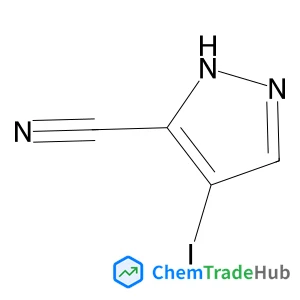


N,N-dimethyl(piperidin-4-yl)methanamine hydrochloride
CAS Number:
172281-72-0
Molecular Formula:
C8H20Cl2N2
![2-(Methylsulfonyl)-2,4,5,6-tetrahydropyrrolo[3,4-c]pyrazole structure](https://static.chemtradehub.com/structs/122/1226781-80-1-09d5.webp "2-(Methylsulfonyl)-2,4,5,6-tetrahydropyrrolo[3,4-c]pyrazole structure")
2-(Methylsulfonyl)-2,4,5,6-tetrahydropyrrolo[3,4-c]pyrazole
CAS Number:
1226781-80-1
Molecular Formula:
C6H9N3O2S
Recommended Suppliers





Disclaimer
This page provides academic journal information for reference and research purposes only. We are not affiliated with any journal publishers and do not handle publication submissions. For publication-related inquiries, please contact the respective journal publishers directly.
If you notice any inaccuracies in the information displayed, please contact us at support@chemtradehub.com. We will promptly review and address your concerns.