


Synthesis of hydroxypropyl cellulose derivatives modified with amphiphilic diblock copolymer side-chains for the slow release of volatile molecules
Literature Information
Publication Date
2011-07-08
DOI
10.1039/C1PY00195G
Impact Factor
5.582
Authors
Damien Loïc Berthier, Andreas Herrmann, Lahoussine Ouali
View Original
Abstract
Hydroxypropyl cellulose (HPC) was used as carrier material to prepare comb-like grafted block copolymers having an amphiphilic core–shell structure. The hydroxyl groups of HPC were partially protected with trimethylsilyl groups and the free OH groups used to initiate the ring opening polymerisation (ROP) of L-lactide. The end-chain of the grafted hydrophobic poly(L-lactide) (PLLA) chain was then functionalised with 2-bromopropionyl bromide which was used to polymerise the tert-butyl acrylate (tBA) monomer by atom transfer radical polymerisation (ATRP). The hydrophobic PtBA block was then hydrolysed to a hydrophilic poly(acrylic acid) (PAA) block. The resulting amphiphilic grafted copolymer HPC-g-(PLLA-b-PAA) was dissolved in an ethanol/water mixture (9 : 1), such as a typical Eau de Toilette (EdT) formulation. Atomic force microscopy (AFM) and size measurements confirmed the presence of core–shell structures in solution. A significant swelling of HPC-g-(PLLA-b-PAA) in the presence of a volatile bioactive molecule, methyl 2,2-dimethyl-6-methylene-1-cyclohexanecarboxylate (Romascone®), was observed by dynamic light scattering (DLS). Furthermore, the presence of HPC-g-(PLLA-b-PAA) significantly decreased the evaporation rate of Romascone®, thus serving as an efficient fragrance delivery system in formulations with high ethanol content.
Recommended Journals

Saudi Pharmaceutical Journal

Journal of Saudi Chemical Society

Nature Medicine

Russian Chemical Bulletin

Current Opinion in Colloid & Interface Science

Organic Process Research & Development

Russian Journal of General Chemistry

Russian Journal of Coordination Chemistry

Journal of Peptide Science

Chemical Communications
Related Literature
Synthesis and characterization of biodegradable polyester/polyether resins via Michael-type addition
Stefan Theiler, Stefanos E. Diamantouros, Stefan Jockenhoevel, Helmut Keul, Martin Moeller
2011-08-17
Paper
DOI: 10.1039/C1PY00262G
Functionalized nanoscale through microscale polypeptide stabilized emulsions for display of biomolecules
Jarrod A. Hanson
2011-03-15
Communication
DOI: 10.1039/C1PY00045D
Phase behavior and self-assembly of PSn(P2VP-b-PAA)n multiarmed multisegmented star terpolymers with ampholytic arms
Zacharoula Iatridi, Yuri Roiter, Sergiy Minko
2011-06-29
Paper
DOI: 10.1039/C1PY00090J
Controlled synthesis of branched poly(vinyl acetate)s by xanthate-mediated RAFT self-condensing vinyl (co)polymerization
Nicolas Blanchard
2011-07-27
Paper
DOI: 10.1039/C1PY00231G
Red light-emitting hyperbranched fluorene-alt-carbazolecopolymers with an iridium complex as the core
Ting Guo, Rong Guan, Jianhua Zou, Jie Liu, Lei Ying, Wei Yang, Hongbin Wu, Yong Cao
2011-07-08
Paper
DOI: 10.1039/C1PY00075F
Examining the UV-vis absorption of RAFT chain transfer agents and their use for polymer analysis
Katja Skrabania, Anna Miasnikova, Achille Mayelle Bivigou-Koumba, Daniel Zehm
2011-06-17
Paper
DOI: 10.1039/C1PY00173F
Exfoliation of layered silicates through in situ controlled free radical polymerization mediated by a silicate-anchored initiator
Shi-Min Shau, Tzong-Yuan Juang, Wei-He Ting, Min-Yu Wu, Shenghong A. Dai
2011-07-29
Paper
DOI: 10.1039/C1PY00238D
A furan-bridged D-π-A copolymer with deep HOMO level: synthesis and application in polymer solar cells
Xiaochen Wang, Maojie Zhang, Yongfang Li, Xiaoyu Li, Haiqiao Wang
2011-10-13
Paper
DOI: 10.1039/C1PY00364J
Modular synthesis of poly(perylene bisimides) using click chemistry: a comparative study
Andreas S. Lang, Mukundan Thelakkat
2011-07-13
Paper
DOI: 10.1039/C1PY00191D
You might also like
Compound Q&A
What is 3-Fluoro-2-methylbenzylamine (CAS: 771573-36-5)?
3-Fluoro-2-methylbenzylamine is an organic compound with the CAS number 771573-3...
771573-36-53-Fluoro-2-methylben...
Compound Q&A
Is Tert-butyl 2-(oxetan-3-ylidene)acetate (CAS: 1207175-03-8) safe?
Tert-butyl 2-(oxetan-3-ylidene)acetate is considered safe for its intended uses ...
1207175-03-8Tert-butyl 2-(oxetan...
Compound Q&A
What precautions should be taken when handling 4-Acetyl-2-fluorobenzonitrile (CAS: 214760-18-6)?
Proper personal protective equipment (PPE) such as gloves, goggles, and a lab co...
214760-18-64-Acetyl-2-fluoroben...
Compound Q&A
How is 2-Ethyl-4-methyl-1,3-thiazole (CAS: 15679-12-6) typically synthesized?
2-Ethyl-4-methyl-1,3-thiazole is commonly synthesized via the reaction of thiour...
15679-12-62-Ethyl-4-methyl-1,3...
Compound Q&A
How should 5',5''-([2,2'-Bithiophene]-5,5'-diyl)bis(([1,1':3',1''-terphenyl]-4,4''-dicarboxylic acid)) (CAS: 1227780-71-3) be stored?
This compound should be stored in a cool, dry place away from direct sunlight an...
1227780-71-35',5''''-([2,2'-Bith...
Compound Q&A
What regulatory guidelines apply to L-Lysine Acetate Salt (CAS: 52315-92-1)?
L-Lysine Acetate Salt (CAS: 52315-92-1) is subject to various regulatory guideli...
52315-92-1L-LYSINE ACETATE SAL...
Compound Q&A
Is 6-Fluoro-3-hydroxy-2-pyrazinecarboxamide (CAS: 259793-96-9) safe?
6-Fluoro-3-hydroxy-2-pyrazinecarboxamide (CAS: 259793-96-9) is generally conside...
259793-96-96-Fluoro-3-hydroxy-2...
Compound Q&A
What are the physical and chemical properties of 1,1'-Sulfonylbis(1H-imidazole) (CAS: 7189-69-7)?
1,1'-Sulfonylbis(1H-imidazole) is a crystalline solid with a molecular weight of...
7189-69-71,1'-Sulfonylbis(1H-...
Compound Q&A
What industries use 4-methyl-7-nitro-1H-indole-3-carbonitrile (CAS: 289483-82-5)?
4-Methyl-7-nitro-1H-indole-3-carbonitrile (CAS: 289483-82-5) is primarily used i...
289483-82-54-methyl-7-nitro-1H-...
Compound Q&A
How should waste containing 5-Bromo-3-indolyl-beta-galactoside (CAS: 97753-82-7) be handled?
Waste containing 5-Bromo-3-indolyl-beta-galactoside (CAS: 97753-82-7) should be ...
97753-82-75-Bromo-3-indolyl-be...
Source Journal
Polymer Chemistry

CiteScore:
8.6
Self-citation Rate:
7.3%
Articles per Year:
457
Polymer Chemistry welcomes submissions in all areas of polymer science that have a strong focus on macromolecular chemistry. Manuscripts may cover a broad range of fields, yet no direct application focus is required.
Recommended Compounds
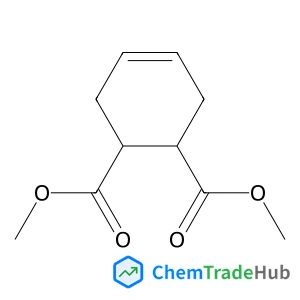
4-Cyclohexene-1,2-dicarboxylic acid, 1,2-dimethyl ester, (1R,2R)-rel-
CAS Number:
17673-68-6
Molecular Formula:
C10H14O4
![[4-Chloro-3-(diethylcarbamoyl)phenyl]boronic acid structure](https://static.chemtradehub.com/structs/871/871332-68-2-0e3b.webp "[4-Chloro-3-(diethylcarbamoyl)phenyl]boronic acid structure")
[4-Chloro-3-(diethylcarbamoyl)phenyl]boronic acid
CAS Number:
871332-68-2
Molecular Formula:
C11H15BClNO3
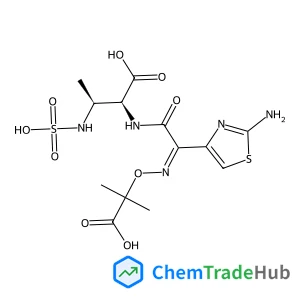
Aztreonam USP Related Compound A (Open-ring Aztreonam)
CAS Number:
87500-74-1
Molecular Formula:
C13H19N5O9S2
Recommended Suppliers




Disclaimer
This page provides academic journal information for reference and research purposes only. We are not affiliated with any journal publishers and do not handle publication submissions. For publication-related inquiries, please contact the respective journal publishers directly.
If you notice any inaccuracies in the information displayed, please contact us at support@chemtradehub.com. We will promptly review and address your concerns.