












Reversible cross-linking of hydrophilic dynamic covalent polymers with radically exchangeable alkoxyamines in aqueous media
Literature Information
Publication Date
2011-06-29
DOI
10.1039/C1PY00176K
Impact Factor
5.582
Authors
Jing Su, Yoshifumi Amamoto, Masamichi Nishihara
View Original
Abstract
Reversible cross-linking of alkoxyamine-containing hydrophilic dynamic covalent polymers in aqueous media has been accomplished. Water-soluble polymers with alkoxyamine units in the side chains were synthesized by radical copolymerization of 2-(dimethylamino)ethyl methacrylate and methacrylic esters with alkoxyamine units, and subsequent protonation of dimethylaminoethyl groups by hydrochloric acid. By heating the polymers in water at 100 °C in a closed system, hydrogels were formed by radical exchange reactions. Because the radical reactions are tolerant of water, the exchange reactions of alkoxyamine units in the side chain caused the cross-linking reaction even in aqueous media. Cross-linking behaviors depended on the amounts of alkoxyamine units in the polymers and the reaction concentrations. A de-cross-linking reaction was also accomplished by radical exchange reaction between the cross-linked polymer and added hydrophilic alkoxyamine compound. This dynamic cross-linking nature in aqueous media provides a foundation for a wide range of polymer reactions, and it can be applied to environmentally benign dynamic materials.
Recommended Journals
Related Literature
Synthesis and characterization of molecularly imprinted polymer of N-maleoylchitosan-grafted-2-acrylamido-2-methylpropanesulfonic acid and its controlled delivery and recognition of bovine serum albumin
T. S. Anirudhan, S. Sandeep
2011-06-09
Paper
DOI: 10.1039/C1PY00059D
Catalytic chain transfer and its derived macromonomers
Johan P. A. Heuts, Niels M. B. Smeets
2011-07-26
Review Article
DOI: 10.1039/C1PY00224D
Synthesis of hydroxypropyl cellulose derivatives modified with amphiphilic diblock copolymer side-chains for the slow release of volatile molecules
Damien Loïc Berthier, Andreas Herrmann, Lahoussine Ouali
2011-07-08
Paper
DOI: 10.1039/C1PY00195G
Synthesis and application of new CO2-soluble vinyl pivalate hydrocarbon stabilisers viaRAFT polymerisation
Natasha A. Birkin, Nicholas J. Arrowsmith, Eun Ju Park, Alexandre P. Richez, Steven M. Howdle
2011-04-20
Paper
DOI: 10.1039/C1PY00062D
Exfoliation of layered silicates through in situ controlled free radical polymerization mediated by a silicate-anchored initiator
Shi-Min Shau, Tzong-Yuan Juang, Wei-He Ting, Min-Yu Wu, Shenghong A. Dai
2011-07-29
Paper
DOI: 10.1039/C1PY00238D
Nitroxide mediated controlled synthesis of glycidyl methacrylate-rich copolymers enabled by SG1-based alkoxyamines bearing succinimidyl ester groups
Ali Moayeri, Benoit Lessard, Milan Maric
2011-06-22
Paper
DOI: 10.1039/C1PY00190F
Enhancing the rigidity of a network polymer of intrinsic microporosity by the combined use of phthalocyanine and triptycene components,‡
Mohammed Hashem, C. Grazia Bezzu, Benson M. Kariuki, Neil B. McKeown
2011-08-19
Communication
DOI: 10.1039/C1PY00288K
Sequential click synthesis of hyperbranched polymersvia the A2 + CB2 approach
Jin Han, Bo Zhao, Yanqin Gao, Aijin Tang, Chao Gao
2011-07-29
Communication
DOI: 10.1039/C1PY00235J
Functional poly(vinylidene fluoride) copolymer membranesvia surface-initiated thiol–ene click reactions
Tao Cai, Rong Wang, K. G. Neoh, E. T. Kang
2011-05-27
Paper
DOI: 10.1039/C1PY00106J
Tunable geometry and wettability of organosilane nanostructured surfaces by water content
Meihua Jin, Jing Wang, Yan Hao, Mingyi Liao, Yong Zhao
2011-06-22
Communication
DOI: 10.1039/C1PY00246E
You might also like
Compound Q&A
What is 3-Fluoro-2-methylbenzylamine (CAS: 771573-36-5)?
3-Fluoro-2-methylbenzylamine is an organic compound with the CAS number 771573-3...
771573-36-53-Fluoro-2-methylben...
Compound Q&A
Is Tert-butyl 2-(oxetan-3-ylidene)acetate (CAS: 1207175-03-8) safe?
Tert-butyl 2-(oxetan-3-ylidene)acetate is considered safe for its intended uses ...
1207175-03-8Tert-butyl 2-(oxetan...
Compound Q&A
What precautions should be taken when handling 4-Acetyl-2-fluorobenzonitrile (CAS: 214760-18-6)?
Proper personal protective equipment (PPE) such as gloves, goggles, and a lab co...
214760-18-64-Acetyl-2-fluoroben...
Compound Q&A
How is 2-Ethyl-4-methyl-1,3-thiazole (CAS: 15679-12-6) typically synthesized?
2-Ethyl-4-methyl-1,3-thiazole is commonly synthesized via the reaction of thiour...
15679-12-62-Ethyl-4-methyl-1,3...
Compound Q&A
How should 5',5''-([2,2'-Bithiophene]-5,5'-diyl)bis(([1,1':3',1''-terphenyl]-4,4''-dicarboxylic acid)) (CAS: 1227780-71-3) be stored?
This compound should be stored in a cool, dry place away from direct sunlight an...
1227780-71-35',5''''-([2,2'-Bith...
Compound Q&A
What regulatory guidelines apply to L-Lysine Acetate Salt (CAS: 52315-92-1)?
L-Lysine Acetate Salt (CAS: 52315-92-1) is subject to various regulatory guideli...
52315-92-1L-LYSINE ACETATE SAL...
Compound Q&A
Is 6-Fluoro-3-hydroxy-2-pyrazinecarboxamide (CAS: 259793-96-9) safe?
6-Fluoro-3-hydroxy-2-pyrazinecarboxamide (CAS: 259793-96-9) is generally conside...
259793-96-96-Fluoro-3-hydroxy-2...
Compound Q&A
What are the physical and chemical properties of 1,1'-Sulfonylbis(1H-imidazole) (CAS: 7189-69-7)?
1,1'-Sulfonylbis(1H-imidazole) is a crystalline solid with a molecular weight of...
7189-69-71,1'-Sulfonylbis(1H-...
Compound Q&A
What industries use 4-methyl-7-nitro-1H-indole-3-carbonitrile (CAS: 289483-82-5)?
4-Methyl-7-nitro-1H-indole-3-carbonitrile (CAS: 289483-82-5) is primarily used i...
289483-82-54-methyl-7-nitro-1H-...
Compound Q&A
How should waste containing 5-Bromo-3-indolyl-beta-galactoside (CAS: 97753-82-7) be handled?
Waste containing 5-Bromo-3-indolyl-beta-galactoside (CAS: 97753-82-7) should be ...
97753-82-75-Bromo-3-indolyl-be...
Source Journal
Polymer Chemistry

CiteScore:
8.6
Self-citation Rate:
7.3%
Articles per Year:
457
Polymer Chemistry welcomes submissions in all areas of polymer science that have a strong focus on macromolecular chemistry. Manuscripts may cover a broad range of fields, yet no direct application focus is required.
Recommended Compounds
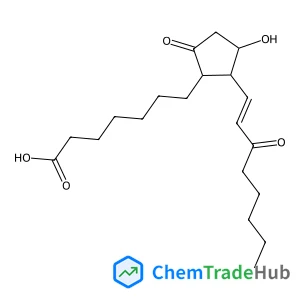
(11alpha,13E)-11-Hydroxy-9,15-dioxoprost-13-en-1-oic acid
CAS Number:
22973-19-9
Molecular Formula:
C20H32O5
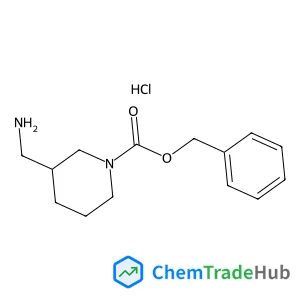
Benzyl 3-(aminomethyl)piperidine-1-carboxylate hydrochloride
CAS Number:
1186663-23-9
Molecular Formula:
C14H21ClN2O2
Recommended Suppliers






Disclaimer
This page provides academic journal information for reference and research purposes only. We are not affiliated with any journal publishers and do not handle publication submissions. For publication-related inquiries, please contact the respective journal publishers directly.
If you notice any inaccuracies in the information displayed, please contact us at support@chemtradehub.com. We will promptly review and address your concerns.