











![9,9'-Spirobi[fluoren]-2-amine structure](https://static.chemtradehub.com/structs/118/118951-68-1-0d14.webp "9,9'-Spirobi[fluoren]-2-amine structure")
Extinction, absorption, and scattering of light by plasmonic spheres embedded in an absorbing host medium
Literature Information
Publication Date
2021-09-15
DOI
10.1039/D1CP03057D
Impact Factor
3.676
Authors
View Original
Abstract
Although the general Lorenz–Mie formalism for spheres in an absorbing host has been developed, no correct analytical expressions in the small-particle limit have been published so far. Here, we derive two sets of analytical expressions for the extinction, absorption, and far- and near-field scattering cross sections of small particles embedded in an absorbing host. One set is a modification of the electrostatic approximation (EA) for an absorbing host, whereas the other represents an improved electrostatic approximation (IEA) based on the generalized Lorenz–Mie theory and a new form of Mie coefficients for the internal field expansion. To illustrate the accuracy of the derived approximations, we consider Au and Ag nanospheres embedded in model hosts (real part of the refractive index, 1.33; imaginary part, 0–0.3), in a lossless poly(methyl methacrylate) (PMMA), and a lossy poly(3-hexylthiophene) (P3HT) matrix. In general, the IEA cross sections agree with those calculated using Lorenz–Mie theory if the particle diameter is not greater than 50 nm. Two small-particle limits are found for the near-field scattering cross sections. When host absorption is negligible, the scattering efficiency scales as the fourth power of the size parameter. In contrast, for nonzero absorption, the scattering efficiency scales as the first power of the size parameter. For a spectrally independent host, an increase in host absorption broadens and suppresses plasmonic peaks. We found an exception to this general tendency for near-field scattering by small (10–50 nm) particles; for these, an increase in host absorption increases the scattering peak. This surprising behavior is explained analytically. For 10–30 nm Au particles in the PMMA and P3HT matrixes, the EA and IEA data perfectly agree with the exact Lorenz–Mie simulations, in contrast to the previously reported conclusions. In particular, replacing PMMA with P3HT shifts the plasmonic peaks of the 10 nm particles from 540 nm to 650 nm and strongly enhances near- and far-field scattering. However, far-field scattering does not contribute to the extinction derived from the generalized optical theorem.
Recommended Journals
Related Literature
Aggregation behavior of gemini surfactants and their interaction with macromolecules in aqueous solution
Yuchun Han, Yilin Wang
2011-01-12
Perspective
DOI: 10.1039/C0CP01196G
Geometric and electronic effects on hydrogenation of cinnamaldehyde over unsupported Pt-based nanocrystals
William O. Oduro, Nick Cailuo, Kai Man K. Yu, Hongwei Yang, Shik Chi Tsang
2011-01-07
Paper
DOI: 10.1039/C0CP01832E
Stepwise vs. concerted pathways in scandium ion-coupled electron transfer from superoxide ion to p-benzoquinone derivatives
Tomonori Kawashima, Kei Ohkubo
2011-01-06
Paper
DOI: 10.1039/C0CP00916D
The stabilization of charged states at phenazine-like units in polyaniline under p-doping: an in situATR-FTIR spectroelectrochemical study
Evgenia Dmitrieva, Lothar Dunsch
2011-01-05
Paper
DOI: 10.1039/C0CP01264E
Fullerene derivative acceptors for high performance polymer solar cells
Youjun He, Yongfang Li
2010-12-22
Perspective
DOI: 10.1039/C0CP01178A
Colloidal metal nanoparticles as a component of designed catalyst
Chun-Jiang Jia, Ferdi Schüth
2011-01-18
Perspective
DOI: 10.1039/C0CP02680H
Bound states of the positron with nitrile species with a configuration interaction multi-component molecular orbital approach
Masanori Tachikawa, Yukiumi Kita, Robert J. Buenker
2010-12-10
Paper
DOI: 10.1039/C0CP01650K
Mechanistic differences between methanol and dimethyl ethercarbonylation in side pockets and large channels of mordenite
Mercedes Boronat, Cristina Martínez, Avelino Corma
2011-01-19
Paper
DOI: 10.1039/C0CP01996H
Photocatalysis of PbS quantum dots in a quantum dot-sensitized solar cell: photovoltaic performance and characteristics
Beibei Ma, Liduo Wang, Haopeng Dong, Rui Gao, Yi Geng, Yifeng Zhu, Yong Qiu
2010-12-16
Communication
DOI: 10.1039/C0CP02415E
Mesoporous carbon capsules as electrode materials in electrochemical double layer capacitors
Shanthi Murali, Daniel R. Dreyer, Patricia Valle-Vigón, Meryl D. Stoller, Yanwu Zhu, Cornelio Morales, Antonio B. Fuertes, Christopher W. Bielawski, Rodney S. Ruoff
2010-12-14
Communication
DOI: 10.1039/C0CP02557G
You might also like
Compound Q&A
How is Ethyl 4-chlorothieno[2,3-b]pyridine-5-carboxylate (CAS: 59713-58-5) typically synthesized?
Ethyl 4-chlorothieno[2,3-b]pyridine-5-carboxylate (CAS: 59713-58-5) can be synth...
59713-58-5Ethyl 4-chlorothieno...
Compound Q&A
What regulatory guidelines apply to 5-Methyl-1H-indole-3-carbaldehyde (CAS: 52562-50-2)?
5-Methyl-1H-indole-3-carbaldehyde (CAS: 52562-50-2) is subject to various regula...
52562-50-25-Methyl-1H-indole-3...
Compound Q&A
What are the physical and chemical properties of (1,3-Dimethyl-2,4-dioxo-1,2,3,4-tetrahydro-5-pyrimidinyl)boronic acid (CAS: 223418-73-3)?
(1,3-Dimethyl-2,4-dioxo-1,2,3,4-tetrahydro-5-pyrimidinyl)boronic acid is a white...
223418-73-3(1,3-Dimethyl-2,4-di...
Compound Q&A
How should waste containing Sulfocostunolide A (CAS: 1016983-51-9) be handled?
Waste containing Sulfocostunolide A (CAS: 1016983-51-9) should be handled with c...
1016983-51-9Sulfocostunolide A
Compound Q&A
What precautions should be taken when handling Murraxocin (CAS: 88478-44-8)?
When handling Murraxocin (CAS: 88478-44-8), ensure proper personal protective eq...
88478-44-8Murraxocin
Compound Q&A
What are the physical and chemical properties of Formvar (CAS: 63148-64-1)?
Formvar (CAS: 63148-64-1) is an alkyd resin characterized by a high molecular we...
63148-64-1Formvar(R)
Compound Q&A
Is (S)-4-benzyl-2-((benzyloxy)methyl)morpholine (CAS: 205242-66-6) safe?
(S)-4-benzyl-2-((benzyloxy)methyl)morpholine is generally safe when handled with...
205242-66-6(S)-4-benzyl-2-((ben...
Compound Q&A
What industries use Methyl 1-(5-bromo-2-pyrimidinyl)cyclopropanecarboxylate (CAS: 1447607-69-3)?
Methyl 1-(5-bromo-2-pyrimidinyl)cyclopropanecarboxylate (CAS: 1447607-69-3) is p...
1447607-69-3Methyl 1-(5-bromo-2-...
Compound Q&A
Is 2-Methyl-1-phenyl-1-propanamine hydrochloride (CAS: 24290-47-9) safe?
2-Methyl-1-phenyl-1-propanamine hydrochloride (CAS: 24290-47-9) is generally con...
24290-47-92-Methyl-1-phenyl-1-...
Compound Q&A
How is 3-(4-Bromophenyl)-2-methylpropanoic acid (CAS: 66735-01-1) typically synthesized?
3-(4-Bromophenyl)-2-methylpropanoic acid is synthesized through a multi-step pro...
66735-01-13-(4-Bromophenyl)-2-...
Source Journal
Physical Chemistry Chemical Physics

CiteScore:
5.5
Self-citation Rate:
10.3%
Articles per Year:
3036
Physical Chemistry Chemical Physics (PCCP) is an international journal co-owned by 19 physical chemistry and physics societies from around the world. This journal publishes original, cutting-edge research in physical chemistry, chemical physics and biophysical chemistry. To be suitable for publication in PCCP, articles must include significant innovation and/or insight into physical chemistry; this is the most important criterion that reviewers and Editors will judge against when evaluating submissions. The journal has a broad scope and welcomes contributions spanning experiment, theory, computation and data science. Topical coverage includes spectroscopy, dynamics, kinetics, statistical mechanics, thermodynamics, electrochemistry, catalysis, surface science, quantum mechanics, quantum computing and machine learning. Interdisciplinary research areas such as polymers and soft matter, materials, nanoscience, energy, surfaces/interfaces, and biophysical chemistry are welcomed if they demonstrate significant innovation and/or insight into physical chemistry. Joined experimental/theoretical studies are particularly appreciated when complementary and based on up-to-date approaches.
Recommended Compounds
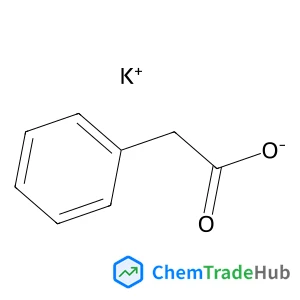
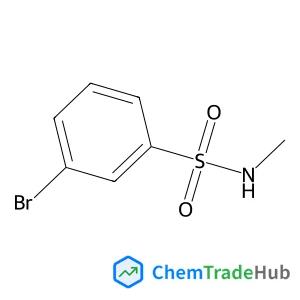
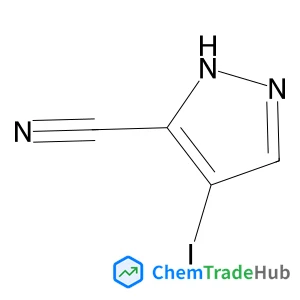
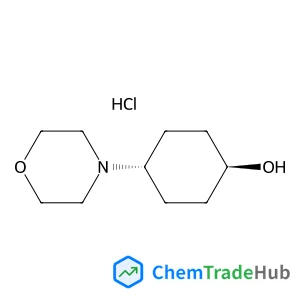
trans-4-(4-Morpholinyl)cyclohexanol hydrochloride (1:1)
CAS Number:
1588441-09-1
Molecular Formula:
C10H20ClNO2
Recommended Suppliers







Disclaimer
This page provides academic journal information for reference and research purposes only. We are not affiliated with any journal publishers and do not handle publication submissions. For publication-related inquiries, please contact the respective journal publishers directly.
If you notice any inaccuracies in the information displayed, please contact us at support@chemtradehub.com. We will promptly review and address your concerns.