












Combined transparency and optical nonlinearity enhancement in flexible covalent multimers by operating through-space interactions between dipolar chromophores
Literature Information
Publication Date
2014-03-17
DOI
10.1039/C4CP00715H
Impact Factor
3.676
Authors
Ravindra Pandey, Francesca Terenziani, Puspendu K. Das
View Original
Abstract
Subtle manipulation of mutual repulsion and polarisation effects between polar and polarisable chromophores forced in closed proximity allows achieving major (100%) enhancement of the first hyperpolarisability together with increased transparency, breaking the well-known nonlinearity–transparency trade-off paradigm.
Related Literature
A differential extended gate-AlGaN/GaN HEMT sensor for real-time detection of ionic pollutants
Bin Miao, Jian Zhang, Bin Zeng, Jiadong Li
2019-07-16
Paper
DOI: 10.1039/C9AY01019J
Droplet incubation and splitting in open microfluidic channels
Samuel B. Berry, Jing J. Lee, Jean Berthier, Erwin Berthier
2019-08-28
Paper
DOI: 10.1039/C9AY00758J
A strategy for rapid identification of healthy Tegillarca granosa from among those contaminated with unspecified heavy metals using infrared spectroscopy
Xi Chen, Leiming Yuan, Xiaojing Chen, Yijian Shi, Dehua Zhu
2017-06-30
Paper
DOI: 10.1039/C7AY00912G
Quantum dot-based Baijiu fluorescent identification sensor array jointly verified by multivariate analysis and radial basis function neural network
Jiawei Li, Pan Li, Changjun Hou, Danqun Huo, Yixia Yang
2019-09-02
Paper
DOI: 10.1039/C9AY01577A
Highly chemoselective difluoromethylative homologation of iso(thio)cyanates: expeditious access to unprecedented α,α-difluoro(thio)amides
Margherita Miele, Rosarita D’Orsi, Vellaisamy Sridharan, Wolfgang Holzer, Vittorio Pace
2019-10-11
Communication
DOI: 10.1039/C9CC06929A
Cu(i)–SNS complexes for outer-sphere hydroboration and hydrosilylation of carbonyls
Matthew R. Elsby, R. Tom Baker
2019-10-28
Communication
DOI: 10.1039/C9CC07266G
Salting-out-assisted liquid–liquid extraction of 5-hydroxymethylfurfural from honey and the determination of 5-hydroxymethylfurfural by high-performance liquid chromatography
Wenbin Chen, Siyuan Wu, Jianing Zhang, Fengjie Yu, Xijuan Tu
2019-09-03
Paper
DOI: 10.1039/C9AY01770D
Magnetite nanoparticles coated with surfactant Sylgard 309 and its application as an adsorbent for paraben extraction from pharmaceutical and water samples
Marinah Mohd Ariffin, Norseyrihan Mohd Sohaimi, Beh Shiuan Yih, Noorashikin Md Saleh
2019-07-23
Paper
DOI: 10.1039/C9AY01147A
A targetable fluorescent probe for imaging of mitochondrial viscosity in living cells
Lixuan Dai, Mingguang Ren, Zihong Li, Li Wang, Weiying Lin
2019-09-03
Communication
DOI: 10.1039/C9AY01575B
You might also like
Compound Q&A
What are the main uses of 1H-Indazole-6-carbonitrile (CAS: 141290-59-7)?
1H-Indazole-6-carbonitrile finds applications in pharmaceuticals, where it serve...
141290-59-71H-Indazole-6-carbon...
Compound Q&A
How should waste containing Dioctyl (2E)-2-butenedioate (CAS: 2997-85-5) be handled?
Waste containing Dioctyl (2E)-2-butenedioate (CAS: 2997-85-5) should be collecte...
2997-85-5Dioctyl (2E)-2-buten...
Compound Q&A
What industries use Sodium [(1,2-benzoxazol-3-ylmethyl)sulfonyl]azanide (CAS: 68291-98-5)?
Sodium [(1,2-benzoxazol-3-ylmethyl)sulfonyl]azanide is primarily used in pharmac...
68291-98-5Sodium [(1,2-benzoxa...
Compound Q&A
Are there alternatives to Dimethyl 4-(4,4,5,5-tetramethyl-1,3,2-dioxaborolan-2-yl)-2,6-pyridinedicarboxylate (CAS: 741709-66-0) in synthesis?
Dimethyl 4-(4,4,5,5-tetramethyl-1,3,2-dioxaborolan-2-yl)-2,6-pyridinedicarboxyla...
741709-66-0Dimethyl 4-(4,4,5,5-...
Compound Q&A
How should waste containing 2-Fluoro-6-hydrazinopyridine (CAS: 80714-39-2) be handled?
Waste containing 2-Fluoro-6-hydrazinopyridine (CAS: 80714-39-2) should be manage...
80714-39-22-Fluoro-6-hydrazino...
Compound Q&A
What is 6-Formyl-2-pyridinecarboxylic acid (CAS: 499214-11-8)?
6-Formyl-2-pyridinecarboxylic acid is an organic compound with the molecular for...
499214-11-86-Formyl-2-pyridinec...
Compound Q&A
What is the market or research trend for 3-(3,4-dimethoxyphenyl)-2,5-dimethyl-N-(2-morpholin-4-ylethyl)pyrazolo[1,5-a]pyrimidin-7-amine (CAS: 900874-91-1)?
Research trends for this compound indicate a focus on its potential applications...
900874-91-13-(3,4-dimethoxyphen...
Compound Q&A
How is 9H-Tribenzo[b,d,f]azepine (CAS: 29875-73-8) typically synthesized?
9H-Tribenzo[b,d,f]azepine is typically synthesized via a multi-step process invo...
29875-73-89H-Tribenzo[b,d,f]az...
Compound Q&A
How is 1-Cyclopropyl-7-ethoxy-6-fluoro-8-methoxy-4-oxo-1,4-dihydro-3-quinolinecarboxylic acid (CAS: 1797982-51-4) typically synthesized?
1-Cyclopropyl-7-ethoxy-6-fluoro-8-methoxy-4-oxo-1,4-dihydro-3-quinolinecarboxyli...
1797982-51-41-Cyclopropyl-7-etho...
Compound Q&A
How should waste containing Methyl 3-oxo-1,2,3,4-tetrahydro-6-quinoxalinecarboxylate (CAS: 671820-52-3) be handled?
Waste containing Methyl 3-oxo-1,2,3,4-tetrahydro-6-quinoxalinecarboxylate (CAS: ...
671820-52-3Methyl 3-oxo-1,2,3,4...
Source Journal
Physical Chemistry Chemical Physics

CiteScore:
5.5
Self-citation Rate:
10.3%
Articles per Year:
3036
Physical Chemistry Chemical Physics (PCCP) is an international journal co-owned by 19 physical chemistry and physics societies from around the world. This journal publishes original, cutting-edge research in physical chemistry, chemical physics and biophysical chemistry. To be suitable for publication in PCCP, articles must include significant innovation and/or insight into physical chemistry; this is the most important criterion that reviewers and Editors will judge against when evaluating submissions. The journal has a broad scope and welcomes contributions spanning experiment, theory, computation and data science. Topical coverage includes spectroscopy, dynamics, kinetics, statistical mechanics, thermodynamics, electrochemistry, catalysis, surface science, quantum mechanics, quantum computing and machine learning. Interdisciplinary research areas such as polymers and soft matter, materials, nanoscience, energy, surfaces/interfaces, and biophysical chemistry are welcomed if they demonstrate significant innovation and/or insight into physical chemistry. Joined experimental/theoretical studies are particularly appreciated when complementary and based on up-to-date approaches.
Recommended Compounds
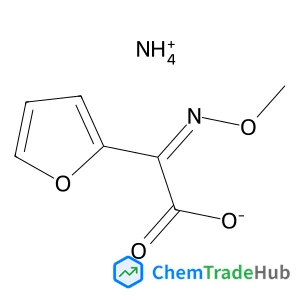
Ammonium (Z)-2-(furan-2-yl)-2-(methoxyimino)acetate
CAS Number:
97148-39-5
Molecular Formula:
C7H10N2O4
![Sodium 3-[(E)-(4-anilinophenyl)diazenyl]benzenesulfonate structure](https://static.chemtradehub.com/structs/587/587-98-4-035f.webp "Sodium 3-[(E)-(4-anilinophenyl)diazenyl]benzenesulfonate structure")
Sodium 3-[(E)-(4-anilinophenyl)diazenyl]benzenesulfonate
CAS Number:
587-98-4
Molecular Formula:
C18H14N3NaO3S
Recommended Suppliers




Disclaimer
This page provides academic journal information for reference and research purposes only. We are not affiliated with any journal publishers and do not handle publication submissions. For publication-related inquiries, please contact the respective journal publishers directly.
If you notice any inaccuracies in the information displayed, please contact us at support@chemtradehub.com. We will promptly review and address your concerns.