












Designing patchy particles for optimum interfacial activity
Literature Information
Publication Date
2014-02-11
DOI
10.1039/C3CP55512G
Impact Factor
3.676
Authors
Hossein Rezvantalab
View Original
Abstract
We study the adsorption of spherical patchy particles to a flat oil–water interface for their potential applications as interface stabilizers. Chemical heterogeneity in form of single and double patches of different sizes is introduced on the surface of a homogeneous particle to induce an amphiphilic character. For a single well-defined patch, we have developed theoretical criteria for designing particles with the maximum degree of surface activity based on any given wettability conditions. We also evaluate the interfacial behavior of spherical particles with two symmetric patches. Depending on the amphiphilicity and size of the patches, our numerical calculations indicate that such particles at equilibrium can orient so their patches are either parallel or normal to the interface. In case of normal-patch orientation, the interface deforms due to heterogeneity along the contact line, leading to quadrupolar capillary interactions between neighboring particles. We demonstrate that the double-patch design can enhance the surface activity for contact angles close to 90°, while a single-patch pattern is preferred in case of highly amphiphilic particles.
Related Literature
Optical nanosensors—smart tools in bioanalytics
Sergey M. Borisov, Ingo Klimant
2008-07-30
Highlight
DOI: 10.1039/B805432K
Use of the thyrocyte sodium iodide symporter as the basis for a perchlorate cell-based assay
Irene E. MacAllister, Michael G. Jakoby IV, Bruce Geryk, Roger L. Schneider, Donald M. Cropek
2008-10-30
Paper
DOI: 10.1039/B802710B
Amperometric quantification based on serial dilution microfluidic systems
Monique Sigaud, Olivier Vittori, Naim Ouaini
2008-12-02
Paper
DOI: 10.1039/B811629F
Preparation and characterization of silica confined ionic liquids as chromatographic stationary phases through surface radical chain-transfer reaction
Hongdeng Qiu, Licheng Wang, Xia Liu, Shengxiang Jiang
2008-11-27
Paper
DOI: 10.1039/B809125K
The investigation of photo-induced chemiluminescence on Co2+-doped TiO2nanoparticles and its analytical application
Guixin Li, Hongyan Nan, Xingwang Zheng
2009-03-25
Paper
DOI: 10.1039/B816226C
Dithizone nanofiber-coated membrane for filtration-enrichment and colorimetric detection of trace Hg(ii) ion
Toshishige M. Suzuki
2009-04-23
Paper
DOI: 10.1039/B816461D
Differentiation of liquid analytes in gel films by permeability-modulated double-layer chemo-chips
Aniket R. Thete, G. Alexander Gross, J. Michael Koehler
2008-11-15
Paper
DOI: 10.1039/B808257J
You might also like
Compound Q&A
Are there alternatives to 1-(4-Chlorophenyl)-N-hydroxymethanimine (CAS: 3848-36-0) in synthesis?
When considering alternatives to 1-(4-Chlorophenyl)-N-hydroxymethanimine (CAS: 3...
3848-36-01-(4-Chlorophenyl)-N...
Compound Q&A
How should (1R,9S,10S,12S,14E,16S,19R,20R,21S,22R)-3,9,21-Trihydroxy-5,10,12,14,16,20,22-heptamethyl-23,24-dioxatetracyclo[17.3.1.1~6,9~.0~2,7~]tetracosa-2,5,7,14-tetraen-4-one (CAS: 183202-73-5) be stored?
This compound should be stored in a cool, dry place away from direct sunlight. I...
183202-73-5(1R,9S,10S,12S,14E,1...
Compound Q&A
How is 3-(4-Bromophenyl)-5-(2-fluorophenyl)-1,2,4-oxadiazole (CAS: 419553-16-5) typically synthesized?
3-(4-Bromophenyl)-5-(2-fluorophenyl)-1,2,4-oxadiazole is synthesized through a m...
419553-16-53-(4-Bromophenyl)-5-...
Compound Q&A
How is 5-Chloro-2-(4-chlorophenyl)-4-methyl-6-[3-(1-piperidinyl)propoxy]pyrimidine (CAS: 1639220-19-1) typically synthesized?
5-Chloro-2-(4-chlorophenyl)-4-methyl-6-[3-(1-piperidinyl)propoxy]pyrimidine (CAS...
1639220-19-15-Chloro-2-(4-chloro...
Compound Q&A
What industries use 2-Chloro-4-(difluoromethoxy)pyridine (CAS: 1206978-15-5)?
2-Chloro-4-(difluoromethoxy)pyridine is used in the pharmaceutical industry for ...
1206978-15-52-Chloro-4-(difluoro...
Compound Q&A
What regulatory guidelines apply to 3-Chloro-6-methylpyridazine (CAS: 1121-79-5)?
3-Chloro-6-methylpyridazine (CAS: 1121-79-5) is classified under the Globally Ha...
1121-79-53-Chloro-6-methylpyr...
Compound Q&A
Are there alternatives to Methyl 4,5-dimethyl-2-nitrobenzoate in synthesis?
Several alternatives can be used in the synthesis of Methyl 4,5-dimethyl-2-nitro...
90922-74-0Methyl 4,5-dimethyl-...
Compound Q&A
Are there alternatives to (2E,2'E)-3,3'-(1,4-Phenylene)bisacrylaldehyde in synthesis?
Alternatives to (2E,2'E)-3,3'-(1,4-Phenylene)bisacrylaldehyde include other acry...
63405-68-5(2E,2'E)-3,3'-(1,4-P...
Compound Q&A
What is 3-Amino-5-chloropyridin-2-ol hydrochloride (CAS: 1261906-29-9)?
3-Amino-5-chloropyridin-2-ol hydrochloride is an organic compound with the CAS n...
1261906-29-93-Amino-5-chloropyri...
Compound Q&A
What precautions should be taken when handling 6,7-Difluoro-2,3-dihydro-4H-chromen-4-one (CAS: 1092349-93-3)?
When handling 6,7-Difluoro-2,3-dihydro-4H-chromen-4-one, it is essential to wear...
1092349-93-36,7-Difluoro-2,3-dih...
Source Journal
Physical Chemistry Chemical Physics

CiteScore:
5.5
Self-citation Rate:
10.3%
Articles per Year:
3036
Physical Chemistry Chemical Physics (PCCP) is an international journal co-owned by 19 physical chemistry and physics societies from around the world. This journal publishes original, cutting-edge research in physical chemistry, chemical physics and biophysical chemistry. To be suitable for publication in PCCP, articles must include significant innovation and/or insight into physical chemistry; this is the most important criterion that reviewers and Editors will judge against when evaluating submissions. The journal has a broad scope and welcomes contributions spanning experiment, theory, computation and data science. Topical coverage includes spectroscopy, dynamics, kinetics, statistical mechanics, thermodynamics, electrochemistry, catalysis, surface science, quantum mechanics, quantum computing and machine learning. Interdisciplinary research areas such as polymers and soft matter, materials, nanoscience, energy, surfaces/interfaces, and biophysical chemistry are welcomed if they demonstrate significant innovation and/or insight into physical chemistry. Joined experimental/theoretical studies are particularly appreciated when complementary and based on up-to-date approaches.
Recommended Compounds

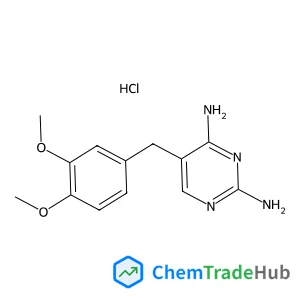
5-(3,4-Dimethoxybenzyl)-2,4-pyrimidinediamine hydrochloride (1:1)
CAS Number:
2507-23-5
Molecular Formula:
C13H17ClN4O2

(E)-2-methyl-4-(4,4,5,5-tetramethyl-1,3,2-dioxaborolan-2-yl)but-3-en-2-ol
CAS Number:
581802-26-8
Molecular Formula:
C11H21BO3
Recommended Suppliers





Disclaimer
This page provides academic journal information for reference and research purposes only. We are not affiliated with any journal publishers and do not handle publication submissions. For publication-related inquiries, please contact the respective journal publishers directly.
If you notice any inaccuracies in the information displayed, please contact us at support@chemtradehub.com. We will promptly review and address your concerns.