













TiO2 nanotubes sensitized with CdSe via RF magnetron sputtering for photoelectrochemical applications under visible light irradiation
Literature Information
Publication Date
2014-03-27
DOI
10.1039/C4CP00361F
Impact Factor
3.676
Authors
Jesum A. Fernandes, Pedro Migowski, Zacarias Fabrim, Adriano F. Feil, Guilherme Rosa, Sherdil Khan, Guilherme J. Machado, Paulo F. P. Fichtner, Sérgio R. Teixeira, Marcos J. L. Santos, Jairton Dupont
View Original
Abstract
Highly ordered TiO2 NT arrays were easily decorated with CdSe via RF magnetron sputtering. After deposition thermal annealing at different temperatures was performed to obtain an improved TiO2/CdSe interface. The heterostructures were characterized by RBS, SEM, XRD, HRTEM, UV-Vis, EIS, IPCE and current versus voltage curves. The sensitized semiconducting electrodes display an enhanced photocurrent density of ca. 2 mA cm−2 at 0.6 V (vs. Ag/AgCl) under visible light (λ > 400 nm). The sensitized photoelectrodes displayed 3 and 535-fold enhanced photocurrent when compared to bare TiO2 NTs under 1 sun and under visible light illumination, respectively. IES results confirmed the improved charge transfer across the TiO2/CdSe/electrolyte interface after annealing at 400 °C. Incident photon-to-electron conversion efficiency measurements confirmed the efficient sensitization by allowing photoresponse in the visible range.
Related Literature
Homopropargyl as a new recognition moiety of a fluorescent probe for detection of palladium in living cells
Miao Chen, Xianhui Wang, Nannan Wang, Xin Ji, Jinling He, Jian Zhang
2019-07-15
Paper
DOI: 10.1039/C9AY00844F
Introducing deep eutectic solvents as biorenewable media for Au(i)-catalysed cycloisomerisation of γ-alkynoic acids: an unprecedented catalytic system
María J. Rodríguez-Álvarez, Cristian Vidal, Josefina Díez, Joaquín García-Álvarez
2014-09-02
Communication
DOI: 10.1039/C4CC05904B
Study on the affinity characteristics of proteins on the immobilized metal affinity chromatography column
Rong Li, Peng Chen, Ning Zhang, Bin Chen
2019-08-15
Paper
DOI: 10.1039/C9AY01469A
A label-free fluorescence method for actin detection based on DNA-templated silver nanoclusters
Mingjian Chen, Changbei Ma, Ying Yan
2019-07-31
Paper
DOI: 10.1039/C9AY01154D
MIP-coated Eu(BTC) for the fluorometric determination of lincomycin in eggs
Pu Wu, Qiuzheng Du, Yiyang Sun, Zhonghong Li
2019-07-29
Paper
DOI: 10.1039/C9AY01448A
Enantioselective aryl–aryl coupling facilitated by chiral binuclear gold complexes
Jonas Himmelstrup, Mikkel B. Buendia, Xing-Wen Sun, Søren Kramer
2019-10-08
Communication
DOI: 10.1039/C9CC07175J
Multidimensional scaling assisted Fourier-transform infrared spectroscopic analysis of fruit wine samples: introducing a novel analytical approach
Keshav Kumar, Anja Giehl, Ralf Schweiggert, Claus-Dieter Patz
2019-07-25
Paper
DOI: 10.1039/C9AY01425J
A label-free turn ON–OFF chemiluminescence strategy for lysozyme detection by target-triggered Cu2−xSe aggregation
Hong Yan Zou, Fang Fang Zhang, Qing Juan Guo, Tong Yang
2019-07-24
Paper
DOI: 10.1039/C9AY01288E
You might also like
Compound Q&A
What are the main uses of 1H-Indazole-6-carbonitrile (CAS: 141290-59-7)?
1H-Indazole-6-carbonitrile finds applications in pharmaceuticals, where it serve...
141290-59-71H-Indazole-6-carbon...
Compound Q&A
How should waste containing Dioctyl (2E)-2-butenedioate (CAS: 2997-85-5) be handled?
Waste containing Dioctyl (2E)-2-butenedioate (CAS: 2997-85-5) should be collecte...
2997-85-5Dioctyl (2E)-2-buten...
Compound Q&A
What industries use Sodium [(1,2-benzoxazol-3-ylmethyl)sulfonyl]azanide (CAS: 68291-98-5)?
Sodium [(1,2-benzoxazol-3-ylmethyl)sulfonyl]azanide is primarily used in pharmac...
68291-98-5Sodium [(1,2-benzoxa...
Compound Q&A
Are there alternatives to Dimethyl 4-(4,4,5,5-tetramethyl-1,3,2-dioxaborolan-2-yl)-2,6-pyridinedicarboxylate (CAS: 741709-66-0) in synthesis?
Dimethyl 4-(4,4,5,5-tetramethyl-1,3,2-dioxaborolan-2-yl)-2,6-pyridinedicarboxyla...
741709-66-0Dimethyl 4-(4,4,5,5-...
Compound Q&A
How should waste containing 2-Fluoro-6-hydrazinopyridine (CAS: 80714-39-2) be handled?
Waste containing 2-Fluoro-6-hydrazinopyridine (CAS: 80714-39-2) should be manage...
80714-39-22-Fluoro-6-hydrazino...
Compound Q&A
What is 6-Formyl-2-pyridinecarboxylic acid (CAS: 499214-11-8)?
6-Formyl-2-pyridinecarboxylic acid is an organic compound with the molecular for...
499214-11-86-Formyl-2-pyridinec...
Compound Q&A
What is the market or research trend for 3-(3,4-dimethoxyphenyl)-2,5-dimethyl-N-(2-morpholin-4-ylethyl)pyrazolo[1,5-a]pyrimidin-7-amine (CAS: 900874-91-1)?
Research trends for this compound indicate a focus on its potential applications...
900874-91-13-(3,4-dimethoxyphen...
Compound Q&A
How is 9H-Tribenzo[b,d,f]azepine (CAS: 29875-73-8) typically synthesized?
9H-Tribenzo[b,d,f]azepine is typically synthesized via a multi-step process invo...
29875-73-89H-Tribenzo[b,d,f]az...
Compound Q&A
How is 1-Cyclopropyl-7-ethoxy-6-fluoro-8-methoxy-4-oxo-1,4-dihydro-3-quinolinecarboxylic acid (CAS: 1797982-51-4) typically synthesized?
1-Cyclopropyl-7-ethoxy-6-fluoro-8-methoxy-4-oxo-1,4-dihydro-3-quinolinecarboxyli...
1797982-51-41-Cyclopropyl-7-etho...
Compound Q&A
How should waste containing Methyl 3-oxo-1,2,3,4-tetrahydro-6-quinoxalinecarboxylate (CAS: 671820-52-3) be handled?
Waste containing Methyl 3-oxo-1,2,3,4-tetrahydro-6-quinoxalinecarboxylate (CAS: ...
671820-52-3Methyl 3-oxo-1,2,3,4...
Source Journal
Physical Chemistry Chemical Physics

CiteScore:
5.5
Self-citation Rate:
10.3%
Articles per Year:
3036
Physical Chemistry Chemical Physics (PCCP) is an international journal co-owned by 19 physical chemistry and physics societies from around the world. This journal publishes original, cutting-edge research in physical chemistry, chemical physics and biophysical chemistry. To be suitable for publication in PCCP, articles must include significant innovation and/or insight into physical chemistry; this is the most important criterion that reviewers and Editors will judge against when evaluating submissions. The journal has a broad scope and welcomes contributions spanning experiment, theory, computation and data science. Topical coverage includes spectroscopy, dynamics, kinetics, statistical mechanics, thermodynamics, electrochemistry, catalysis, surface science, quantum mechanics, quantum computing and machine learning. Interdisciplinary research areas such as polymers and soft matter, materials, nanoscience, energy, surfaces/interfaces, and biophysical chemistry are welcomed if they demonstrate significant innovation and/or insight into physical chemistry. Joined experimental/theoretical studies are particularly appreciated when complementary and based on up-to-date approaches.
Recommended Compounds
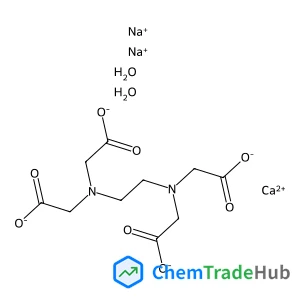
EthylenediaminetetraaceticacidcalciumDisodiumsalthydrate
CAS Number:
23411-34-9
Molecular Formula:
C10H16CaN2Na2O10

![Sodium (2Z)-7-{[(2R)-2-amino-2-carboxyethyl]sulfanyl}-2-({[(1S)-2,2-dimethylcyclopropyl]carbonyl}amino)-2-heptenoate structure](https://static.chemtradehub.com/structs/811/81129-83-1-441c.webp "Sodium (2Z)-7-{[(2R)-2-amino-2-carboxyethyl]sulfanyl}-2-({[(1S)-2,2-dimethylcyclopropyl]carbonyl}amino)-2-heptenoate structure")
Sodium (2Z)-7-{[(2R)-2-amino-2-carboxyethyl]sulfanyl}-2-({[(1S)-2,2-dimethylcyclopropyl]carbonyl}amino)-2-heptenoate
CAS Number:
81129-83-1
Molecular Formula:
C16H25N2NaO5S

Recommended Suppliers







Disclaimer
This page provides academic journal information for reference and research purposes only. We are not affiliated with any journal publishers and do not handle publication submissions. For publication-related inquiries, please contact the respective journal publishers directly.
If you notice any inaccuracies in the information displayed, please contact us at support@chemtradehub.com. We will promptly review and address your concerns.