












![5-Bromo-3-isopropyl-1H-pyrrolo[2,3-b]pyridine structure](https://static.chemtradehub.com/structs/125/1256819-54-1-8620.webp "5-Bromo-3-isopropyl-1H-pyrrolo[2,3-b]pyridine structure")
A large sample volume magic angle spinning nuclear magnetic resonance probe for in situ investigations with constant flow of reactants
Literature Information
Publication Date
2011-10-24
DOI
10.1039/C1CP22692D
Impact Factor
3.676
Authors
Jian Zhi Hu, Jesse A. Sears, Hardeep S. Mehta, Joseph J. Ford, Ja Hun Kwak, Kake Zhu, Yong Wang, Jun Liu, David W. Hoyt, Charles H. F. Peden
View Original
Abstract
A large-sample-volume constant-flow magic angle sample spinning (CF-MAS) NMR probe is reported for in situ studies of the reaction dynamics, stable intermediates/transition states, and mechanisms of catalytic reactions. In our approach, the reactants are introduced into the catalyst bed using a fixed tube at one end of the MAS rotor while a second fixed tube, linked to a vacuum pump, is attached at the other end of the rotor. The pressure difference between both ends of the catalyst bed inside the sample cell space forces the reactants flowing through the catalyst bed, which improves the diffusion of the reactants and products. This design allows the use of a large sample volume for enhanced sensitivity and thus permitting in situ13C CF-MAS studies at natural abundance. As an example of application, we show that reactants, products and reaction transition states associated with the 2-butanol dehydration reaction over a mesoporous silicalite supported heteropoly acid catalyst (HPA/meso-silicalite-1) can all be detected in a single 13C CF-MAS NMR spectrum at natural abundance. Coke products can also be detected at natural 13C abundance and under the stopped flow condition. Furthermore, 1H CF-MAS NMR is used to identify the surface functional groups of HPA/meso-silicalite-1 under the condition of in situ drying. We also show that the reaction dynamics of 2-butanol dehydration using HPA/meso-silicalite-1 as a catalyst can be explored using 1H CF-MAS NMR.
Recommended Journals
Related Literature
Influence of neutral auxiliary ligands on crystal structure and magnetic behaviour of new [Mn II2Mn III2] clusters supported by p-adamantylcalix[4]arene
Alexander S. Ovsyannikov, Aida I. Samigullina, Daut R. Islamov, Mikhail A. Cherosov, Ruslan G. Batulin, Airat G. Kiiamov, Aidar T. Gubaidullin, Pavel V. Dorovatovskii, Svetlana E. Solovieva, Igor S. Antipin
2023-11-20
Paper
DOI: 10.1039/D3NJ04809H
Spherical porous iron–nitrogen–carbon nanozymes derived from a tannin coordination framework for the preparation of l-DOPA by emulating tyrosine hydroxylase
Chan Chen, Haisheng Ren, Weikang Tang, Mengqi Han, Qinfei Chen, Hong Zhou, Jiadong Chen, Yuyue Gao, Wenbin Liu
2023-11-02
Paper
DOI: 10.1039/D3TB01082A
Nitrate anions embedded in rigid and cationic 3D energetic MOFs constructed by the chelating ligand towards insensitive energetic materials
Qin Wang, Jiao-Lin Weng, Ying Huang, Fu Yang, Hao-Hui Xie, Fei Tan
2023-11-28
Paper
DOI: 10.1039/D3NJ04910H
Metal–organic gels: recent advances in their classification, characterization, and application in the pharmaceutical field
Wei Cao, Zezhi Lin, Daoyi Zheng, Jianjun Zhang, Weili Heng, Yuanfeng Wei, Yuan Gao, Shuai Qian
2023-10-20
Review Article
DOI: 10.1039/D3TB01612A
Injectable spontaneously formed asymmetric adhesive hydrogel with controllable removal for wound healing
Lei Liang, Xi Li, Zhouying Tan, Min Liu, Yuwei Qiu, Qingyu Yu, Chaojie Yu, Mengmeng Yao, Bingyan Guo, Pengcheng Che, Hong Zhang
2023-10-26
Paper
DOI: 10.1039/D3TB02014B
Correction: Injectable organo-hydrogels influenced by click chemistry as a paramount stratagem in the conveyor belt of pharmaceutical revolution
Misba Majood, Radhika Chaurasia, Rupesh, Akanksha Singh, Tapan Dey, Omnarayan Agrawal, Yogesh Kumar Verma, Monalisa Mukherjee
2023-10-24
Correction
DOI: 10.1039/D3TB90198J
A review of recent research and development on GLP-1 receptor agonists-sustained-release microspheres
2023-11-08
Review Article
DOI: 10.1039/D3TB02207B
A tetrasulfide bond-bridged mesoporous organosilica-based nanoplatform for triple-enhanced chemodynamic therapy combined with chemotherapy and H2S therapy
Mingzhe Liu, Hui Xu, FangFang Zhou, Xiyu Gong, Songwen Tan, Yongju He
2023-10-25
Paper
DOI: 10.1039/D3TB02147E
Self-driven immune checkpoint blockade and spatiotemporal-sensitive immune response monitoring in acute myeloid leukemia using an all-in-one turn-on bionanoprobe
Honglian Wu, Tianci Wang, Yuting Wang, Sixi Liu, Feiqiu Wen, Gerile Oudeng, Mo Yang
2023-10-17
Paper
DOI: 10.1039/D3TB01553J
Belinostat loaded lipid–polymer hybrid nanoparticulate delivery system for breast cancer: improved pharmacokinetics and biodistribution in a tumor model
Kommera Sai Pradyuth, Shubham A. Salunkhe, Arihant Kumar Singh, Deepak Chitkara, Anupama Mittal
2023-10-27
Paper
DOI: 10.1039/D3TB01317K
You might also like
Compound Q&A
Is 6-(3-Fluorophenyl)picolinic acid (CAS: 887982-40-3) safe?
6-(3-Fluorophenyl)picolinic acid is generally considered safe for laboratory use...
887982-40-36-(3-Fluorophenyl)pi...
Compound Q&A
What industries use (3R)-3-Pyrrolidinol (CAS: 2799-21-5)?
(3R)-3-Pyrrolidinol is used in the pharmaceutical industry as a precursor for dr...
2799-21-5(3R)-3-Pyrrolidinol
Compound Q&A
What precautions should be taken when handling (4R,5R)-4,5-Diethoxycarbonyl-2,2-dimethyldioxolane (CAS: 59779-75-8)?
When handling (4R,5R)-4,5-Diethoxycarbonyl-2,2-dimethyldioxolane (CAS: 59779-75-...
59779-75-8(4R,5R)-4,5-Diethoxy...
Compound Q&A
How is 1-(6-Chloroimidazo[1,2-b]pyridazin-3-yl)ethanone (CAS: 90734-71-7) typically synthesized?
1-(6-Chloroimidazo[1,2-b]pyridazin-3-yl)ethanone is often synthesized via a mult...
90734-71-71-(6-Chloroimidazo[1...
Compound Q&A
What is the market or research trend for N-Ethyl-3,4-dimethylbenzylamine (CAS: 39180-83-1)?
The market for N-Ethyl-3,4-dimethylbenzylamine (CAS: 39180-83-1) remains steady,...
39180-83-1N-Ethyl-3,4-dimethyl...
Compound Q&A
What is Tert-butyl 3-(pyrrolidin-1-yl)azetidine-1-carboxylate (CAS: 1019008-21-9)?
Tert-butyl 3-(pyrrolidin-1-yl)azetidine-1-carboxylate is a chemical compound wit...
1019008-21-9Tert-butyl 3-(pyrrol...
Compound Q&A
What regulatory guidelines apply to 1-Bromo-3-chloro-2,4-dimethoxybenzene (CAS: 1228956-93-1)?
1-Bromo-3-chloro-2,4-dimethoxybenzene (CAS: 1228956-93-1) falls under the classi...
1228956-93-11-Bromo-3-chloro-2,4...
Compound Q&A
Is 8-Bromo-2-methyl-3,4-dihydroisoquinolin-1(2H)-one (CAS: 1368622-07-4) safe?
The safety of 8-Bromo-2-methyl-3,4-dihydroisoquinolin-1(2H)-one (CAS: 1368622-07...
1368622-07-48-Bromo-2-methyl-3,4...
Compound Q&A
Is Benzyl [(3S)-2,6-dioxo-3-piperidinyl]carbamate (CAS: 22785-43-9) safe?
Benzyl [(3S)-2,6-dioxo-3-piperidinyl]carbamate is generally safe when handled wi...
22785-43-9Benzyl [(3S)-2,6-dio...
Compound Q&A
How should 1-{[4-(4,4,5,5-Tetramethyl-1,3,2-dioxaborolan-2-yl)phenyl]sulfonyl}pyrrolidine (CAS: 928657-21-0) be stored?
1-{[4-(4,4,5,5-Tetramethyl-1,3,2-dioxaborolan-2-yl)phenyl]sulfonyl}pyrrolidine s...
928657-21-01-{[4-(4,4,5,5-Tetra...
Source Journal
Physical Chemistry Chemical Physics

CiteScore:
5.5
Self-citation Rate:
10.3%
Articles per Year:
3036
Physical Chemistry Chemical Physics (PCCP) is an international journal co-owned by 19 physical chemistry and physics societies from around the world. This journal publishes original, cutting-edge research in physical chemistry, chemical physics and biophysical chemistry. To be suitable for publication in PCCP, articles must include significant innovation and/or insight into physical chemistry; this is the most important criterion that reviewers and Editors will judge against when evaluating submissions. The journal has a broad scope and welcomes contributions spanning experiment, theory, computation and data science. Topical coverage includes spectroscopy, dynamics, kinetics, statistical mechanics, thermodynamics, electrochemistry, catalysis, surface science, quantum mechanics, quantum computing and machine learning. Interdisciplinary research areas such as polymers and soft matter, materials, nanoscience, energy, surfaces/interfaces, and biophysical chemistry are welcomed if they demonstrate significant innovation and/or insight into physical chemistry. Joined experimental/theoretical studies are particularly appreciated when complementary and based on up-to-date approaches.
Recommended Compounds
![1-Benzyl-1,7-diazaspiro[4.4]nonane dihydrochloride structure](https://static.chemtradehub.com/structs/115/1159822-71-5-0320.webp "1-Benzyl-1,7-diazaspiro[4.4]nonane dihydrochloride structure")
1-Benzyl-1,7-diazaspiro[4.4]nonane dihydrochloride
CAS Number:
1159822-71-5
Molecular Formula:
C14H22Cl2N2
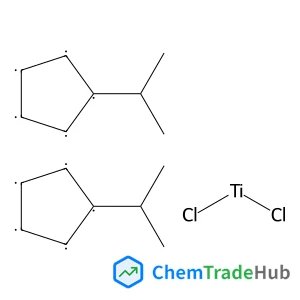
BIS(I-PROPYLCYCLOPENTADIENYL)TITANIUM DICHLORIDE
CAS Number:
12130-65-3
Molecular Formula:
C16H22Cl2Ti
Recommended Suppliers







Disclaimer
This page provides academic journal information for reference and research purposes only. We are not affiliated with any journal publishers and do not handle publication submissions. For publication-related inquiries, please contact the respective journal publishers directly.
If you notice any inaccuracies in the information displayed, please contact us at support@chemtradehub.com. We will promptly review and address your concerns.