












Adsorption of a single molecule of a diarylethene photochromic dye on Cu(111)
Literature Information
Publication Date
2011-10-17
DOI
10.1039/C1CP22526J
Impact Factor
3.676
Authors
Christophe Coudret, Gonzalo Guirado, Nicolas Estrampes, Roland Coratger
View Original
Abstract
On the route to single (large) molecule unimolecular chemistry, the adsorption of a photochromic dithienylethene dye on Cu(111) at a submonolayer level has been studied by Ultra High Vacuum-Scanning Tunneling Microscopy at Low Temperature. This technique has shown that the observed adsorbed molecule's shape is compatible with an helical conformation but has also revealed a surrounding electronic corrugation due to the perturbed surface states. Careful examination of the standing wave pattern indicated that only a part of the molecule is indeed interacting with the metallic substrate. Geometric considerations were used to infer that the bridging ethene moiety could be responsible for the electronic scattering. Scanning Tunneling Spectroscopy has shown a substantial amount of charge transfer from the surface to the adsorbate. The hypothesis that this precise double bond is a reactive locus toward charge transfer processes is confirmed by the electrochemical results: this double bond is indeed reduced upon coulometric reduction on glassy carbon. Furthermore, the use of a copper cathode strongly facilitates the reduction since a +0.6 V shift was recorded.
Related Literature
A mechanistic study on the regioselective Ni-catalyzed methylation–alkenylation of alkyne with AlMe3 and allylic alcohol
Jiao Liu, Deguang Liu, Wan Nie, Haizhu Yu, Jing Shi
2021-11-17
Research Article
DOI: 10.1039/D1QO01580J
Semi-syntheses of the 11-hydroxyrotenoids sumatrol and villosinol
David A. Russell, Julien J. Freudenreich, Hannah L. Stewart, Andrew D. Bond, Hannah F. Sore, David R. Spring
2018-08-22
Communication
DOI: 10.1039/C8OB01919C
High pressure-assisted low-loading asymmetric organocatalytic conjugate addition of nitroalkanes to chalcones‡
Agnieszka Cholewiak, Kamil Adamczyk, Michał Kopyt, Adrian Kasztelan, Piotr Kwiatkowski
2018-05-22
Paper
DOI: 10.1039/C8OB00561C
Homolysis/mesolysis of alkoxyamines activated by chemical oxidation and photochemical-triggered radical reactions at room temperature
Gérard Audran, Mitchell T. Blyth, Michelle L. Coote, Georg Gescheidt, Micael Hardy, Jeffrey Havot, Maxence Holzritter, Samuel Jacoutot, Jean-Patrick Joly, Sylvain R. A. Marque, Tataye Moussounda Moussounda Koumba, Dmytro Neshchadin, Enzo Vaiedelich
2021-10-14
Research Article
DOI: 10.1039/D1QO01276B
Highly regioselective, electrophile induced cyclizations of 2-(prop-1-ynyl)benzamides
Bhavani Shankar Chinta, Harikrishna Sanapa, Kamala Prasad Vasikarla, Beeraiah Baire
2018-04-26
Paper
DOI: 10.1039/C8OB00434J
Cascade double isocyanide insertion and C–N coupling of 2-iodo-2′-isocyano-1,1′-biphenyls
2018-05-02
Communication
DOI: 10.1039/C8OB00956B
Regioselective ortho-functionalization of bromofluorenecarbaldehydes using TMPMgCl·LiCl
Dominik Göbel, Nils Clamor, Boris J. Nachtsheim
2018-05-15
Communication
DOI: 10.1039/C8OB01072B
A photoredox/nickel dual-catalytic strategy for benzylic C–H alkoxylation
Min Dong, Yuqi Jia, Wei Zhou, Jinlai Gao, Xiaoqing Lv, Fan Luo, Yongqiang Zhang, Shihui Liu
2021-10-26
Research Article
DOI: 10.1039/D1QO01421H
You might also like
Compound Q&A
What industries use (1R,3S)-1,3-Cyclopentanediol (CAS: 16326-97-9)?
(1R,3S)-1,3-Cyclopentanediol finds applications in various industries. In the ph...
16326-97-9(1R,3S)-1,3-Cyclopen...
Compound Q&A
What precautions should be taken when handling N'-[4-(Dimethylamino)phenyl]-N,N-dimethyl-1,4-benzenediamine (CAS: 637-31-0)?
When handling N'-[4-(Dimethylamino)phenyl]-N,N-dimethyl-1,4-benzenediamine, it i...
637-31-0N'-[4-(Dimethylamino...
Compound Q&A
Are there alternatives to 5-(2,4-Difluorophenyl)-2-methoxypyrimidine (CAS: 1352318-16-1) in synthesis?
There are several alternatives to 5-(2,4-Difluorophenyl)-2-methoxypyrimidine in ...
1352318-16-15-(2,4-Difluoropheny...
Compound Q&A
What regulatory guidelines apply to 1-(3-Methoxyphenoxy)propan-2-ol (CAS: 382141-68-6)?
1-(3-Methoxyphenoxy)propan-2-ol (CAS: 382141-68-6) must comply with the Globally...
382141-68-61-(3-Methoxyphenoxy)...
Compound Q&A
Is Tetrodotoxin Citrate (CAS: 18660-81-6) safe?
Tetrodotoxin Citrate is extremely dangerous and should be handled with extreme c...
18660-81-6Tetrodotoxin Citrate
Compound Q&A
What are the main uses of 2-Methyl-2-propanyl [(1R,3S)-3-hydroxycyclopentyl]carbamate (CAS: 225641-84-9)?
2-Methyl-2-propanyl [(1R,3S)-3-hydroxycyclopentyl]carbamate (CAS: 225641-84-9) i...
225641-84-92-Methyl-2-propanyl ...
Compound Q&A
How should waste containing 4-(2-Hydroxyhexafluoroisopropyl)Benzoic Acid (CAS: 16261-80-6) be handled?
Waste containing 4-(2-Hydroxyhexafluoroisopropyl)Benzoic Acid (CAS: 16261-80-6) ...
16261-80-64-(2-Hydroxyhexafluo...
Compound Q&A
How is 2-Methyl-2-proanyl {(2S)-1-[(benzyloxy)amino]-3-hydroxy-3-methyl-1-oxo-2-butanyl}carbamate (CAS: 102507-19-7) typically synthesized?
2-Methyl-2-proanyl {(2S)-1-[(benzyloxy)amino]-3-hydroxy-3-methyl-1-oxo-2-butanyl...
102507-19-72-Methyl-2-propanyl ...
Compound Q&A
What is Benzeneethanamine, α-ethyl-, hydrochloride (1:1) (CAS: 20735-15-3)?
Benzeneethanamine, α-ethyl-, hydrochloride (1:1) is an organic compound with the...
20735-15-3Benzeneethanamine, α...
Compound Q&A
Are there alternatives to 3-{(E)-[4-(Dimethylamino)phenyl]diazenyl}benzoic acid (CAS: 20691-84-3) in synthesis?
In the synthesis of compounds similar to 3-{(E)-[4-(Dimethylamino)phenyl]diazeny...
20691-84-33-{(E)-[4-(Dimethyla...
Source Journal
Physical Chemistry Chemical Physics

CiteScore:
5.5
Self-citation Rate:
10.3%
Articles per Year:
3036
Physical Chemistry Chemical Physics (PCCP) is an international journal co-owned by 19 physical chemistry and physics societies from around the world. This journal publishes original, cutting-edge research in physical chemistry, chemical physics and biophysical chemistry. To be suitable for publication in PCCP, articles must include significant innovation and/or insight into physical chemistry; this is the most important criterion that reviewers and Editors will judge against when evaluating submissions. The journal has a broad scope and welcomes contributions spanning experiment, theory, computation and data science. Topical coverage includes spectroscopy, dynamics, kinetics, statistical mechanics, thermodynamics, electrochemistry, catalysis, surface science, quantum mechanics, quantum computing and machine learning. Interdisciplinary research areas such as polymers and soft matter, materials, nanoscience, energy, surfaces/interfaces, and biophysical chemistry are welcomed if they demonstrate significant innovation and/or insight into physical chemistry. Joined experimental/theoretical studies are particularly appreciated when complementary and based on up-to-date approaches.
Recommended Compounds
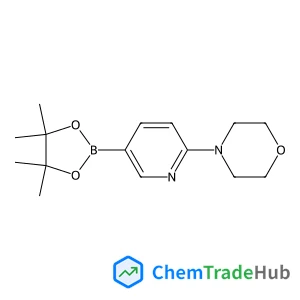
4-(5-(4,4,5,5-tetramethyl-1,3,2-dioxaborolan-2-yl)pyridin-2-yl)morpholine
CAS Number:
485799-04-0
Molecular Formula:
C15H23BN2O3
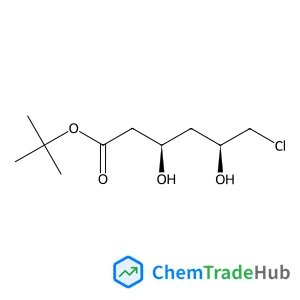
2-Methyl-2-propanyl (3R,5S)-6-chloro-3,5-dihydroxyhexanoate
CAS Number:
154026-93-4
Molecular Formula:
C10H19ClO4
Recommended Suppliers





Disclaimer
This page provides academic journal information for reference and research purposes only. We are not affiliated with any journal publishers and do not handle publication submissions. For publication-related inquiries, please contact the respective journal publishers directly.
If you notice any inaccuracies in the information displayed, please contact us at support@chemtradehub.com. We will promptly review and address your concerns.