


Disentanglement of triplet and singlet states of azobenzene: direct EELS detection and QMC modeling
Literature Information
Publication Date
2011-10-17
DOI
10.1039/C1CP22520K
Impact Factor
3.676
Authors
M. Dubecký, R. Derian, L. Horváthová, M. Allan, I. Štich
View Original
Abstract
Singlet and triplet excited states of trans-azobenzene have been measured in the gas phase by electron energy loss spectroscopy (EELS). In order to interpret the strongly overlapping singlet and triplet bands in the spectra a set of large-scale correlated quantum Monte-Carlo (QMC) simulations was performed. The EELS/QMC combination of methods yields an excellent agreement between theory and experiment and for the two low-lying excited singlet and two low-lying triplet states permitted their unambiguous assignment. In addition, EELS revealed two overlapping electronic states in the band commonly assigned as S2, the lower one with a pronounced vibrational structure, the upper one structureless. Finally, the agreement between theory and experiment was shown to further increase by taking computationally into account the finite temperature effects.
Recommended Journals

Journal of the Indian Institute of Science

NDT & E International

Herald of the Russian Academy of Sciences

Medicinal Chemistry Research

Critical Reviews in Solid State and Materials Sciences

Atomization and Sprays

Biocatalysis and Biotransformation

Polycyclic Aromatic Compounds

Main Group Chemistry

Electroanalysis
Related Literature
Nickel-catalyzed cascade carbonylative synthesis of N-benzoyl indoles from 2-nitroalkynes and aryl iodides
Lingyun Yao, Jun Ying
2021-10-05
Research Article
DOI: 10.1039/D1QO01284C
Novel photoactivatable substrates for Renilla luciferase imaging in vitro and in vivo
Chaochao Zhang, Lin Cheng, Gaopan Dong, Guangxi Han, Xingye Yang, Chunchao Tang, Xiang Li, Yubin Zhou, Lupei Du
2018-06-13
Communication
DOI: 10.1039/C8OB01192C
Regioselective synthesis and biological evaluation of N-substituted 2-aminoquinazolin-4-ones
Zhen-Yuan Liao, Wen-Hsiung Yeh, Pen-Yuan Liao, Yu-Ting Liu, Ying-Cheng Chen, Yi-Hung Chen, Tsung-Han Hsieh, Chia-Chi Lin, Ming-Hsuan Lu, Yi-Song Chen, Ming-Chih Hsu, Tsai-Kun Li, Tun-Cheng Chien
2018-04-27
Paper
DOI: 10.1039/C8OB00624E
Alkylsulfonium salts for the photochemical desulphurizative functionalization of heteroarenes
Xiaolong Zhu, Xuan Li, Enjie Zhu, Qirong Deng, Xiuyan Song, Jian Lv
2021-11-24
Research Article
DOI: 10.1039/D1QO01570B
Key role of a π–π complex in diaryl cross-coupling between aryldiazonium salts and arylboronic acids using photosensitizer-free gold/photoredox catalysis
Yanhong Liu, Rongxiu Zhu, Chengbu Liu, Dongju Zhang
2021-11-17
Research Article
DOI: 10.1039/D1QO01464A
Construction of polysubstituted spiro[2.3] or [3.3] cyclic frameworks fused with a tosylated pyrrolidine promoted by visible-light-induced photosensitization
Xintao Gu, Yin Wei
2021-11-04
Research Article
DOI: 10.1039/D1QO01373D
Elucidating the selectivity of dyotropic rearrangements of β-lactones: a computational survey
Jingyang Zhang, Yumiao Ma, Ke Qiu, Bo Li, Zhengwen Xue, Boxue Tian, Yefeng Tang
2021-11-25
Research Article
DOI: 10.1039/D1QO01591E
Mechanistic insights into the rhodium-catalyzed aryl C–H carboxylation
DeGuang Liu, ZheYuan Xu, MingQiang Liu, Yao Fu
2021-12-07
Research Article
DOI: 10.1039/D1QO01560E
Preparation of π-extended fullerene derivatives through addition of phenylenediamine to open-cage fullerene derivatives
Zeyu Liu, Zhen Liu, Rui Gao, Jie Su, Yi Qiu, Liangbing Gan
2021-11-18
Research Article
DOI: 10.1039/D1QO01593A
Thermally-induced intramolecular [2 + 2] cycloaddition of acrylamide-tethered alkylidenecyclopropanes
Xiao-Yu Zhang, Song Yang, Yin Wei
2018-08-22
Communication
DOI: 10.1039/C8OB01765D
You might also like
Compound Q&A
What industries use (1R,3S)-1,3-Cyclopentanediol (CAS: 16326-97-9)?
(1R,3S)-1,3-Cyclopentanediol finds applications in various industries. In the ph...
16326-97-9(1R,3S)-1,3-Cyclopen...
Compound Q&A
What precautions should be taken when handling N'-[4-(Dimethylamino)phenyl]-N,N-dimethyl-1,4-benzenediamine (CAS: 637-31-0)?
When handling N'-[4-(Dimethylamino)phenyl]-N,N-dimethyl-1,4-benzenediamine, it i...
637-31-0N'-[4-(Dimethylamino...
Compound Q&A
Are there alternatives to 5-(2,4-Difluorophenyl)-2-methoxypyrimidine (CAS: 1352318-16-1) in synthesis?
There are several alternatives to 5-(2,4-Difluorophenyl)-2-methoxypyrimidine in ...
1352318-16-15-(2,4-Difluoropheny...
Compound Q&A
What regulatory guidelines apply to 1-(3-Methoxyphenoxy)propan-2-ol (CAS: 382141-68-6)?
1-(3-Methoxyphenoxy)propan-2-ol (CAS: 382141-68-6) must comply with the Globally...
382141-68-61-(3-Methoxyphenoxy)...
Compound Q&A
Is Tetrodotoxin Citrate (CAS: 18660-81-6) safe?
Tetrodotoxin Citrate is extremely dangerous and should be handled with extreme c...
18660-81-6Tetrodotoxin Citrate
Compound Q&A
What are the main uses of 2-Methyl-2-propanyl [(1R,3S)-3-hydroxycyclopentyl]carbamate (CAS: 225641-84-9)?
2-Methyl-2-propanyl [(1R,3S)-3-hydroxycyclopentyl]carbamate (CAS: 225641-84-9) i...
225641-84-92-Methyl-2-propanyl ...
Compound Q&A
How should waste containing 4-(2-Hydroxyhexafluoroisopropyl)Benzoic Acid (CAS: 16261-80-6) be handled?
Waste containing 4-(2-Hydroxyhexafluoroisopropyl)Benzoic Acid (CAS: 16261-80-6) ...
16261-80-64-(2-Hydroxyhexafluo...
Compound Q&A
How is 2-Methyl-2-proanyl {(2S)-1-[(benzyloxy)amino]-3-hydroxy-3-methyl-1-oxo-2-butanyl}carbamate (CAS: 102507-19-7) typically synthesized?
2-Methyl-2-proanyl {(2S)-1-[(benzyloxy)amino]-3-hydroxy-3-methyl-1-oxo-2-butanyl...
102507-19-72-Methyl-2-propanyl ...
Compound Q&A
What is Benzeneethanamine, α-ethyl-, hydrochloride (1:1) (CAS: 20735-15-3)?
Benzeneethanamine, α-ethyl-, hydrochloride (1:1) is an organic compound with the...
20735-15-3Benzeneethanamine, α...
Compound Q&A
Are there alternatives to 3-{(E)-[4-(Dimethylamino)phenyl]diazenyl}benzoic acid (CAS: 20691-84-3) in synthesis?
In the synthesis of compounds similar to 3-{(E)-[4-(Dimethylamino)phenyl]diazeny...
20691-84-33-{(E)-[4-(Dimethyla...
Source Journal
Physical Chemistry Chemical Physics

CiteScore:
5.5
Self-citation Rate:
10.3%
Articles per Year:
3036
Physical Chemistry Chemical Physics (PCCP) is an international journal co-owned by 19 physical chemistry and physics societies from around the world. This journal publishes original, cutting-edge research in physical chemistry, chemical physics and biophysical chemistry. To be suitable for publication in PCCP, articles must include significant innovation and/or insight into physical chemistry; this is the most important criterion that reviewers and Editors will judge against when evaluating submissions. The journal has a broad scope and welcomes contributions spanning experiment, theory, computation and data science. Topical coverage includes spectroscopy, dynamics, kinetics, statistical mechanics, thermodynamics, electrochemistry, catalysis, surface science, quantum mechanics, quantum computing and machine learning. Interdisciplinary research areas such as polymers and soft matter, materials, nanoscience, energy, surfaces/interfaces, and biophysical chemistry are welcomed if they demonstrate significant innovation and/or insight into physical chemistry. Joined experimental/theoretical studies are particularly appreciated when complementary and based on up-to-date approaches.
Recommended Compounds
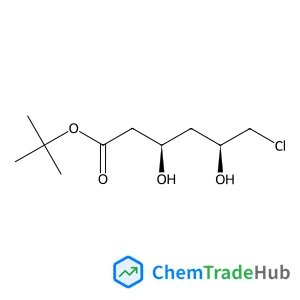
2-Methyl-2-propanyl (3R,5S)-6-chloro-3,5-dihydroxyhexanoate
CAS Number:
154026-93-4
Molecular Formula:
C10H19ClO4
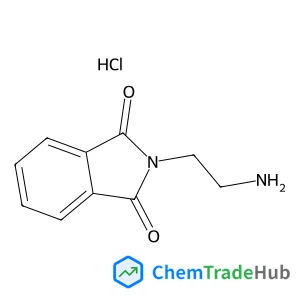
2-(2-Aminoethyl)-1H-isoindole-1,3(2H)-dione hydrochloride (1:1)
CAS Number:
30250-67-0
Molecular Formula:
C10H11ClN2O2
Recommended Suppliers








Disclaimer
This page provides academic journal information for reference and research purposes only. We are not affiliated with any journal publishers and do not handle publication submissions. For publication-related inquiries, please contact the respective journal publishers directly.
If you notice any inaccuracies in the information displayed, please contact us at support@chemtradehub.com. We will promptly review and address your concerns.