













Sustained self-organizing pH patterns in hydrogen peroxide driven aqueous redox systems
Literature Information
Publication Date
2011-10-12
DOI
10.1039/C1CP22449B
Impact Factor
3.676
Authors
István Szalai, Nándor Takács, Patrick De Kepper
View Original
Abstract
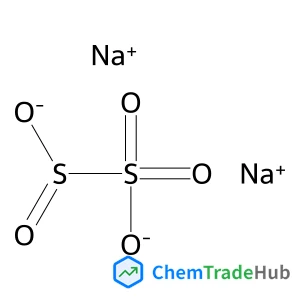
Many pattern developments in nature are believed to result from the interplay between self-activated (bio)chemical processes and the diffusive transport of constituents. Though the details are difficult to work out, the relevance of reaction–diffusion processes is widely accepted in many aspects of biological development. Due to their easier manipulation and control, aqueous phase chemical reactions are commonly preferred to probe the patterning capacity of reaction–diffusion processes. Nonetheless, sustained patterns of such a type were observed only in reactions involving oxyhalogen compounds. We report on halogen free solution chemistry systems which lead to stationary or oscillatory spatiotemporal pH patterns. They are based on the acid autocatalytic oxidation of sulfite ions by hydrogen peroxide in combination with two significantly different proton consuming feedback reactions. Besides the chemical novelty, yet experimentally and even theoretically undocumented pattern dynamics are uncovered. This success, based on a well-defined method, further paves the way to the discovery of stationary patterns in delicate biochemical reactions.
Related Literature
Photocontrolled reversible supramolecular assemblies of a diblock azo-copolymer based on β-cyclodextrin–Azo host–guest inclusion complexation
Shaohua Wang, Qiongxia Shen, Mian Hasnain Nawaz, Weian Zhang
2013-02-04
Paper
DOI: 10.1039/C3PY21148G
Facile synthesis of multi-block copolymers containing poly(ester–amide) segments with an ordered side group sequence
An Lv, Xin-Xing Deng, Lei Li, Zi-Long Li, Yao-Zong Wang, Fu-Sheng Du, Zi-Chen Li
2013-05-08
Communication
DOI: 10.1039/C3PY00382E
Effects of poly(vinyl pivalate)-based stabiliser architecture on CO2-solubility and stabilising ability in dispersion polymerisation of N-vinyl pyrrolidone
Natasha A. Birkin, Oliver J. Wildig, Steven M. Howdle
2013-05-16
Paper
DOI: 10.1039/C3PY00275F
A mesoporous silica-supported CeO2/cellulose cathode catalyst for efficient bioelectrochemical reduction of inorganic carbon to biofuels
Dayakar Thatikayala, Deepak Pant, Booki Min
2021-07-21
Paper
DOI: 10.1039/D1RE00166C
Practical polymerization of functionalized lactones and carbonates with Sn(OTf)2 in metal catalysed ring-opening polymerization methods
David M. Stevens, Harry A. Watson, Marc-Andre LeBlanc, Ray Y. Wang, Joanne Chou, Westley S. Bauer, Eva Harth
2013-02-11
Paper
DOI: 10.1039/C3PY21119C
Strategy for polymorphic control by enzymatic reaction and antisolvent crystallization: effect of aminoacylase on metastable β-glycine formation
Jen-Chieh Hsueh, Kuan Lin Yeh, Hung Lin Lee, Tu Lee
2021-09-21
Paper
DOI: 10.1039/D1RE00335F
Selective oxidation of bio-based platform molecules and their conversion products over metal nanoparticle catalysts: a review
Konstantin L. Timofeev, Olga V. Vodyankina
2020-11-24
Review Article
DOI: 10.1039/D0RE00352B
Bioinspired phospholipid polymer prodrug as a pH-responsive drug delivery system for cancer therapy
Haibo Wang, Fangming Xu, Dandan Li, Xiangsheng Liu, Qiao Jin, Jian Ji
2013-01-07
Paper
DOI: 10.1039/C2PY20981K
Immobilization of MacMillan catalyst via controlled radical polymerization: catalytic activity and reuse
Beth L. Moore, Annhelen Lu, Deborah A. Longbottom, Rachel K. O'Reilly
2013-02-06
Paper
DOI: 10.1039/C3PY21125H
You might also like
Compound Q&A
What are the main uses of 4-Nitrophenyl phosphate disodium salt hexahydrate (CAS: 333338-18-4)?
4-Nitrophenyl phosphate disodium salt hexahydrate is primarily used as a substra...
333338-18-44-Nitrophenyl phosph...
Compound Q&A
What are the main uses of 2-(Trifluoromethyl)-1,3-oxazole-4-carboxylic Acid (CAS: 1060816-01-4)?
2-(Trifluoromethyl)-1,3-oxazole-4-carboxylic Acid (CAS: 1060816-01-4) is widely ...
1060816-01-42-(Trifluoromethyl)-...
Compound Q&A
How should 2-Fluoro-4-biphenylcarboxylic acid (CAS: 137045-30-8) be stored?
2-Fluoro-4-biphenylcarboxylic acid should be stored in a cool, dry place at room...
137045-30-82-Fluoro-4-biphenylc...
Compound Q&A
What industries use Prednisolone-21-Carboxylic Acid (CAS: 61549-70-0)?
Prednisolone-21-Carboxylic Acid is primarily used in the pharmaceutical industry...
61549-70-0Prednisolone-21-Carb...
Compound Q&A
How should 4-(Hydrazinomethyl)-1,2,3-benzenetriol (CAS: 3614-72-0) be stored?
4-(Hydrazinomethyl)-1,2,3-benzenetriol (CAS: 3614-72-0) should be stored in a co...
3614-72-04-(Hydrazinomethyl)-...
Compound Q&A
What industries use 4-Amino-1-methyl-1H-pyrazole-5-carboxylic acid hydrochloride (CAS: 92534-70-8)?
4-Amino-1-methyl-1H-pyrazole-5-carboxylic acid hydrochloride (CAS: 92534-70-8) i...
92534-70-84-Amino-1-methyl-1H-...
Compound Q&A
What regulatory guidelines apply to dehydropachymic acid (CAS: 77012-31-8)?
Dehydropachymic acid (CAS: 77012-31-8) is regulated by various agencies. It fall...
77012-31-8Dehydropachymic acid
Compound Q&A
What is the market or research trend for 6-[(2,2-Dimethylpropanoyl)amino]nicotinic acid (CAS: 898561-66-5)?
The market and research trends for 6-[(2,2-Dimethylpropanoyl)amino]nicotinic aci...
898561-66-56-[(2,2-Dimethylprop...
Compound Q&A
How should 1,10-Phenanthroline-2,9-dicarbaldehyde (CAS: 57709-62-3) be stored?
1,10-Phenanthroline-2,9-dicarbaldehyde should be stored in a cool, dry place awa...
57709-62-31,10-Phenanthroline-...
Compound Q&A
How is 5-Carbamoyl-11-oxo-10,11-dihydro-5H-dibenzo[b,f]azepin-10-yl acetate (CAS: 113952-21-9) typically synthesized?
5-Carbamoyl-11-oxo-10,11-dihydro-5H-dibenzo[b,f]azepin-10-yl acetate can be synt...
113952-21-95-Carbamoyl-11-oxo-1...
Source Journal
Physical Chemistry Chemical Physics

CiteScore:
5.5
Self-citation Rate:
10.3%
Articles per Year:
3036
Physical Chemistry Chemical Physics (PCCP) is an international journal co-owned by 19 physical chemistry and physics societies from around the world. This journal publishes original, cutting-edge research in physical chemistry, chemical physics and biophysical chemistry. To be suitable for publication in PCCP, articles must include significant innovation and/or insight into physical chemistry; this is the most important criterion that reviewers and Editors will judge against when evaluating submissions. The journal has a broad scope and welcomes contributions spanning experiment, theory, computation and data science. Topical coverage includes spectroscopy, dynamics, kinetics, statistical mechanics, thermodynamics, electrochemistry, catalysis, surface science, quantum mechanics, quantum computing and machine learning. Interdisciplinary research areas such as polymers and soft matter, materials, nanoscience, energy, surfaces/interfaces, and biophysical chemistry are welcomed if they demonstrate significant innovation and/or insight into physical chemistry. Joined experimental/theoretical studies are particularly appreciated when complementary and based on up-to-date approaches.
Recommended Compounds
Recommended Suppliers





Disclaimer
This page provides academic journal information for reference and research purposes only. We are not affiliated with any journal publishers and do not handle publication submissions. For publication-related inquiries, please contact the respective journal publishers directly.
If you notice any inaccuracies in the information displayed, please contact us at support@chemtradehub.com. We will promptly review and address your concerns.