












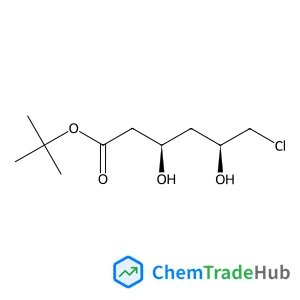
2-Methyl-2-propanyl (3R,5S)-6-chloro-3,5-dihydroxyhexanoate
CAS Number:
154026-93-4
Molecular Formula:
C10H19ClO4
Zhiyao Duan, Guofeng Wang
We have performed first-principle density functional theory calculations to investigate how a subsurface transition metal M (M = Ni, Co, or Fe) affects the energetics and mechanisms of oxygen reduction reaction (ORR) on the outermost Pt mono-surface layer of Pt/M(111) surfaces. In this work, we found that the subsurface Ni, Co, and Fe could down-shift the d-band center of the Pt surface layer and thus weaken the binding of chemical species to the Pt/M(111) surface. Moreover, the subsurface Ni, Co, and Fe could modify the heat of reaction and activation energy of various elementary reactions of ORR on these Pt/M(111) surfaces. Our DFT results revealed that, due to the influence of the subsurface Ni, Co, and Fe, ORR would adopt a hydrogen peroxide dissociation mechanism with an activation energy of 0.15 eV on Pt/Ni(111), 0.17 eV on Pt/Co(111), and 0.16 eV on Pt/Fe(111) surface, respectively, for their rate-determining O2 protonation reaction. In contrast, ORR would follow a peroxyl dissociation mechanism on a pure Pt(111) surface with an activation energy of 0.79 eV for its rate-determining O protonation reaction. Thus, our theoretical study explained why the subsurface Ni, Co, and Fe could lead to multi-fold enhancement in catalytic activity for ORR on the Pt mono-surface layer of Pt/M(111) surfaces.
DOI: 10.1039/C9OB00059C
Christof Domnick, Gregor Hagelueken, Frank Eggert, Olav Schiemann, Stephanie Kath-Schorr
DOI: 10.1039/C8OB02597E
Jianxiao Li, Shaorong Yang, Wanqing Wu, Huanfeng Jiang
DOI: 10.1039/D0QO00377H
Jiawei Zhang, Erfei Wang, Yang Zhou, Lu Zhang, Mao Chen, Xinrong Lin
DOI: 10.1039/D0QO00432D
Haorui Gu, Shaoying Huang, Xufeng Lin
DOI: 10.1039/C8OB03065K
Zhiwen Liu, Liang Ma, Liping Zhang, Wenjun Zhang, Yiguang Zhu, Yuchan Chen, Weimin Zhang, Changsheng Zhang
DOI: 10.1039/C8OB02775G
Vladyslav Shenderman
DOI: 10.1039/C8OB02890G
Surajit Haldar, Chandan K. Jana
DOI: 10.1039/C8OB02309C
Xiao-Ya Yuan, Fan-Lin Zeng, Hu-Lin Zhu, Qi-Yan Lv, Xiao-Lan Chen, Lifen Peng, Bing Yu
DOI: 10.1039/D0QO00222D
(1R,3S)-1,3-Cyclopentanediol finds applications in various industries. In the ph...
When handling N'-[4-(Dimethylamino)phenyl]-N,N-dimethyl-1,4-benzenediamine, it i...
There are several alternatives to 5-(2,4-Difluorophenyl)-2-methoxypyrimidine in ...
1-(3-Methoxyphenoxy)propan-2-ol (CAS: 382141-68-6) must comply with the Globally...
Tetrodotoxin Citrate is extremely dangerous and should be handled with extreme c...
2-Methyl-2-propanyl [(1R,3S)-3-hydroxycyclopentyl]carbamate (CAS: 225641-84-9) i...
Waste containing 4-(2-Hydroxyhexafluoroisopropyl)Benzoic Acid (CAS: 16261-80-6) ...
2-Methyl-2-proanyl {(2S)-1-[(benzyloxy)amino]-3-hydroxy-3-methyl-1-oxo-2-butanyl...
Benzeneethanamine, α-ethyl-, hydrochloride (1:1) is an organic compound with the...
In the synthesis of compounds similar to 3-{(E)-[4-(Dimethylamino)phenyl]diazeny...

Physical Chemistry Chemical Physics (PCCP) is an international journal co-owned by 19 physical chemistry and physics societies from around the world. This journal publishes original, cutting-edge research in physical chemistry, chemical physics and biophysical chemistry. To be suitable for publication in PCCP, articles must include significant innovation and/or insight into physical chemistry; this is the most important criterion that reviewers and Editors will judge against when evaluating submissions. The journal has a broad scope and welcomes contributions spanning experiment, theory, computation and data science. Topical coverage includes spectroscopy, dynamics, kinetics, statistical mechanics, thermodynamics, electrochemistry, catalysis, surface science, quantum mechanics, quantum computing and machine learning. Interdisciplinary research areas such as polymers and soft matter, materials, nanoscience, energy, surfaces/interfaces, and biophysical chemistry are welcomed if they demonstrate significant innovation and/or insight into physical chemistry. Joined experimental/theoretical studies are particularly appreciated when complementary and based on up-to-date approaches.
![N-[(1S,2R,4S)-2-Amino-4-(dimethylcarbamoyl)cyclohexyl]-N'-(5-chloro-2-pyridinyl)ethanediamide structure](https://static.chemtradehub.com/structs/480/480452-37-7-0898.webp "N-[(1S,2R,4S)-2-Amino-4-(dimethylcarbamoyl)cyclohexyl]-N'-(5-chloro-2-pyridinyl)ethanediamide structure")
![N-[(5,6-Dichloro-1H-benzimidazol-2-yl)methyl]-9-(1-methyl-1H-pyrazol-4-yl)-2-(4-morpholinyl)-9H-purin-6-amine structure](https://static.chemtradehub.com/structs/238/2387704-62-1-25f4.webp "N-[(5,6-Dichloro-1H-benzimidazol-2-yl)methyl]-9-(1-methyl-1H-pyrazol-4-yl)-2-(4-morpholinyl)-9H-purin-6-amine structure")
![N-[(9H-Fluoren-9-ylmethoxy)carbonyl]-beta-phenyl-L-phenylalanine structure](https://static.chemtradehub.com/structs/201/201484-50-6-c2fc.webp "N-[(9H-Fluoren-9-ylmethoxy)carbonyl]-beta-phenyl-L-phenylalanine structure")




