












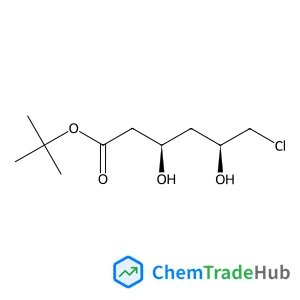
2-Methyl-2-propanyl (3R,5S)-6-chloro-3,5-dihydroxyhexanoate
CAS Number:
154026-93-4
Molecular Formula:
C10H19ClO4
Enrico Tapavicza, Alexander M. Meyer, Filipp Furche
We investigate the photodynamics of vitamin D derivatives by a fully analytical implementation of the linear response time-dependent density functional theory surface hopping method (LR-TDDFT-SH). Our study elucidates the dynamics of the processes involved in vitamin D formation at the molecular level and with femtosecond resolution. We explain the major experimental findings and provide new insights that cannot directly be obtained from experiments: firstly, we investigate the dynamics of the photoinduced ring-opening of provitamin D (Pro) and cyclohexadiene (CHD) and the subsequent rotational isomerization. In agreement with recent experiments and CC2 calculations, only the bright S1 state is involved in the ring-opening reaction. Our calculations confirm the experimentally reported 5 : 1 ratio between the excited state lifetimes of Pro and CHD. The longer lifetimes of Pro are attributed to steric constraints of the steroid skeleton and to temperature effects, both emerging directly from our simulations. For CHD and Pro, we present an explanation of the biexponential decay recently reported by Sension and coworkers [Tang et al., J. Phys. Chem., 2011, 134, 104503]: our calculations suggest that the fast and slow components arise from a reactive and an unreactive reaction pathway, respectively. Secondly, we assess the wavelength dependent photochemistry of previtamin D (Pre). Using replica exchange molecular dynamics we sample the Pre conformers present at thermal equilibrium. Based on this ensemble we explain the conformation dependent absorption and the essential features of Pre photochemistry. Consistent with the experiments, we find ring-closure to occur mostly after excitation of the cZc conformers and at lower energies, whereas Z/Eisomerization of the central double bond preferably occurs after excitation at higher energies. For the isomerization we provide the first theoretical evidence of the proposed hula-twist mechanism. Our results show that LR-TDDFT-SH is a highly valuable tool for studying the photochemistry of moderately large systems, even though challenges remain in the vicinity of conical intersections.
Wenbo Ma, Nikolaos Kaplaneris, Xinyue Fang, Linghui Gu, Ruhuai Mei, Lutz Ackermann
DOI: 10.1039/C9QO01497G
Yuanqi Wu, Bing Xu, Bing Liu, Zhan-Ming Zhang, Yu Liu
DOI: 10.1039/C8OB02922A
Sourav Roy, Suman Pradhan, Krishan Kumar, Indranil Chatterjee
DOI: 10.1039/D0QO00354A
Zhili Chen, Hui Mao, Fangli Hu, Dongmei Li, Yu Tan, Fengqing Yang, Wenling Qin
DOI: 10.1039/C8OB02967A
DOI: 10.1039/C8OB02284D
Vladimir V. Voronin, Maria S. Ledovskaya
DOI: 10.1039/D0QO00202J
Jianxiao Li, Shaorong Yang, Wanqing Wu, Huanfeng Jiang
DOI: 10.1039/D0QO00377H
Huiqing Chen, Jia Xie, Dong Xing, Jinping Wang, Jie Tang, Zhengfang Yi, Fei Xia, Wen-Wei Qiu, Fan Yang
DOI: 10.1039/C8OB02761G
Surajit Haldar, Chandan K. Jana
DOI: 10.1039/C8OB02309C
Samer Gnaim, Doron Shabat
DOI: 10.1039/C8OB03042A
(1R,3S)-1,3-Cyclopentanediol finds applications in various industries. In the ph...
When handling N'-[4-(Dimethylamino)phenyl]-N,N-dimethyl-1,4-benzenediamine, it i...
There are several alternatives to 5-(2,4-Difluorophenyl)-2-methoxypyrimidine in ...
1-(3-Methoxyphenoxy)propan-2-ol (CAS: 382141-68-6) must comply with the Globally...
Tetrodotoxin Citrate is extremely dangerous and should be handled with extreme c...
2-Methyl-2-propanyl [(1R,3S)-3-hydroxycyclopentyl]carbamate (CAS: 225641-84-9) i...
Waste containing 4-(2-Hydroxyhexafluoroisopropyl)Benzoic Acid (CAS: 16261-80-6) ...
2-Methyl-2-proanyl {(2S)-1-[(benzyloxy)amino]-3-hydroxy-3-methyl-1-oxo-2-butanyl...
Benzeneethanamine, α-ethyl-, hydrochloride (1:1) is an organic compound with the...
In the synthesis of compounds similar to 3-{(E)-[4-(Dimethylamino)phenyl]diazeny...

Physical Chemistry Chemical Physics (PCCP) is an international journal co-owned by 19 physical chemistry and physics societies from around the world. This journal publishes original, cutting-edge research in physical chemistry, chemical physics and biophysical chemistry. To be suitable for publication in PCCP, articles must include significant innovation and/or insight into physical chemistry; this is the most important criterion that reviewers and Editors will judge against when evaluating submissions. The journal has a broad scope and welcomes contributions spanning experiment, theory, computation and data science. Topical coverage includes spectroscopy, dynamics, kinetics, statistical mechanics, thermodynamics, electrochemistry, catalysis, surface science, quantum mechanics, quantum computing and machine learning. Interdisciplinary research areas such as polymers and soft matter, materials, nanoscience, energy, surfaces/interfaces, and biophysical chemistry are welcomed if they demonstrate significant innovation and/or insight into physical chemistry. Joined experimental/theoretical studies are particularly appreciated when complementary and based on up-to-date approaches.

![N,N'-1,2-Ethanediylbis[2-(vinylsulfonyl)acetamide] structure](https://static.chemtradehub.com/structs/667/66710-66-5-b556.webp "N,N'-1,2-Ethanediylbis[2-(vinylsulfonyl)acetamide] structure")





