












An intramolecular charge/electron transfer chemiluminescence mechanism of oxidophenyl-substituted 1,2-dioxetane
Literature Information
Publication Date
2011-08-10
DOI
10.1039/C1CP20973F
Impact Factor
3.676
Authors
Chizuko Tanaka, Jiro Tanaka, Masakatsu Matsumoto
View Original
Abstract
The chemiluminescence (CL) mechanism of oxidophenyl-substituted 1,2-dioxetane was investigated by performing TD-DFT calculations on biradicals of three model compounds. We propose a novel mechanism of CL in which excitation of a dissociative intermediate by infrared radiation (IRE) of the surrounding solvent is considered. The excitation energies and oscillator strengths (f-values) were estimated for intermediates along the reaction coordinate (Rx). The difference in efficiencies of CL between syn- and anti-isomers of m-oxidophenyl-dioxetane is explained using the difference in potential curves of the singlet excited states (S) and the IRE mechanism. At the point where the biradical of the anti-isomer decomposes into two fragments, the interaction between the S and triplet (T) states is induced by a significant back electron transfer (BET) from the dioxetane group to the oxido-phenyl group and the S1 excited state is stabilized and CL efficiency is enhanced. In the syn-isomer, the barrier in the S1 potential curve to reach the final CL state is higher than for the anti-isomer, which reduces the efficiency. The poor CL yield for the p-isomer is ascribed to a much higher barrier in the potential curve of the S1 state.
Related Literature
Catalyst-free synthesis of diversely substituted 6H-benzo[c]chromenes and 6H-benzo[c]chromen-6-ones in aqueous media under MWI
Yan He, Xinying Zhang, Liangyan Cui, Jianji Wang, Xuesen Fan
2012-10-09
Paper
DOI: 10.1039/C2GC36379H
Tailored synthesis of mesoporous platinum replicas using double gyroid mesoporous silica (KIT-6) with different pore diameters via vapor infiltration of a reducing agent
Yoji Doi, Azusa Takai, Yasuhiro Sakamoto, Kazuyuki Kuroda
2010-08-03
Communication
DOI: 10.1039/C0CC01196G
Practical iron-catalyzed dehalogenation of aryl halides
Waldemar Maximilian Czaplik, Sabine Grupe, Matthias Mayer, Axel Jacobi von Wangelin
2010-08-09
Communication
DOI: 10.1039/C0CC01980A
Potassium carbonate–silica: a highly effective stationary phase for the chromatographic removal of organotin impurities‡
David C. Harrowven, Dennis P. Curran, Sarah L. Kostiuk, Ian L. Wallis-Guy, Sally Whiting, Kerri J. Stenning, Bencan Tang, Emma Packard, Lana Nanson
2010-08-03
Communication
DOI: 10.1039/C0CC01328E
Epoxidation of styrene by TBHP to styrene oxide using barium oxide as a highly active/selective and reusable solid catalyst
Vasant R. Choudhary, Rani Jha, Prabhas Jana
2006-06-30
Communication
DOI: 10.1039/B604937K
Stabilization of zwitterionic aryltrifluoroborates against hydrolysis
Casey R. Wade, Haiyan Zhao, François P. Gabbaï
2010-08-05
Communication
DOI: 10.1039/C0CC02117B
Synthesis and catalytic properties of mesoporous, bifunctional, gallium–niobium mixed oxides
Chinmay A. Deshmane, Jacek B. Jasinski, Paul Ratnasamy, Moises A. Carreon
2010-08-10
Communication
DOI: 10.1039/C0CC01962C
Microalgae biorefinery concept based on hydrothermal microwave pyrolysis
V. Budarin, A. B. Ross, P. Biller, R. Riley, J. H. Clark, J. M. Jones, D. J. Gilmour, W. Zimmerman
2012-10-01
Communication
DOI: 10.1039/C2GC36202C
Catalyst free approach to benzimidazoles using air as the oxidant at room temperature
Chun Zhang, Liangren Zhang
2012-10-09
Communication
DOI: 10.1039/C2GC36416F
You might also like
Compound Q&A
What regulatory guidelines apply to 4-Amino-3-bromophenol (CAS: 74440-80-5)?
4-Amino-3-bromophenol (CAS: 74440-80-5) falls under the classification of a haza...
74440-80-54-Amino-3-bromopheno...
Compound Q&A
How should (17beta)-3-Oxoestr-4-en-17-yl acetate (CAS: 1425-10-1) be stored?
(17beta)-3-Oxoestr-4-en-17-yl acetate should be stored in a cool, dry place away...
1425-10-1(17beta)-3-Oxoestr-4...
Compound Q&A
What are the physical and chemical properties of 2-[(2,2-Diethoxyethyl)disulfanyl]-1,1-diethoxyethane (CAS: 76505-71-0)?
2-[(2,2-Diethoxyethyl)disulfanyl]-1,1-diethoxyethane (CAS: 76505-71-0) is a colo...
76505-71-02-[(2,2-Diethoxyethy...
Compound Q&A
What is the market or research trend for 1-(β-D-ribofuranosyl)-1H-imidazo[4,5-c]pyridin-4-amine?
The market and research for 1-(β-D-ribofuranosyl)-1H-imidazo[4,5-c]pyridin-4-ami...
6736-58-91-(beta-D-Ribofurano...
Compound Q&A
How should waste containing Conjugated Estrogen (CAS: 12126-59-9) be handled?
Waste containing Conjugated Estrogen (CAS: 12126-59-9) should be collected and d...
12126-59-9Conjugated Estrogen
Compound Q&A
What is the market or research trend for Bis(2,2,2-trifluoroethyl) (methoxycarbonylmethyl)phosphonate?
The market for Bis(2,2,2-trifluoroethyl) (methoxycarbonylmethyl)phosphonate (CAS...
88738-78-7Bis(2,2,2-trifluoroe...
Compound Q&A
Are there alternatives to 3,4'-Di-O-methylellagic acid (CAS: 57499-59-9) in synthesis?
There are several alternatives to 3,4'-Di-O-methylellagic acid (CAS: 57499-59-9)...
57499-59-93,4'-Di-O-methylella...
Compound Q&A
What regulatory guidelines apply to 2-Chloro-N,N-dimethylpyridin-4-amine (CAS: 59047-70-0)?
2-Chloro-N,N-dimethylpyridin-4-amine (CAS: 59047-70-0) is regulated under the Gl...
59047-70-02-Chloro-N,N-dimethy...
Compound Q&A
What is cerium(3+);oxygen(2-);vanadium(5+) (CAS: 13597-19-8)?
Cerium(3+);oxygen(2-);vanadium(5+) (CAS: 13597-19-8) is a complex inorganic comp...
13597-19-8cerium(3+);oxygen(2-...
Compound Q&A
Is 7-Chloro-1-iodoisoquinoline (CAS: 1203579-27-4) safe?
7-Chloro-1-iodoisoquinoline (CAS: 1203579-27-4) is generally considered safe whe...
1203579-27-47-Chloro-1-iodoisoqu...
Source Journal
Physical Chemistry Chemical Physics

CiteScore:
5.5
Self-citation Rate:
10.3%
Articles per Year:
3036
Physical Chemistry Chemical Physics (PCCP) is an international journal co-owned by 19 physical chemistry and physics societies from around the world. This journal publishes original, cutting-edge research in physical chemistry, chemical physics and biophysical chemistry. To be suitable for publication in PCCP, articles must include significant innovation and/or insight into physical chemistry; this is the most important criterion that reviewers and Editors will judge against when evaluating submissions. The journal has a broad scope and welcomes contributions spanning experiment, theory, computation and data science. Topical coverage includes spectroscopy, dynamics, kinetics, statistical mechanics, thermodynamics, electrochemistry, catalysis, surface science, quantum mechanics, quantum computing and machine learning. Interdisciplinary research areas such as polymers and soft matter, materials, nanoscience, energy, surfaces/interfaces, and biophysical chemistry are welcomed if they demonstrate significant innovation and/or insight into physical chemistry. Joined experimental/theoretical studies are particularly appreciated when complementary and based on up-to-date approaches.
Recommended Compounds
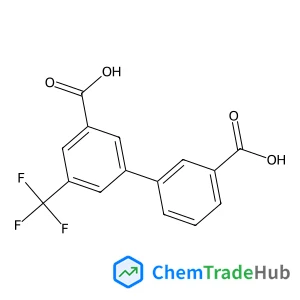
3-(3-Carboxyphenyl)-5-(trifluoromethyl)benzoic acid
CAS Number:
1261930-96-4
Molecular Formula:
C15H9F3O4
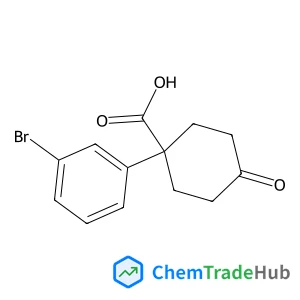
1-(3-Bromophenyl)-4-oxocyclohexanecarboxylic acid
CAS Number:
1385694-53-0
Molecular Formula:
C13H13BrO3
Recommended Suppliers





Disclaimer
This page provides academic journal information for reference and research purposes only. We are not affiliated with any journal publishers and do not handle publication submissions. For publication-related inquiries, please contact the respective journal publishers directly.
If you notice any inaccuracies in the information displayed, please contact us at support@chemtradehub.com. We will promptly review and address your concerns.