











Catalyst free approach to benzimidazoles using air as the oxidant at room temperature
Literature Information
Publication Date
2012-10-09
DOI
10.1039/C2GC36416F
Impact Factor
10.182
Authors
Chun Zhang, Liangren Zhang
View Original
Abstract
A green and practical method to construct benzimidazoles, which are ubiquitous structural units in a number of biologically active compounds, has been developed. The catalyst and additive free conditions, using air as oxidant and the mild conditions make this transformation very green, practical, and attractive.
Related Literature
Chiral recognition and atropisomerism in the sevoflurane dimer
Nathan A. Seifert, Cristóbal Pérez, Justin L. Neill, Brooks H. Pate, Montserrat Vallejo-López, Alberto Lesarri, Emilio J. Cocinero, Fernando Castaño
2015-04-22
Paper
DOI: 10.1039/C5CP01025J
Direct 17O NMR experimental evidence for Al–NBO bonds in Si-rich and highly polymerized aluminosilicate glasses
Aleksander Jaworski, Baltzar Stevensson, Mattias Edén
2015-06-23
Communication
DOI: 10.1039/C5CP02985F
Controlling charge separation and recombination by chemical design in donor–acceptor dyads
Li Liu, Pierre Eisenbrandt, Thomas Roland, Matthias Polkehn, Pierre-Olivier Schwartz, Kirsten Bruchlos, Beatrice Omiecienski, Sabine Ludwigs, Nicolas Leclerc, Elena Zaborova, Jérémie Léonard, Stéphane Méry, Irene Burghardt, Stefan Haacke
2016-05-17
Paper
DOI: 10.1039/C6CP00644B
Highly efficient perturbative + variational strategy based on orthogonal valence bond theory for the evaluation of magnetic coupling constants. Application to the trinuclear Cu(ii) site of multicopper oxidases
Lorenzo Tenti, Daniel Maynau, Celestino Angeli, Carmen J. Calzado
2016-06-09
Paper
DOI: 10.1039/C6CP03234F
High thermoelectric performance of the distorted bismuth(110) layer
L. Cheng, H. J. Liu, J. Zhang, J. Wei, J. H. Liang, P. H. Jiang, D. D. Fan, L. Sun, J. Shi
2016-06-01
Paper
DOI: 10.1039/C6CP01958G
Characterisation of the surface of freshly prepared precious metal catalysts
Stewart F. Parker, Devashibhai Adroja, Mónica Jiménez-Ruiz, Markus Tischer, Konrad Möbus, Stefan D. Wieland, Peter Albers
2016-03-09
Paper
DOI: 10.1039/C6CP01027J
In situ investigation of mesoporous silicon oxidation kinetics using infrared emittance spectroscopy
Benjamin Bardet, Domingos De Sousa Meneses, Thomas Defforge, Jérôme Billoué, Gaël Gautier
2016-06-17
Paper
DOI: 10.1039/C6CP02086K
High coverage adsorption and co-adsorption of CO and H2 on Ru(0001) from DFT and thermodynamics
Jianguo Wang
2015-06-23
Paper
DOI: 10.1039/C5CP02486B
The effect of molecular dynamics sampling on the calculated observable gas-phase structures
Arseniy A. Otlyotov
2016-06-07
Paper
DOI: 10.1039/C6CP02973F
Crystallographic origin of cycle decay of the high-voltage LiNi0.5Mn1.5O4 spinel lithium-ion battery electrode
Cheng-Zhang Lu, Chia-Erh Liu, Vanessa K. Peterson, Shih-Chieh Liao, Jin-Ming Chen
2016-03-04
Paper
DOI: 10.1039/C6CP00947F
You might also like
Compound Q&A
What regulatory guidelines apply to 4-Amino-3-bromophenol (CAS: 74440-80-5)?
4-Amino-3-bromophenol (CAS: 74440-80-5) falls under the classification of a haza...
74440-80-54-Amino-3-bromopheno...
Compound Q&A
How should (17beta)-3-Oxoestr-4-en-17-yl acetate (CAS: 1425-10-1) be stored?
(17beta)-3-Oxoestr-4-en-17-yl acetate should be stored in a cool, dry place away...
1425-10-1(17beta)-3-Oxoestr-4...
Compound Q&A
What are the physical and chemical properties of 2-[(2,2-Diethoxyethyl)disulfanyl]-1,1-diethoxyethane (CAS: 76505-71-0)?
2-[(2,2-Diethoxyethyl)disulfanyl]-1,1-diethoxyethane (CAS: 76505-71-0) is a colo...
76505-71-02-[(2,2-Diethoxyethy...
Compound Q&A
What is the market or research trend for 1-(β-D-ribofuranosyl)-1H-imidazo[4,5-c]pyridin-4-amine?
The market and research for 1-(β-D-ribofuranosyl)-1H-imidazo[4,5-c]pyridin-4-ami...
6736-58-91-(beta-D-Ribofurano...
Compound Q&A
How should waste containing Conjugated Estrogen (CAS: 12126-59-9) be handled?
Waste containing Conjugated Estrogen (CAS: 12126-59-9) should be collected and d...
12126-59-9Conjugated Estrogen
Compound Q&A
What is the market or research trend for Bis(2,2,2-trifluoroethyl) (methoxycarbonylmethyl)phosphonate?
The market for Bis(2,2,2-trifluoroethyl) (methoxycarbonylmethyl)phosphonate (CAS...
88738-78-7Bis(2,2,2-trifluoroe...
Compound Q&A
Are there alternatives to 3,4'-Di-O-methylellagic acid (CAS: 57499-59-9) in synthesis?
There are several alternatives to 3,4'-Di-O-methylellagic acid (CAS: 57499-59-9)...
57499-59-93,4'-Di-O-methylella...
Compound Q&A
What regulatory guidelines apply to 2-Chloro-N,N-dimethylpyridin-4-amine (CAS: 59047-70-0)?
2-Chloro-N,N-dimethylpyridin-4-amine (CAS: 59047-70-0) is regulated under the Gl...
59047-70-02-Chloro-N,N-dimethy...
Compound Q&A
What is cerium(3+);oxygen(2-);vanadium(5+) (CAS: 13597-19-8)?
Cerium(3+);oxygen(2-);vanadium(5+) (CAS: 13597-19-8) is a complex inorganic comp...
13597-19-8cerium(3+);oxygen(2-...
Compound Q&A
Is 7-Chloro-1-iodoisoquinoline (CAS: 1203579-27-4) safe?
7-Chloro-1-iodoisoquinoline (CAS: 1203579-27-4) is generally considered safe whe...
1203579-27-47-Chloro-1-iodoisoqu...
Source Journal
Green Chemistry

CiteScore:
16.1
Self-citation Rate:
7.5%
Articles per Year:
944
Green Chemistry provides a unique forum for the publication of innovative research on the development of alternative green and sustainable technologies. The scope of Green Chemistry is based on, but not limited to, the definition proposed by Anastas and Warner (Green Chemistry: Theory and Practice, P T Anastas and J C Warner, Oxford University Press, Oxford, 1998). Green chemistry is the utilisation of a set of principles that reduces or eliminates the use or generation of hazardous substances in the design, manufacture and application of chemical products. Green Chemistry is at the frontiers of this continuously-evolving interdisciplinary science and publishes research that attempts to reduce the environmental impact of the chemical enterprise by developing a technology base that is inherently non-toxic to living things and the environment. Submissions on all aspects of research relating to the endeavour are welcome. The journal publishes original and significant cutting-edge research that is likely to be of wide general appeal. To be published, work must present a significant advance in green chemistry. Papers must contain a comparison with existing methods and demonstrate advantages over those methods before publication can be considered. For more information please see this Editorial. Coverage includes the following, but is not limited to: Design (e.g. biomimicry, design for degradation/recycling/reduced toxicity…) Reagents & Feedstocks (e.g. renewables, CO2, solvents, auxiliary agents, waste utilization…) Synthesis (e.g. organic, inorganic, synthetic biology…) Catalysis (e.g. homogeneous, heterogeneous, enzyme, whole cell…) Process (e.g. process design, intensification, separations, recycling, efficiency…) Energy (e.g. renewable energy, fuels, photovoltaics, fuel cells, energy storage, energy carriers…) Applications (e.g. electronics, dyes, consumer products, coatings, pharmaceuticals, preservatives, building materials, chemicals for industry/agriculture/mining…) Impact (e.g. safety, metrics, LCA, sustainability, (eco)toxicology…) Green chemistry is, by definition, a continuously-evolving frontier. Therefore, the inclusion of a particular material or technology does not, of itself, guarantee that a paper is suitable for the journal. To be suitable, the novel advance should have the potential for reduced environmental impact relative to the state of the art. Green Chemistry does not normally deal with research associated with 'end-of-pipe' or remediation issues.
Recommended Compounds
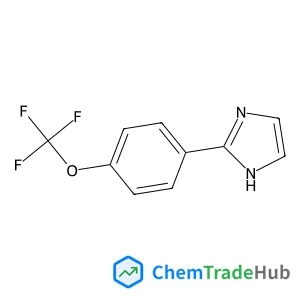
Recommended Suppliers







Disclaimer
This page provides academic journal information for reference and research purposes only. We are not affiliated with any journal publishers and do not handle publication submissions. For publication-related inquiries, please contact the respective journal publishers directly.
If you notice any inaccuracies in the information displayed, please contact us at support@chemtradehub.com. We will promptly review and address your concerns.