












![5,10-Dihydro-11H-dibenzo[b,e][1,4]diazepin-11-one structure](https://static.chemtradehub.com/structs/581/5814-41-5-0b01.webp "5,10-Dihydro-11H-dibenzo[b,e][1,4]diazepin-11-one structure")
JAAS—a historical perspective
Literature Information
Publication Date
2006-01-19
DOI
10.1039/B600105J
Impact Factor
4.023
Authors
View Original
Abstract
A graphical abstract is available for this content
Recommended Journals
Related Literature
Structural phase transition in perovskite metal–formate frameworks: a Potts-type model with dipolar interactions
Mantas Šimėnas, Sergejus Balčiūnas, Mirosław Maçzka, Jūras Banys, Evaldas E. Tornau
2016-06-13
Paper
DOI: 10.1039/C6CP03414D
Functionalized SPIONs: the surfactant nature modulates the self-assembly and cluster formation
Richard K. Heenan
2016-06-09
Paper
DOI: 10.1039/C6CP01694D
Characterization of dimethylsulfoxide/glycerol mixtures: a binary solvent system for the study of “friction-dependent” chemical reactivity
Gonzalo Angulo, Marta Brucka, Mario Gerecke, Günter Grampp, Damien Jeannerat, Jadwiga Milkiewicz, Yavor Mitrev, Arnulf Rosspeintner, Eric Vauthey
2016-06-10
Paper
DOI: 10.1039/C6CP02997C
Controlling charge separation and recombination by chemical design in donor–acceptor dyads
Li Liu, Pierre Eisenbrandt, Thomas Roland, Matthias Polkehn, Pierre-Olivier Schwartz, Kirsten Bruchlos, Beatrice Omiecienski, Sabine Ludwigs, Nicolas Leclerc, Elena Zaborova, Jérémie Léonard, Stéphane Méry, Irene Burghardt, Stefan Haacke
2016-05-17
Paper
DOI: 10.1039/C6CP00644B
Hydrothermal stability investigation of micro- and mesoporous silica containing long-range ordered cobalt oxide clusters by XAS
David K. Wang, Peter Kappen
2015-06-30
Paper
DOI: 10.1039/C5CP02309B
First principles optimally tuned range-separated density functional theory for prediction of phosphorus–hydrogen spin–spin coupling constants
Mojtaba Alipour, Parisa Fallahzadeh
2016-06-24
Paper
DOI: 10.1039/C6CP02648F
Fabrication of bilayer tetrathiafulvalene integrated surface covalent organic frameworks
Cheng Wang, Dong Wang, Li-Jun Wan
2016-06-06
Communication
DOI: 10.1039/C6CP01804A
Direct 17O NMR experimental evidence for Al–NBO bonds in Si-rich and highly polymerized aluminosilicate glasses
Aleksander Jaworski, Baltzar Stevensson, Mattias Edén
2015-06-23
Communication
DOI: 10.1039/C5CP02985F
Positional recurrence maps, a powerful tool to de-correlate static and dynamical disorder in distribution maps from molecular dynamics simulations: the case of Nd2NiO4+d
A. Piovano, A. Perrichon, M. Boehm, M. R. Johnson, W. Paulus
2015-12-01
Paper
DOI: 10.1039/C5CP06464C
You might also like
Compound Q&A
What regulatory guidelines apply to 4-Amino-3-bromophenol (CAS: 74440-80-5)?
4-Amino-3-bromophenol (CAS: 74440-80-5) falls under the classification of a haza...
74440-80-54-Amino-3-bromopheno...
Compound Q&A
How should (17beta)-3-Oxoestr-4-en-17-yl acetate (CAS: 1425-10-1) be stored?
(17beta)-3-Oxoestr-4-en-17-yl acetate should be stored in a cool, dry place away...
1425-10-1(17beta)-3-Oxoestr-4...
Compound Q&A
What are the physical and chemical properties of 2-[(2,2-Diethoxyethyl)disulfanyl]-1,1-diethoxyethane (CAS: 76505-71-0)?
2-[(2,2-Diethoxyethyl)disulfanyl]-1,1-diethoxyethane (CAS: 76505-71-0) is a colo...
76505-71-02-[(2,2-Diethoxyethy...
Compound Q&A
What is the market or research trend for 1-(β-D-ribofuranosyl)-1H-imidazo[4,5-c]pyridin-4-amine?
The market and research for 1-(β-D-ribofuranosyl)-1H-imidazo[4,5-c]pyridin-4-ami...
6736-58-91-(beta-D-Ribofurano...
Compound Q&A
How should waste containing Conjugated Estrogen (CAS: 12126-59-9) be handled?
Waste containing Conjugated Estrogen (CAS: 12126-59-9) should be collected and d...
12126-59-9Conjugated Estrogen
Compound Q&A
What is the market or research trend for Bis(2,2,2-trifluoroethyl) (methoxycarbonylmethyl)phosphonate?
The market for Bis(2,2,2-trifluoroethyl) (methoxycarbonylmethyl)phosphonate (CAS...
88738-78-7Bis(2,2,2-trifluoroe...
Compound Q&A
Are there alternatives to 3,4'-Di-O-methylellagic acid (CAS: 57499-59-9) in synthesis?
There are several alternatives to 3,4'-Di-O-methylellagic acid (CAS: 57499-59-9)...
57499-59-93,4'-Di-O-methylella...
Compound Q&A
What regulatory guidelines apply to 2-Chloro-N,N-dimethylpyridin-4-amine (CAS: 59047-70-0)?
2-Chloro-N,N-dimethylpyridin-4-amine (CAS: 59047-70-0) is regulated under the Gl...
59047-70-02-Chloro-N,N-dimethy...
Compound Q&A
What is cerium(3+);oxygen(2-);vanadium(5+) (CAS: 13597-19-8)?
Cerium(3+);oxygen(2-);vanadium(5+) (CAS: 13597-19-8) is a complex inorganic comp...
13597-19-8cerium(3+);oxygen(2-...
Compound Q&A
Is 7-Chloro-1-iodoisoquinoline (CAS: 1203579-27-4) safe?
7-Chloro-1-iodoisoquinoline (CAS: 1203579-27-4) is generally considered safe whe...
1203579-27-47-Chloro-1-iodoisoqu...
Source Journal
Journal of Analytical Atomic Spectrometry

CiteScore:
6.2
Self-citation Rate:
25.8%
Articles per Year:
254
The Journal of Analytical Atomic Spectrometry (JAAS) is the central journal for publishing innovative research on fundamentals, instrumentation, and methods in the determination, speciation and isotopic analysis of (trace) elements within all fields of application. This includes, but is not restricted to, the most recent progress, developments and achievements in all forms of atomic and elemental detection, isotope ratio determination, molecular analysis, plasma-based analysis and X-ray techniques. The journal welcomes full papers, communications, technical notes, critical and tutorial review articles, editorials, and comments, in addition to the Atomic Spectrometry Updates (ASU) literature reviews that are prepared by an expert panel. Submissions are welcome in the following areas, but note this list reflects the current scope and authors are strongly encouraged to contact the Editorial team if they believe that their work offers potentially new and emerging research relevant to the journal remit: Fundamental studies in the following. New and existing sources for atomic emission, absorption, fluorescence and mass spectrometry and those that provide both atomic and molecular information Sample introduction techniques for solids, liquids, gases Improvements in sensitivity, selectivity, precision, accuracy and/or robustness Isotope ratio measurements, including techniques for improving precision and mass bias correction Single channel and multichannel simultaneous detection systems Chemometrics, statistics, calibration techniques and internal standardisation Theoretical and numerical modelling of fundamental processes related to all of the above methodologies Novel or improved methodologies in areas of application including, but not limited to the following. Biosciences, including elemental, speciation and isotopic analysis in biological systems, immunoassays based on metal-labeled antibodies, bio-imaging, and nanoparticle toxicology Geochemistry Environmental science Materials science, including engineered nanoparticles and quantum dots Metrology, including reference materials Forensic analysis Food and agricultural sciences Energy Archaeometry Molecular analysis. Molecular sources for elemental and isotopic analysis Atomic sources for molecular analysis Atomic and molecular techniques simultaneously used for complementary chemical information All contributions are judged on originality and quality of scientific content, and appropriateness of length to content of new science.
Recommended Compounds

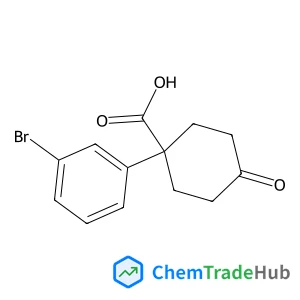
1-(3-Bromophenyl)-4-oxocyclohexanecarboxylic acid
CAS Number:
1385694-53-0
Molecular Formula:
C13H13BrO3
![[3-Formyl-5-(trifluoromethoxy)phenyl]boronic acid structure](https://static.chemtradehub.com/structs/145/1451393-39-7-aebb.webp "[3-Formyl-5-(trifluoromethoxy)phenyl]boronic acid structure")
[3-Formyl-5-(trifluoromethoxy)phenyl]boronic acid
CAS Number:
1451393-39-7
Molecular Formula:
C8H6BF3O4
Recommended Suppliers





Disclaimer
This page provides academic journal information for reference and research purposes only. We are not affiliated with any journal publishers and do not handle publication submissions. For publication-related inquiries, please contact the respective journal publishers directly.
If you notice any inaccuracies in the information displayed, please contact us at support@chemtradehub.com. We will promptly review and address your concerns.