












Understanding microsolvation of Li+: structural and energetical analyses
Literature Information
Publication Date
2011-07-27
DOI
10.1039/C1CP20903E
Impact Factor
3.676
Authors
Jonathan Romero, Andres Reyes, Jorge David, Albeiro Restrepo
View Original
Abstract
A stochastic exploration of the quantum conformational space for the (H2O)nLi+, n = 3, 4, 5 complexes produced 32 molecular clusters at the B3LYP/6–311++G** and MP2/6–311++G** levels. The first solvation shell is predicted to comprise a maximum of 4 water molecules. Energy decomposition analyses were performed to determine the relationship between the geometrical features of the complexes and the types of interactions responsible for their stabilization. Our findings reveal that electrostatic interactions are major players determining the structures and relative stabilities of the clusters. The formal charge on the Li atom leads to two distinct types of hydrogen bonds, scattered in a wide range of distances (1.61–2.32 Å), in many cases affording H-bonds that are considerably larger and considerably shorter than those in pure water clusters (typically ∼1.97 Å).
Recommended Journals
Related Literature
The energetics of carbonated PuO2 surfaces affects nanoparticle morphology: a DFT+U study
Samuel Moxon, Adam R. Symington, Joshua S. Tse, James Dawson, Joseph M. Flitcroft, Stephen C. Parker, David J. Cooke, Robert M. Harker, Marco Molinari
2020-03-11
Paper
DOI: 10.1039/D0CP00021C
CPMD investigation of α-RDX and ε-CL-20: the transition of deflagration to detonation depending on the self-produced radicals
Tiantian Zhang, Longjiu Cheng, Jianguo Zhang, Kun Wang
2020-03-02
Paper
DOI: 10.1039/D0CP00050G
Deciphering the pH-dependence of ground- and excited-state equilibria of thienoguanine
Pascal Didier, Jagannath Kuchlyan, Lara Martinez-Fernandez, Pauline Gosset, Jérémie Léonard, Yitzhak Tor, Roberto Improta, Yves Mély
2020-03-25
Paper
DOI: 10.1039/C9CP06931C
Oxygen surface exchange kinetics of Ba0.5Sr0.5Co0.8Fe0.2O3−δ
V. A. Eremin, M. V. Ananyev, H. J. M. Bouwmeester, E. Kh. Kurumchin, Ch.-Y. Yoo
2020-04-29
Paper
DOI: 10.1039/C9CP06650K
Structural and thermodynamic study of Ca A- or Co B-site substituted SrFeO3−δ perovskites for low temperature chemical looping applications
Giancarlo Luongo, Felix Donat, Christoph R. Müller
2020-04-08
Paper
DOI: 10.1039/D0CP01049A
Negative magnetization, complex magnetic ordering and applications of Cr-doped Co2TiO4
Q. S. Fu, X. H. Chen, C. Chakrabarti, C. L. Li, J. Zheng, P. J. Wang, H. X. Yin, Y. Qiu, B. Meng, S. L. Yuan
2020-02-28
Paper
DOI: 10.1039/C9CP06444C
Influence of Er3+ concentration and Ln3+ on the Judd–Ofelt parameters in LnOCl (Ln = Y, La, Gd) phosphors
Chunfeng Yu, Baojiu Chen, Xizhen Zhang, Xiangping Li, Jinsu Zhang, Sai Xu, Hongquan Yu, Jiashi Sun, Yongze Cao, Haiping Xia
2020-02-21
Paper
DOI: 10.1039/C9CP06755H
Hierarchical phenomena in multicomponent liquids: simulation methods, analysis, chemistry
Michael J. Servis, Ernesto Martinez-Baez
2020-03-05
Perspective
DOI: 10.1039/D0CP00164C
Good stability and high thermoelectric performance of Fe doped Cu1.80S
Pengfei Qiu, Kunpeng Zhao, Dudi Ren, Xun Shi
2020-03-17
Paper
DOI: 10.1039/D0CP00733A
Effects of fixed charge group physicochemistry on anion exchange membrane permselectivity and ion transport
Yuanyuan Ji, Hongxi Luo, Geoffrey M. Geise
2020-03-16
Paper
DOI: 10.1039/D0CP00018C
You might also like
Compound Q&A
What are the main uses of 1-(3-Aminophenyl)-3-[(3R)-1-(3,3-dimethyl-2-oxobutyl)-2-oxo-5-(2-pyridinyl)-2,3-dihydro-1H-1,4-benzodiazepin-3-yl]urea (CAS: 155412-88-7)?
This compound is mainly used as an intermediate in the synthesis of antipsychoti...
155412-88-71-(3-Aminophenyl)-3-...
Compound Q&A
How should waste containing 1-(D-Ribofuranosyl)-1,4-dihydro-3-pyridinecarboxamide (CAS: 19132-12-8) be handled?
Waste containing 1-(D-Ribofuranosyl)-1,4-dihydro-3-pyridinecarboxamide (CAS: 191...
19132-12-81-(D-Ribofuranosyl)-...
Compound Q&A
What regulatory guidelines apply to 2-Methyl-2-propanyl 3-bromo-3-(hydroxymethyl)-1-azetidinecarboxylate (CAS: 2007919-81-3)?
2-Methyl-2-propanyl 3-bromo-3-(hydroxymethyl)-1-azetidinecarboxylate (CAS: 20079...
2007919-81-32-Methyl-2-propanyl ...
Compound Q&A
What is N-(4-Chloro-2-pyridinyl)acetamide (CAS: 245056-66-0)?
N-(4-Chloro-2-pyridinyl)acetamide (CAS: 245056-66-0) is a chemical compound with...
245056-66-0N-(4-Chloro-2-pyridi...
Compound Q&A
What is 5-Chloro-2-hydroxybenzoic acid (CAS: 321-14-2)?
5-Chloro-2-hydroxybenzoic acid, also known as 5-chlorosalicylic acid, is an arom...
321-14-25-Chloro-2-hydroxybe...
Compound Q&A
What precautions should be taken when handling 1,1-Dichloro-1-fluoroethane (CAS: 1717-00-6)?
When handling 1,1-Dichloro-1-fluoroethane (CAS: 1717-00-6), it is important to u...
1717-00-61,1-Dichloro-1-fluor...
Compound Q&A
What are the physical and chemical properties of Fmoc-(2S,3R)-3-phenylpyrrolidine-2-carboxylic acid (CAS: 281655-32-1)?
Fmoc-(2S,3R)-3-phenylpyrrolidine-2-carboxylic acid is a white crystalline solid ...
281655-32-1Fmoc-(2S,3R)-3-pheny...
Compound Q&A
What are the main uses of 4-Amino-5-bromo-2-pyridinecarboxylic acid (CAS: 1363381-01-4)?
4-Amino-5-bromo-2-pyridinecarboxylic acid is primarily used as a precursor in th...
1363381-01-44-Amino-5-bromo-2-py...
Compound Q&A
What precautions should be taken when handling (S)-tert-butyl 2-((2-(4-bromophenyl)-2-oxoethyl)carbamoyl)pyrrolidine-1-carboxylate (CAS: 1007881-98-2)?
Handling this compound should be done with personal protective equipment (PPE) i...
1007881-98-2(S)-tert-butyl 2-((2...
Compound Q&A
What precautions should be taken when handling 8-bromo-2,2-dimethyl-3,4-dihydro-2H-1,4-benzoxazin-3-one (CAS: 688363-73-7)?
When handling 8-bromo-2,2-dimethyl-3,4-dihydro-2H-1,4-benzoxazin-3-one, use prop...
688363-73-78-bromo-2,2-dimethyl...
Source Journal
Physical Chemistry Chemical Physics

CiteScore:
5.5
Self-citation Rate:
10.3%
Articles per Year:
3036
Physical Chemistry Chemical Physics (PCCP) is an international journal co-owned by 19 physical chemistry and physics societies from around the world. This journal publishes original, cutting-edge research in physical chemistry, chemical physics and biophysical chemistry. To be suitable for publication in PCCP, articles must include significant innovation and/or insight into physical chemistry; this is the most important criterion that reviewers and Editors will judge against when evaluating submissions. The journal has a broad scope and welcomes contributions spanning experiment, theory, computation and data science. Topical coverage includes spectroscopy, dynamics, kinetics, statistical mechanics, thermodynamics, electrochemistry, catalysis, surface science, quantum mechanics, quantum computing and machine learning. Interdisciplinary research areas such as polymers and soft matter, materials, nanoscience, energy, surfaces/interfaces, and biophysical chemistry are welcomed if they demonstrate significant innovation and/or insight into physical chemistry. Joined experimental/theoretical studies are particularly appreciated when complementary and based on up-to-date approaches.
Recommended Compounds
![2,6-Bis({(2R)-2-[hydroxy(diphenyl)methyl]-1-pyrrolidinyl}methyl)-4-methylphenol structure](https://static.chemtradehub.com/structs/877/877395-58-9-70bf.webp "2,6-Bis({(2R)-2-[hydroxy(diphenyl)methyl]-1-pyrrolidinyl}methyl)-4-methylphenol structure")
2,6-Bis({(2R)-2-[hydroxy(diphenyl)methyl]-1-pyrrolidinyl}methyl)-4-methylphenol
CAS Number:
877395-58-9
Molecular Formula:
C43H46N2O3

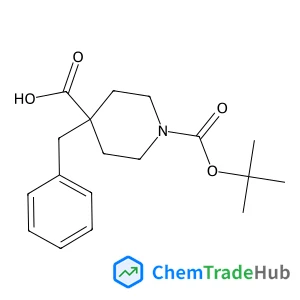
4-Benzyl-1-(tert-butoxycarbonyl)piperidine-4-carboxylic acid
CAS Number:
170838-87-6
Molecular Formula:
C18H25NO4
Recommended Suppliers



Disclaimer
This page provides academic journal information for reference and research purposes only. We are not affiliated with any journal publishers and do not handle publication submissions. For publication-related inquiries, please contact the respective journal publishers directly.
If you notice any inaccuracies in the information displayed, please contact us at support@chemtradehub.com. We will promptly review and address your concerns.