












Plasmonic enhancement of the optical absorption and catalytic efficiency of BiVO4 photoanodes decorated with Ag@SiO2 core–shell nanoparticles
Literature Information
Publication Date
2014-06-12
DOI
10.1039/C4CP01583E
Impact Factor
3.676
Authors
Ali Dabirian, Bernard Dam, Roel van de Krol
View Original
Abstract
Recent progress in the development of bismuth vanadate (BiVO4) photoanodes has firmly established it as a promising material for solar water splitting applications. Performance limitations due to intrinsically poor catalytic activity and slow electron transport have been successfully addressed through the application of water oxidation co-catalysts and novel doping strategies. The next bottleneck to tackle is the modest optical absorption in BiVO4, particularly close to its absorption edge of 2.4 eV. Here, we explore the modification of the BiVO4 surface with Ag@SiO2 core–shell plasmonic nanoparticles. A photocurrent enhancement by a factor of ∼2.5 is found under 1 sun illumination (AM1.5). We show that this enhancement consists of two contributions: optical absorption and catalysis. The optical absorption enhancement is induced by the excitation of localized surface plasmon resonances in the Ag nanoparticles, and agrees well with our full-field electromagnetic simulations. Far-field effects (scattering) are found to be dominant, with a smaller contribution from near-field plasmonic enhancement. In addition, a significant catalytic enhancement is observed, which is tentatively attributed to the electrocatalytic activity of the Ag@SiO2 nanoparticles.
Recommended Journals
Related Literature
An ultrasensitive electrochemiluminescence biosensor for nuclear factor kappa B p50 based on the proximity hybridization-induced hybridization chain reaction
Xiaocui Huang, Ying Zhang, Wen Xu, Wei Xu, Longhua Guo, Bin Qiu, Zhenyu Lin
2019-10-10
Communication
DOI: 10.1039/C9CC06210F
Chromenopyrazole-based bipolar host materials for solution-processable thermally activated delayed fluorescence OLEDs exhibiting high efficiency and low roll-off
Mallesham Godumala, Jiwon Yoon, Chiho Lee, Ji-Eun Jeong, Sungnam Park, Han Young Woo, Min Ju Cho, Dong Hoon Choi
2019-10-02
Communication
DOI: 10.1039/C9CC05983K
MIP-coated Eu(BTC) for the fluorometric determination of lincomycin in eggs
Pu Wu, Qiuzheng Du, Yiyang Sun, Zhonghong Li
2019-07-29
Paper
DOI: 10.1039/C9AY01448A
Salting-out-assisted liquid–liquid extraction of 5-hydroxymethylfurfural from honey and the determination of 5-hydroxymethylfurfural by high-performance liquid chromatography
Wenbin Chen, Siyuan Wu, Jianing Zhang, Fengjie Yu, Xijuan Tu
2019-09-03
Paper
DOI: 10.1039/C9AY01770D
Pt nanoparticles supported on YCoxFe1−xO3 perovskite oxides: highly efficient catalysts for liquid-phase hydrogenation of cinnamaldehyde
Yujie Xue, Huiyue Xin, Wenhui Xie, Peng Wu, Xiaohong Li
2019-02-21
Communication
DOI: 10.1039/C9CC00318E
Calcium stannyl formation by organostannane dehydrogenation
Louis J. Morris, Michael S. Hill, Ian Manners, Claire L. McMullin, Mary F. Mahon, Nasir A. Rajabi
2019-10-03
Communication
DOI: 10.1039/C9CC07289F
Lab on paper: assay of beta-lactam pharmaceuticals by redox titration
Mercy W. Maina, Phelix Makoto Were, Jamie L. Luther, Sarah L. Bliese, Nils Oberhof, Doaa Aldulaimi, Marya Lieberman
2019-09-02
Paper
DOI: 10.1039/C9AY01547G
You might also like
Compound Q&A
What are the main uses of 1H-Indazole-6-carbonitrile (CAS: 141290-59-7)?
1H-Indazole-6-carbonitrile finds applications in pharmaceuticals, where it serve...
141290-59-71H-Indazole-6-carbon...
Compound Q&A
How should waste containing Dioctyl (2E)-2-butenedioate (CAS: 2997-85-5) be handled?
Waste containing Dioctyl (2E)-2-butenedioate (CAS: 2997-85-5) should be collecte...
2997-85-5Dioctyl (2E)-2-buten...
Compound Q&A
What industries use Sodium [(1,2-benzoxazol-3-ylmethyl)sulfonyl]azanide (CAS: 68291-98-5)?
Sodium [(1,2-benzoxazol-3-ylmethyl)sulfonyl]azanide is primarily used in pharmac...
68291-98-5Sodium [(1,2-benzoxa...
Compound Q&A
Are there alternatives to Dimethyl 4-(4,4,5,5-tetramethyl-1,3,2-dioxaborolan-2-yl)-2,6-pyridinedicarboxylate (CAS: 741709-66-0) in synthesis?
Dimethyl 4-(4,4,5,5-tetramethyl-1,3,2-dioxaborolan-2-yl)-2,6-pyridinedicarboxyla...
741709-66-0Dimethyl 4-(4,4,5,5-...
Compound Q&A
How should waste containing 2-Fluoro-6-hydrazinopyridine (CAS: 80714-39-2) be handled?
Waste containing 2-Fluoro-6-hydrazinopyridine (CAS: 80714-39-2) should be manage...
80714-39-22-Fluoro-6-hydrazino...
Compound Q&A
What is 6-Formyl-2-pyridinecarboxylic acid (CAS: 499214-11-8)?
6-Formyl-2-pyridinecarboxylic acid is an organic compound with the molecular for...
499214-11-86-Formyl-2-pyridinec...
Compound Q&A
What is the market or research trend for 3-(3,4-dimethoxyphenyl)-2,5-dimethyl-N-(2-morpholin-4-ylethyl)pyrazolo[1,5-a]pyrimidin-7-amine (CAS: 900874-91-1)?
Research trends for this compound indicate a focus on its potential applications...
900874-91-13-(3,4-dimethoxyphen...
Compound Q&A
How is 9H-Tribenzo[b,d,f]azepine (CAS: 29875-73-8) typically synthesized?
9H-Tribenzo[b,d,f]azepine is typically synthesized via a multi-step process invo...
29875-73-89H-Tribenzo[b,d,f]az...
Compound Q&A
How is 1-Cyclopropyl-7-ethoxy-6-fluoro-8-methoxy-4-oxo-1,4-dihydro-3-quinolinecarboxylic acid (CAS: 1797982-51-4) typically synthesized?
1-Cyclopropyl-7-ethoxy-6-fluoro-8-methoxy-4-oxo-1,4-dihydro-3-quinolinecarboxyli...
1797982-51-41-Cyclopropyl-7-etho...
Compound Q&A
How should waste containing Methyl 3-oxo-1,2,3,4-tetrahydro-6-quinoxalinecarboxylate (CAS: 671820-52-3) be handled?
Waste containing Methyl 3-oxo-1,2,3,4-tetrahydro-6-quinoxalinecarboxylate (CAS: ...
671820-52-3Methyl 3-oxo-1,2,3,4...
Source Journal
Physical Chemistry Chemical Physics

CiteScore:
5.5
Self-citation Rate:
10.3%
Articles per Year:
3036
Physical Chemistry Chemical Physics (PCCP) is an international journal co-owned by 19 physical chemistry and physics societies from around the world. This journal publishes original, cutting-edge research in physical chemistry, chemical physics and biophysical chemistry. To be suitable for publication in PCCP, articles must include significant innovation and/or insight into physical chemistry; this is the most important criterion that reviewers and Editors will judge against when evaluating submissions. The journal has a broad scope and welcomes contributions spanning experiment, theory, computation and data science. Topical coverage includes spectroscopy, dynamics, kinetics, statistical mechanics, thermodynamics, electrochemistry, catalysis, surface science, quantum mechanics, quantum computing and machine learning. Interdisciplinary research areas such as polymers and soft matter, materials, nanoscience, energy, surfaces/interfaces, and biophysical chemistry are welcomed if they demonstrate significant innovation and/or insight into physical chemistry. Joined experimental/theoretical studies are particularly appreciated when complementary and based on up-to-date approaches.
Recommended Compounds
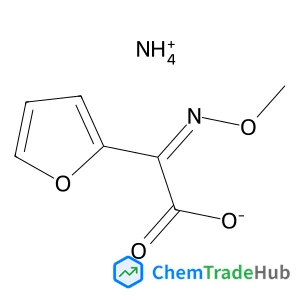
Ammonium (Z)-2-(furan-2-yl)-2-(methoxyimino)acetate
CAS Number:
97148-39-5
Molecular Formula:
C7H10N2O4
Recommended Suppliers






Disclaimer
This page provides academic journal information for reference and research purposes only. We are not affiliated with any journal publishers and do not handle publication submissions. For publication-related inquiries, please contact the respective journal publishers directly.
If you notice any inaccuracies in the information displayed, please contact us at support@chemtradehub.com. We will promptly review and address your concerns.