












XAS of tetrakis(phenyl)- and tetrakis(pentafluorophenyl)-porphyrin: an experimental and theoretical study
Literature Information
Publication Date
2014-11-27
DOI
10.1039/C4CP03958K
Impact Factor
3.676
Authors
Roberto Verucchi, Luca Pasquali, Angelo Giglia, Giovanna Fronzoni, Mauro Sambi, Giulia Mangione
View Original
Abstract
The unoccupied electronic structure of tetrakis(phenyl)- and tetrakis(pentafluorophenyl)-porphyrin thick films deposited on SiO2/Si(100) native oxide surfaces has been thoroughly studied by combining the outcomes of near-edge X-ray absorption fine structure spectroscopy at the C, N, and F K-edges with those of scalar relativistic zeroth order regular approximation time-dependent density functional theory calculations carried out on isolated molecules. Both experimental and theoretical results concur to stress the electronic inertness of pristine porphyrin macrocycle based 1sC → π* and 1sN → π* transitions whose excitation energies are substantially unaffected upon fluorination. The obtained results complement those published by the same group about the occupied states of both molecules, thus providing the missing tile to get a thorough description of the halide decoration effects on the electronic structure of the tetrakis(phenyl)-porphyrin.
Related Literature
Localization energies for graphite and fullerenes
Kenji Fujine, Toshimasa Ishida, Jun-ichi Aihara
2001-08-21
Paper
DOI: 10.1039/B103886A
An EPR study of diffusion of chromium into rutile
Emyr Harris, Brynmor Mile, Christopher C. Rowlands
2000-06-29
Paper
DOI: 10.1039/B003232H
Intra- and intermolecular interactions in mesogenic cyano compounds
Kayako Hori, Miki Kuribayashi, Mizue Iimuro
2000-06-05
Paper
DOI: 10.1039/B000567N
Electronic absorption spectral study of the oxidation of uranium dioxide in chloride melts
Vladimir A. Volkovich, Trevor R. Griffiths, Derek J. Fray, Robert C. Thied
2000-08-02
Paper
DOI: 10.1039/B004464O
Highly conducting states in metal–ammonia solutions
Rainer Burkart, Ulrich Schindewolf
2000-06-14
Paper
DOI: 10.1039/B002598O
Ab initio and kinetic calculations for the reactions of H with SiH(4−n)Fn (n = 1–3)
Qingzhu Zhang, Shaokun Wang, Chunsheng Wang, Yueshu Gu
2001-08-31
Paper
DOI: 10.1039/B104107J
Effect of DNA on the rate of electron transfer reactions between non-intercalated reactants: kinetic study of the reactions [Ru(NH3)5pz]2+ + [Co(C2O4)3]3− and [Ru(NH3)5py]2+ + [Co(NH3)4pzCO2]2+ in aqueous solutions in the presence of DNA
F. Secco, M. Venturini, M. López, P. Pérez, R. Prado, F. Sánchez
2001-09-11
Paper
DOI: 10.1039/B103549P
The structure of zeolite Na-MAP: Aiding Rietveld refinement by density functional calculations
Jörg-Rüdiger Hill, John A. Stuart, Alan R. Minihan, Erich Wimmer, Chris J. Adams
2000-08-10
Paper
DOI: 10.1039/B003770M
You might also like
Compound Q&A
What are the main uses of 1H-Indazole-6-carbonitrile (CAS: 141290-59-7)?
1H-Indazole-6-carbonitrile finds applications in pharmaceuticals, where it serve...
141290-59-71H-Indazole-6-carbon...
Compound Q&A
How should waste containing Dioctyl (2E)-2-butenedioate (CAS: 2997-85-5) be handled?
Waste containing Dioctyl (2E)-2-butenedioate (CAS: 2997-85-5) should be collecte...
2997-85-5Dioctyl (2E)-2-buten...
Compound Q&A
What industries use Sodium [(1,2-benzoxazol-3-ylmethyl)sulfonyl]azanide (CAS: 68291-98-5)?
Sodium [(1,2-benzoxazol-3-ylmethyl)sulfonyl]azanide is primarily used in pharmac...
68291-98-5Sodium [(1,2-benzoxa...
Compound Q&A
Are there alternatives to Dimethyl 4-(4,4,5,5-tetramethyl-1,3,2-dioxaborolan-2-yl)-2,6-pyridinedicarboxylate (CAS: 741709-66-0) in synthesis?
Dimethyl 4-(4,4,5,5-tetramethyl-1,3,2-dioxaborolan-2-yl)-2,6-pyridinedicarboxyla...
741709-66-0Dimethyl 4-(4,4,5,5-...
Compound Q&A
How should waste containing 2-Fluoro-6-hydrazinopyridine (CAS: 80714-39-2) be handled?
Waste containing 2-Fluoro-6-hydrazinopyridine (CAS: 80714-39-2) should be manage...
80714-39-22-Fluoro-6-hydrazino...
Compound Q&A
What is 6-Formyl-2-pyridinecarboxylic acid (CAS: 499214-11-8)?
6-Formyl-2-pyridinecarboxylic acid is an organic compound with the molecular for...
499214-11-86-Formyl-2-pyridinec...
Compound Q&A
What is the market or research trend for 3-(3,4-dimethoxyphenyl)-2,5-dimethyl-N-(2-morpholin-4-ylethyl)pyrazolo[1,5-a]pyrimidin-7-amine (CAS: 900874-91-1)?
Research trends for this compound indicate a focus on its potential applications...
900874-91-13-(3,4-dimethoxyphen...
Compound Q&A
How is 9H-Tribenzo[b,d,f]azepine (CAS: 29875-73-8) typically synthesized?
9H-Tribenzo[b,d,f]azepine is typically synthesized via a multi-step process invo...
29875-73-89H-Tribenzo[b,d,f]az...
Compound Q&A
How is 1-Cyclopropyl-7-ethoxy-6-fluoro-8-methoxy-4-oxo-1,4-dihydro-3-quinolinecarboxylic acid (CAS: 1797982-51-4) typically synthesized?
1-Cyclopropyl-7-ethoxy-6-fluoro-8-methoxy-4-oxo-1,4-dihydro-3-quinolinecarboxyli...
1797982-51-41-Cyclopropyl-7-etho...
Compound Q&A
How should waste containing Methyl 3-oxo-1,2,3,4-tetrahydro-6-quinoxalinecarboxylate (CAS: 671820-52-3) be handled?
Waste containing Methyl 3-oxo-1,2,3,4-tetrahydro-6-quinoxalinecarboxylate (CAS: ...
671820-52-3Methyl 3-oxo-1,2,3,4...
Source Journal
Physical Chemistry Chemical Physics

CiteScore:
5.5
Self-citation Rate:
10.3%
Articles per Year:
3036
Physical Chemistry Chemical Physics (PCCP) is an international journal co-owned by 19 physical chemistry and physics societies from around the world. This journal publishes original, cutting-edge research in physical chemistry, chemical physics and biophysical chemistry. To be suitable for publication in PCCP, articles must include significant innovation and/or insight into physical chemistry; this is the most important criterion that reviewers and Editors will judge against when evaluating submissions. The journal has a broad scope and welcomes contributions spanning experiment, theory, computation and data science. Topical coverage includes spectroscopy, dynamics, kinetics, statistical mechanics, thermodynamics, electrochemistry, catalysis, surface science, quantum mechanics, quantum computing and machine learning. Interdisciplinary research areas such as polymers and soft matter, materials, nanoscience, energy, surfaces/interfaces, and biophysical chemistry are welcomed if they demonstrate significant innovation and/or insight into physical chemistry. Joined experimental/theoretical studies are particularly appreciated when complementary and based on up-to-date approaches.
Recommended Compounds


Trichloro(3,3,4,4,5,5,6,6,7,7,8,8,8-tridecafluorooctyl)silane
CAS Number:
78560-45-9
Molecular Formula:
C8H4Cl3F13Si
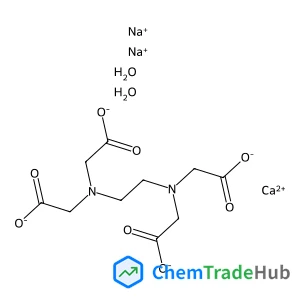
EthylenediaminetetraaceticacidcalciumDisodiumsalthydrate
CAS Number:
23411-34-9
Molecular Formula:
C10H16CaN2Na2O10
Recommended Suppliers






Disclaimer
This page provides academic journal information for reference and research purposes only. We are not affiliated with any journal publishers and do not handle publication submissions. For publication-related inquiries, please contact the respective journal publishers directly.
If you notice any inaccuracies in the information displayed, please contact us at support@chemtradehub.com. We will promptly review and address your concerns.