












Supramolecular assembly of hoechst-33258 with cucurbit[7]uril macrocycle
Literature Information
Publication Date
2011-06-20
DOI
10.1039/C1CP20493A
Impact Factor
3.676
Authors
Nilotpal Barooah, Jyotirmayee Mohanty, Haridas Pal, Achikanath C. Bhasikuttan
View Original
Abstract
Molecular assemblies of potential guest molecules through non-covalent host–guest interactions have found immense use in many applied areas. In this study supramolecular interaction of a biologically important dye Hoechst-33258 (H33258) has been investigated in aqueous solutions at different pHs, in the presence of a macrocyclic host, namely, cucurbit[7]uril (CB7). The pH dependent emission behaviour of H33258 is inherently connected with its protolytic equilibria which allow the dye in different geometrical conformations. This pH dependent structural orientation is greatly affected by the complexation with CB7. The significant structural changes in the monocationic H33258 brought out by CB7 at pH 7 have been documented in the fluorescence emission and lifetime data, which are comparatively less affected in case of the dicationic form, which is prominent in dye solutions at pH 4.5. The strong ion-dipole interactions provided by the carbonyl portals of the CB7 host adequately stabilize the CB7-H33258 complex, both in 1 : 1 and 2 : 1 stoichiometries at both the pH conditions. The Job's plot method, fluorescence anisotropy, NMR measurements and geometry optimization calculations confirm the stoichiometric arrangement and are found to be tunable with the addition of metal ions. The non-covalently stabilized assembly brings out large enhancement in the fluorescence emission due to the unique structural orientation attained by H33258, which reduces the non-radiative relaxation pathways. Comparison of the spectral data of the dye at different pH conditions in the absence and presence of CB7 proposes a large upward pKa shift due to CB7 encapsulation, thus providing a handy tool to modulate the photophysical characteristics of the guest molecules.
Related Literature
A first-principles study of the III–IV–V semiconductor nanosheets
Amrita Bhattacharya, Saswata Bhattacharya, G. P. Das
2014-11-12
Paper
DOI: 10.1039/C4CP04188G
Electron small polarons and their transport in bismuth vanadate: a first principles study
Kyoung E. Kweon, Gyeong S. Hwang, Jinhan Kim, Sungjin Kim, SeongMin Kim
2014-11-03
Paper
DOI: 10.1039/C4CP03666B
Opposite photocatalytic activity orders of low-index facets of anatase TiO2 for liquid phase dye degradation and gaseous phase CO2 photoreduction
Jin Mao, Tianyou Peng, Ling Zan, Youxiang Zhang
2014-04-22
Paper
DOI: 10.1039/C4CP01488J
SO2 – yet another two-faced ligand
Jingbai Li, Andrey Yu. Rogachev
2014-12-01
Paper
DOI: 10.1039/C4CP04208E
Plasmon resonance analysis with configuration interaction
Emilie B. Guidez, Christine M. Aikens
2014-06-17
Paper
DOI: 10.1039/C4CP01365D
Solid state chemistry of nitrogen oxides – Part II: surface consumption of NO2
G. Fedoseev, M. Minissale, E. Congiu, F. Dulieu, H. Linnartz
2014-03-17
Paper
DOI: 10.1039/C3CP54918F
Entropy-controlled biradical–quinoid isomerization of a π-conjugated delocalized biradical
Katsuya Mutoh, Yuki Nakagawa, Sayaka Hatano, Yoichi Kobayashi
2014-11-17
Paper
DOI: 10.1039/C4CP04606D
Assignment of the 13C NMR spectrum by correlation to dipolar coupled proton-pairs and estimation of order parameters of a thiophene based liquid crystal
K. V. Ramanathan
2014-11-21
Paper
DOI: 10.1039/C4CP04782F
Viscosity scaling of the self-diffusion and velocity cross-correlation coefficients of two functionalised ionic liquids and of their non-functionalized analogues
Kenneth R. Harris, Takashi Makino, Mitsuhiro Kanakubo
2014-03-31
Paper
DOI: 10.1039/C4CP00435C
One-electron self-interaction and the asymptotics of the Kohn–Sham potential: an impaired relation
Tobias Schmidt, Eli Kraisler, Leeor Kronik, Stephan Kümmel
2014-02-20
Perspective
DOI: 10.1039/C3CP55433C
You might also like
Compound Q&A
What are the main uses of 1H-Indazole-6-carbonitrile (CAS: 141290-59-7)?
1H-Indazole-6-carbonitrile finds applications in pharmaceuticals, where it serve...
141290-59-71H-Indazole-6-carbon...
Compound Q&A
How should waste containing Dioctyl (2E)-2-butenedioate (CAS: 2997-85-5) be handled?
Waste containing Dioctyl (2E)-2-butenedioate (CAS: 2997-85-5) should be collecte...
2997-85-5Dioctyl (2E)-2-buten...
Compound Q&A
What industries use Sodium [(1,2-benzoxazol-3-ylmethyl)sulfonyl]azanide (CAS: 68291-98-5)?
Sodium [(1,2-benzoxazol-3-ylmethyl)sulfonyl]azanide is primarily used in pharmac...
68291-98-5Sodium [(1,2-benzoxa...
Compound Q&A
Are there alternatives to Dimethyl 4-(4,4,5,5-tetramethyl-1,3,2-dioxaborolan-2-yl)-2,6-pyridinedicarboxylate (CAS: 741709-66-0) in synthesis?
Dimethyl 4-(4,4,5,5-tetramethyl-1,3,2-dioxaborolan-2-yl)-2,6-pyridinedicarboxyla...
741709-66-0Dimethyl 4-(4,4,5,5-...
Compound Q&A
How should waste containing 2-Fluoro-6-hydrazinopyridine (CAS: 80714-39-2) be handled?
Waste containing 2-Fluoro-6-hydrazinopyridine (CAS: 80714-39-2) should be manage...
80714-39-22-Fluoro-6-hydrazino...
Compound Q&A
What is 6-Formyl-2-pyridinecarboxylic acid (CAS: 499214-11-8)?
6-Formyl-2-pyridinecarboxylic acid is an organic compound with the molecular for...
499214-11-86-Formyl-2-pyridinec...
Compound Q&A
What is the market or research trend for 3-(3,4-dimethoxyphenyl)-2,5-dimethyl-N-(2-morpholin-4-ylethyl)pyrazolo[1,5-a]pyrimidin-7-amine (CAS: 900874-91-1)?
Research trends for this compound indicate a focus on its potential applications...
900874-91-13-(3,4-dimethoxyphen...
Compound Q&A
How is 9H-Tribenzo[b,d,f]azepine (CAS: 29875-73-8) typically synthesized?
9H-Tribenzo[b,d,f]azepine is typically synthesized via a multi-step process invo...
29875-73-89H-Tribenzo[b,d,f]az...
Compound Q&A
How is 1-Cyclopropyl-7-ethoxy-6-fluoro-8-methoxy-4-oxo-1,4-dihydro-3-quinolinecarboxylic acid (CAS: 1797982-51-4) typically synthesized?
1-Cyclopropyl-7-ethoxy-6-fluoro-8-methoxy-4-oxo-1,4-dihydro-3-quinolinecarboxyli...
1797982-51-41-Cyclopropyl-7-etho...
Compound Q&A
How should waste containing Methyl 3-oxo-1,2,3,4-tetrahydro-6-quinoxalinecarboxylate (CAS: 671820-52-3) be handled?
Waste containing Methyl 3-oxo-1,2,3,4-tetrahydro-6-quinoxalinecarboxylate (CAS: ...
671820-52-3Methyl 3-oxo-1,2,3,4...
Source Journal
Physical Chemistry Chemical Physics

CiteScore:
5.5
Self-citation Rate:
10.3%
Articles per Year:
3036
Physical Chemistry Chemical Physics (PCCP) is an international journal co-owned by 19 physical chemistry and physics societies from around the world. This journal publishes original, cutting-edge research in physical chemistry, chemical physics and biophysical chemistry. To be suitable for publication in PCCP, articles must include significant innovation and/or insight into physical chemistry; this is the most important criterion that reviewers and Editors will judge against when evaluating submissions. The journal has a broad scope and welcomes contributions spanning experiment, theory, computation and data science. Topical coverage includes spectroscopy, dynamics, kinetics, statistical mechanics, thermodynamics, electrochemistry, catalysis, surface science, quantum mechanics, quantum computing and machine learning. Interdisciplinary research areas such as polymers and soft matter, materials, nanoscience, energy, surfaces/interfaces, and biophysical chemistry are welcomed if they demonstrate significant innovation and/or insight into physical chemistry. Joined experimental/theoretical studies are particularly appreciated when complementary and based on up-to-date approaches.
Recommended Compounds

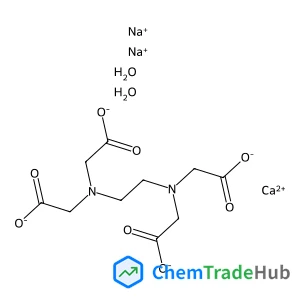
EthylenediaminetetraaceticacidcalciumDisodiumsalthydrate
CAS Number:
23411-34-9
Molecular Formula:
C10H16CaN2Na2O10
Recommended Suppliers







Disclaimer
This page provides academic journal information for reference and research purposes only. We are not affiliated with any journal publishers and do not handle publication submissions. For publication-related inquiries, please contact the respective journal publishers directly.
If you notice any inaccuracies in the information displayed, please contact us at support@chemtradehub.com. We will promptly review and address your concerns.