












Internal structure, hygroscopic and reactive properties of mixed sodium methanesulfonate-sodium chloride particles
Literature Information
Publication Date
2011-05-13
DOI
10.1039/C1CP20444K
Impact Factor
3.676
Authors
Y. Liu, B. Minofar, Y. Desyaterik, E. Dames, Z. Zhu, J. P. Cain, R. J. Hopkins, M. K. Gilles, H. Wang, P. Jungwirth, A. Laskin
View Original
Abstract
Internal structures, hygroscopic properties and heterogeneous reactivity of mixed CH3SO3Na/NaCl particles were investigated using a combination of computer modeling and experimental approaches. Surfactant properties of CH3SO3− ions and their surface accumulation in wet, deliquesced particles were assessed using molecular dynamics (MD) simulations and surface tension measurements. Internal structures of dry CH3SO3Na/NaCl particles were investigated using scanning electron microscopy (SEM) assisted with X-ray microanalysis mapping, and time-of-flight secondary ion mass spectrometry (TOF-SIMS). The combination of these techniques shows that dry CH3SO3Na/NaCl particles are composed of a NaCl core surrounded by a CH3SO3Na shell. Hygroscopic growth, deliquescence and efflorescence phase transitions of mixed CH3SO3Na/NaCl particles were determined and compared to those of pure NaCl particles. These results indicate that particles undergo a two step deliquescence transition: first at ∼69% relative humidity (RH) the CH3SO3Na shell takes up water, and then at ∼75% RH the NaCl core deliquesces. Reactive uptake coefficients for the particle–HNO3 heterogeneous reaction were determined at different CH3SO3Na/NaCl mixing ratios and RH. The net reaction probability decreased notably with increasing CH3SO3Na and at lower RH.
Related Literature
Analysis of solvent induced porous PMMA–Bioglass monoliths by the phase separation method – mechanical and in vitro biocompatible studies
D. Durgalakshmi, S. Balakumar
2014-11-07
Paper
DOI: 10.1039/C4CP03515A
Coverage dependent adsorption and co-adsorption of CO and H2 on the CdI2-antitype metallic Mo2C(001) surface‡
Tao Wang, Jianguo Wang, Matthias Beller
2014-11-27
Paper
DOI: 10.1039/C4CP04331F
Surface conformations of an anti-ricin aptamer and its affinity for ricin determined by atomic force microscopy and surface plasmon resonance
B. Wang, Z. Lou, B. Park, Y. Kwon, H. Zhang, B. Xu
2014-08-11
Paper
DOI: 10.1039/C4CP03190C
Influence of intermolecular interactions on solid state luminescence of imidazopyridines: theoretical interpretations using FMO-TDDFT and ONIOM approaches
Toshiki Mutai, Hirohiko Houjou, Koji Araki
2014-03-06
Paper
DOI: 10.1039/C3CP55461A
On the directionality and non-linearity of halogen and hydrogen bonds
J. Grant Hill, Anthony C. Legon
2014-08-14
Paper
DOI: 10.1039/C4CP03376K
DPT tautomerisation of the G·Asyn and A*·G*syn DNA mismatches: a QM/QTAIM combined atomistic investigation
2014-03-06
Paper
DOI: 10.1039/C4CP00488D
In situ profiling of lithium/Ag2VP2O8 primary batteries using energy dispersive X-ray diffraction
Kevin C. Kirshenbaum, David C. Bock, Zhong Zhong
2014-04-07
Paper
DOI: 10.1039/C4CP01220H
Arresting consecutive steps of a photochromic reaction: studies of β-thioxoketones combining laser photolysis with NMR detection
Mariusz Pietrzak, Jacek Dobkowski, Alexandr Gorski, Sylwester Gawinkowski, Michał Kijak, Roman Luboradzki, Poul Erik Hansen, Jacek Waluk
2014-03-28
Paper
DOI: 10.1039/C4CP00530A
Dual relaxation and structural changes under uniaxial strain in main-chain smectic-C liquid crystal elastomer
Dena M. Agra-Kooijman, Michael R. Fisch, Wanting Ren, Philip J. McMullan, Anselm C. Griffin, Satyendra Kumar
2014-11-07
Paper
DOI: 10.1039/C4CP04713C
Density functional tight binding: values of semi-empirical methods in an ab initio era
Qiang Cui, Marcus Elstner
2014-05-13
Perspective
DOI: 10.1039/C4CP00908H
You might also like
Compound Q&A
What are the main uses of 1H-Indazole-6-carbonitrile (CAS: 141290-59-7)?
1H-Indazole-6-carbonitrile finds applications in pharmaceuticals, where it serve...
141290-59-71H-Indazole-6-carbon...
Compound Q&A
How should waste containing Dioctyl (2E)-2-butenedioate (CAS: 2997-85-5) be handled?
Waste containing Dioctyl (2E)-2-butenedioate (CAS: 2997-85-5) should be collecte...
2997-85-5Dioctyl (2E)-2-buten...
Compound Q&A
What industries use Sodium [(1,2-benzoxazol-3-ylmethyl)sulfonyl]azanide (CAS: 68291-98-5)?
Sodium [(1,2-benzoxazol-3-ylmethyl)sulfonyl]azanide is primarily used in pharmac...
68291-98-5Sodium [(1,2-benzoxa...
Compound Q&A
Are there alternatives to Dimethyl 4-(4,4,5,5-tetramethyl-1,3,2-dioxaborolan-2-yl)-2,6-pyridinedicarboxylate (CAS: 741709-66-0) in synthesis?
Dimethyl 4-(4,4,5,5-tetramethyl-1,3,2-dioxaborolan-2-yl)-2,6-pyridinedicarboxyla...
741709-66-0Dimethyl 4-(4,4,5,5-...
Compound Q&A
How should waste containing 2-Fluoro-6-hydrazinopyridine (CAS: 80714-39-2) be handled?
Waste containing 2-Fluoro-6-hydrazinopyridine (CAS: 80714-39-2) should be manage...
80714-39-22-Fluoro-6-hydrazino...
Compound Q&A
What is 6-Formyl-2-pyridinecarboxylic acid (CAS: 499214-11-8)?
6-Formyl-2-pyridinecarboxylic acid is an organic compound with the molecular for...
499214-11-86-Formyl-2-pyridinec...
Compound Q&A
What is the market or research trend for 3-(3,4-dimethoxyphenyl)-2,5-dimethyl-N-(2-morpholin-4-ylethyl)pyrazolo[1,5-a]pyrimidin-7-amine (CAS: 900874-91-1)?
Research trends for this compound indicate a focus on its potential applications...
900874-91-13-(3,4-dimethoxyphen...
Compound Q&A
How is 9H-Tribenzo[b,d,f]azepine (CAS: 29875-73-8) typically synthesized?
9H-Tribenzo[b,d,f]azepine is typically synthesized via a multi-step process invo...
29875-73-89H-Tribenzo[b,d,f]az...
Compound Q&A
How is 1-Cyclopropyl-7-ethoxy-6-fluoro-8-methoxy-4-oxo-1,4-dihydro-3-quinolinecarboxylic acid (CAS: 1797982-51-4) typically synthesized?
1-Cyclopropyl-7-ethoxy-6-fluoro-8-methoxy-4-oxo-1,4-dihydro-3-quinolinecarboxyli...
1797982-51-41-Cyclopropyl-7-etho...
Compound Q&A
How should waste containing Methyl 3-oxo-1,2,3,4-tetrahydro-6-quinoxalinecarboxylate (CAS: 671820-52-3) be handled?
Waste containing Methyl 3-oxo-1,2,3,4-tetrahydro-6-quinoxalinecarboxylate (CAS: ...
671820-52-3Methyl 3-oxo-1,2,3,4...
Source Journal
Physical Chemistry Chemical Physics

CiteScore:
5.5
Self-citation Rate:
10.3%
Articles per Year:
3036
Physical Chemistry Chemical Physics (PCCP) is an international journal co-owned by 19 physical chemistry and physics societies from around the world. This journal publishes original, cutting-edge research in physical chemistry, chemical physics and biophysical chemistry. To be suitable for publication in PCCP, articles must include significant innovation and/or insight into physical chemistry; this is the most important criterion that reviewers and Editors will judge against when evaluating submissions. The journal has a broad scope and welcomes contributions spanning experiment, theory, computation and data science. Topical coverage includes spectroscopy, dynamics, kinetics, statistical mechanics, thermodynamics, electrochemistry, catalysis, surface science, quantum mechanics, quantum computing and machine learning. Interdisciplinary research areas such as polymers and soft matter, materials, nanoscience, energy, surfaces/interfaces, and biophysical chemistry are welcomed if they demonstrate significant innovation and/or insight into physical chemistry. Joined experimental/theoretical studies are particularly appreciated when complementary and based on up-to-date approaches.
Recommended Compounds


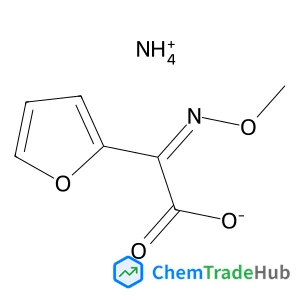
Ammonium (Z)-2-(furan-2-yl)-2-(methoxyimino)acetate
CAS Number:
97148-39-5
Molecular Formula:
C7H10N2O4
![(1S)-1,5-Anhydro-1-[3-(1-benzothiophen-2-ylmethyl)-4-fluorophenyl]-D-glucitol structure](https://static.chemtradehub.com/structs/761/761423-87-4-dbeb.webp "(1S)-1,5-Anhydro-1-[3-(1-benzothiophen-2-ylmethyl)-4-fluorophenyl]-D-glucitol structure")
(1S)-1,5-Anhydro-1-[3-(1-benzothiophen-2-ylmethyl)-4-fluorophenyl]-D-glucitol
CAS Number:
761423-87-4
Molecular Formula:
C21H21FO5S
Recommended Suppliers






Disclaimer
This page provides academic journal information for reference and research purposes only. We are not affiliated with any journal publishers and do not handle publication submissions. For publication-related inquiries, please contact the respective journal publishers directly.
If you notice any inaccuracies in the information displayed, please contact us at support@chemtradehub.com. We will promptly review and address your concerns.