













Dual relaxation and structural changes under uniaxial strain in main-chain smectic-C liquid crystal elastomer
Literature Information
Publication Date
2014-11-07
DOI
10.1039/C4CP04713C
Impact Factor
3.676
Authors
Dena M. Agra-Kooijman, Michael R. Fisch, Wanting Ren, Philip J. McMullan, Anselm C. Griffin, Satyendra Kumar
View Original
Abstract
The relationship between strain-dependent macroscopic elastic behavior and the changes in microscopic structure of the smectic-C liquid crystal elastomer (LCE), C11MeHQSi8 were investigated using synchrotron X-ray studies. At very low strains ε ≤ 0.2, the smectic layers are randomly oriented. As the strain increases beyond 0.2, the smectic layers reorient and become parallel to the direction of the applied strain. The polydomain to monodomain (P–M) transition accompanied by the formation of chevron structure ensues for ε > 0.2 and is nearly complete for ε = 0.7. The chevron structure relaxes after the applied strain changes, with a time constant τα ∼ 45 min while the orientation order parameters of the mesogenic and elastomeric components gradually increase and saturate at 0.83 and 0.4, respectively at ε = 1.7 which is near the end of the plateau region. Relaxation rates τα for the tilt angle and τd corresponding to the smectic layer spacing both become about 10 times faster when the strain exceeds 0.7. The LCE remains “locked” into the monodomain state and retains 90% and 80% values of α and S, respectively for 24 hours after the applied strain is removed. The viscoelastic properties of the liquid crystal appear to dominate the equilibration process at low strains while the elastomeric properties control the system's response at high strains.
Related Literature
Calcium stannyl formation by organostannane dehydrogenation
Louis J. Morris, Michael S. Hill, Ian Manners, Claire L. McMullin, Mary F. Mahon, Nasir A. Rajabi
2019-10-03
Communication
DOI: 10.1039/C9CC07289F
Mono-6-thio-β-cyclodextrin-functionalized AuNP/two-dimensional TiO2 nanosheet nanocomposite for the electrochemical determination of trace methyl parathion in water
Xuan-Hua Li, Jian Zhang, Gan Wei
2019-09-06
Paper
DOI: 10.1039/C9AY01338E
Preparation of gold nanoparticles using pyridine-formaldehyde as a reducing agent and its application in high sensitivity colorimetric detection of Pb2+
Liling Lei, Haimei Song, Junhong Zhao, Qingxiang Yang, Zhijun Chen
2019-08-06
Paper
DOI: 10.1039/C9AY01088B
A robust method for critical micelle concentration determination using coumarin-6 as a fluorescent probe
Arnon Fluksman, Ofra Benny
2019-07-01
Paper
DOI: 10.1039/C9AY00577C
Fabrication of dual-template molecularly imprinted mesoporous silica for simultaneous rapid and efficient detection of bisphenol A and diethylstilbestrol in environmental water samples
Mengjie Tian, Kai Yu, Leyan Li, Yafei Wang, Liping Guo, Zulei Zhang, Yixia Lu, Lei Li
2019-08-19
Paper
DOI: 10.1039/C9AY01368G
Chromenopyrazole-based bipolar host materials for solution-processable thermally activated delayed fluorescence OLEDs exhibiting high efficiency and low roll-off
Mallesham Godumala, Jiwon Yoon, Chiho Lee, Ji-Eun Jeong, Sungnam Park, Han Young Woo, Min Ju Cho, Dong Hoon Choi
2019-10-02
Communication
DOI: 10.1039/C9CC05983K
A simple and effective strategy based on sodium gallate-exfoliated graphene for the simultaneous voltammetric determination of guaiacol and vanillin
Chenchen Li, Ju Fu, Xiaohong Tan, Qunfang Li
2019-07-24
Paper
DOI: 10.1039/C9AY01018A
A targetable fluorescent probe for imaging of mitochondrial viscosity in living cells
Lixuan Dai, Mingguang Ren, Zihong Li, Li Wang, Weiying Lin
2019-09-03
Communication
DOI: 10.1039/C9AY01575B
Droplet-based microfluidic synthesis of (Au nanorod@Ag)–polyaniline Janus nanoparticles and their application as a surface-enhanced Raman scattering nanosensor for mercury detection
Yue Wang, Mengxue Shang, Yaning Wang, Zhangrun Xu
2019-07-12
Paper
DOI: 10.1039/C9AY01213C
You might also like
Compound Q&A
What are the main uses of 1H-Indazole-6-carbonitrile (CAS: 141290-59-7)?
1H-Indazole-6-carbonitrile finds applications in pharmaceuticals, where it serve...
141290-59-71H-Indazole-6-carbon...
Compound Q&A
How should waste containing Dioctyl (2E)-2-butenedioate (CAS: 2997-85-5) be handled?
Waste containing Dioctyl (2E)-2-butenedioate (CAS: 2997-85-5) should be collecte...
2997-85-5Dioctyl (2E)-2-buten...
Compound Q&A
What industries use Sodium [(1,2-benzoxazol-3-ylmethyl)sulfonyl]azanide (CAS: 68291-98-5)?
Sodium [(1,2-benzoxazol-3-ylmethyl)sulfonyl]azanide is primarily used in pharmac...
68291-98-5Sodium [(1,2-benzoxa...
Compound Q&A
Are there alternatives to Dimethyl 4-(4,4,5,5-tetramethyl-1,3,2-dioxaborolan-2-yl)-2,6-pyridinedicarboxylate (CAS: 741709-66-0) in synthesis?
Dimethyl 4-(4,4,5,5-tetramethyl-1,3,2-dioxaborolan-2-yl)-2,6-pyridinedicarboxyla...
741709-66-0Dimethyl 4-(4,4,5,5-...
Compound Q&A
How should waste containing 2-Fluoro-6-hydrazinopyridine (CAS: 80714-39-2) be handled?
Waste containing 2-Fluoro-6-hydrazinopyridine (CAS: 80714-39-2) should be manage...
80714-39-22-Fluoro-6-hydrazino...
Compound Q&A
What is 6-Formyl-2-pyridinecarboxylic acid (CAS: 499214-11-8)?
6-Formyl-2-pyridinecarboxylic acid is an organic compound with the molecular for...
499214-11-86-Formyl-2-pyridinec...
Compound Q&A
What is the market or research trend for 3-(3,4-dimethoxyphenyl)-2,5-dimethyl-N-(2-morpholin-4-ylethyl)pyrazolo[1,5-a]pyrimidin-7-amine (CAS: 900874-91-1)?
Research trends for this compound indicate a focus on its potential applications...
900874-91-13-(3,4-dimethoxyphen...
Compound Q&A
How is 9H-Tribenzo[b,d,f]azepine (CAS: 29875-73-8) typically synthesized?
9H-Tribenzo[b,d,f]azepine is typically synthesized via a multi-step process invo...
29875-73-89H-Tribenzo[b,d,f]az...
Compound Q&A
How is 1-Cyclopropyl-7-ethoxy-6-fluoro-8-methoxy-4-oxo-1,4-dihydro-3-quinolinecarboxylic acid (CAS: 1797982-51-4) typically synthesized?
1-Cyclopropyl-7-ethoxy-6-fluoro-8-methoxy-4-oxo-1,4-dihydro-3-quinolinecarboxyli...
1797982-51-41-Cyclopropyl-7-etho...
Compound Q&A
How should waste containing Methyl 3-oxo-1,2,3,4-tetrahydro-6-quinoxalinecarboxylate (CAS: 671820-52-3) be handled?
Waste containing Methyl 3-oxo-1,2,3,4-tetrahydro-6-quinoxalinecarboxylate (CAS: ...
671820-52-3Methyl 3-oxo-1,2,3,4...
Source Journal
Physical Chemistry Chemical Physics

CiteScore:
5.5
Self-citation Rate:
10.3%
Articles per Year:
3036
Physical Chemistry Chemical Physics (PCCP) is an international journal co-owned by 19 physical chemistry and physics societies from around the world. This journal publishes original, cutting-edge research in physical chemistry, chemical physics and biophysical chemistry. To be suitable for publication in PCCP, articles must include significant innovation and/or insight into physical chemistry; this is the most important criterion that reviewers and Editors will judge against when evaluating submissions. The journal has a broad scope and welcomes contributions spanning experiment, theory, computation and data science. Topical coverage includes spectroscopy, dynamics, kinetics, statistical mechanics, thermodynamics, electrochemistry, catalysis, surface science, quantum mechanics, quantum computing and machine learning. Interdisciplinary research areas such as polymers and soft matter, materials, nanoscience, energy, surfaces/interfaces, and biophysical chemistry are welcomed if they demonstrate significant innovation and/or insight into physical chemistry. Joined experimental/theoretical studies are particularly appreciated when complementary and based on up-to-date approaches.
Recommended Compounds

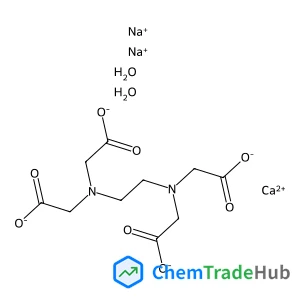
EthylenediaminetetraaceticacidcalciumDisodiumsalthydrate
CAS Number:
23411-34-9
Molecular Formula:
C10H16CaN2Na2O10


Recommended Suppliers






Disclaimer
This page provides academic journal information for reference and research purposes only. We are not affiliated with any journal publishers and do not handle publication submissions. For publication-related inquiries, please contact the respective journal publishers directly.
If you notice any inaccuracies in the information displayed, please contact us at support@chemtradehub.com. We will promptly review and address your concerns.