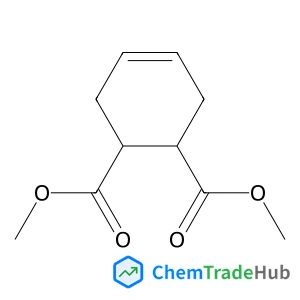
4-Cyclohexene-1,2-dicarboxylic acid, 1,2-dimethyl ester, (1R,2R)-rel-
CAS Number:
17673-68-6
Molecular Formula:
C10H14O4
Ozcan Altintas, Umit Tunca, Christopher Barner-Kowollik
Hamilton wedge (HW) end-functionalized poly(styrene) (PS–HW, Mn = 5400 g mol−1, PDI = 1.06), HW mid-chain functionalized poly(styrene) (PS–HW–PS, Mn = 4600 g mol−1, PDI = 1.04), cyanuric acid (CA) end-functionalized poly(styrene) (PS–CA, Mn = 3700 g mol−1, PDI = 1.04) and CA end-functionalized poly(methyl methacrylate) (PMMA–CA, Mn = 8500 g mol−1, PDI = 1.13) precursors were successfully synthesized via a combination of atom transfer radical polymerization (ATRP) and copper catalyzed azide–alkynecycloaddition (CuAAC). The precursor polymers were characterized viasize exclusion chromatography (SEC) and 1H NMR with respect to both molecular weight and structure. Supramolecular homopolymer (PS–HW·PS–CA), block copolymer (PS–HW·PMMA–CA), star polymer (PS–HW–PS·PS–CA) as well as miktoarm star polymer (PS–HW–PS·PMMA–CA) were formed in solution in high yields at ambient temperature (association close to 89% for PS–HW·PS–CA, 90% for PS–HW–PS·PS–CA and 98% for PS–HW–PS·PMMA–CA) via H-bonding between the orthogonal recognition units, HW and CA. The formation of supramolecular polymers was confirmed via1H NMR at ambient temperature in deuterated methylene chloride (CD2Cl2) solution.
Arya Shafiefarhood, Joseph Clay Hamill, Luke Michael Neal, Fanxing Li
DOI: 10.1039/C5CP05583K
Bing Li, Hongfeng Li, Peng Chen, Wenbin Sun, Cheng Wang, Ting Gao, Pengfei Yan
DOI: 10.1039/C5CP05888K
Luyan Liu, Chen Chen, Siyu Yang, Hua Xie, MaoGang Gong, Xiaoliang Xu
DOI: 10.1039/C5CP06305A
Yukihiro Nakabayashi, Yoshio Nosaka
DOI: 10.1039/C5CP04531B
Jun Ma, Xizi Cao, Xiaopeng Xing, Xuefeng Wang, Joel H. Parks
DOI: 10.1039/C5CP06116D
Leila Rajabi, S. C. Hendy
DOI: 10.1039/C5CP04448K
P. Antoniou, Z. Ma, P. Zhang
DOI: 10.1039/C5CP00610D
Daniel Höche, Carsten Blawert, Sviatlana V. Lamaka, Nico Scharnagl, Chamini Mendis
DOI: 10.1039/C5CP05577F
Monica Kosa, Hannah Noa Barad, Vijay Singh, David A. Keller, Klimentiy Shimanovich, Sven Rühle, Assaf Y. Anderson, Arie Zaban, Dan Thomas Major
DOI: 10.1039/C5CP05987A
Malte Sachs, Michael Gellert, Min Chen, Hans-Jörg Drescher, Stefan Renato Kachel, Han Zhou, Malte Zugermeier, Mihaela Gorgoi, Bernhard Roling, J. Michael Gottfried
DOI: 10.1039/C5CP03837E
3-Fluoro-2-methylbenzylamine is an organic compound with the CAS number 771573-3...
Tert-butyl 2-(oxetan-3-ylidene)acetate is considered safe for its intended uses ...
Proper personal protective equipment (PPE) such as gloves, goggles, and a lab co...
2-Ethyl-4-methyl-1,3-thiazole is commonly synthesized via the reaction of thiour...
This compound should be stored in a cool, dry place away from direct sunlight an...
L-Lysine Acetate Salt (CAS: 52315-92-1) is subject to various regulatory guideli...
6-Fluoro-3-hydroxy-2-pyrazinecarboxamide (CAS: 259793-96-9) is generally conside...
1,1'-Sulfonylbis(1H-imidazole) is a crystalline solid with a molecular weight of...
4-Methyl-7-nitro-1H-indole-3-carbonitrile (CAS: 289483-82-5) is primarily used i...
Waste containing 5-Bromo-3-indolyl-beta-galactoside (CAS: 97753-82-7) should be ...

Polymer Chemistry welcomes submissions in all areas of polymer science that have a strong focus on macromolecular chemistry. Manuscripts may cover a broad range of fields, yet no direct application focus is required.