


Ring-opening polymerization of L-lactide using N-heterocyclic molecules: mechanistic, kinetics and DFT studies
Literature Information
Publication Date
2010-08-10
DOI
10.1039/C0PY00125B
Impact Factor
5.582
Authors
Vimal Katiyar, Hemant Nanavati
View Original
Abstract
We report here our investigations of the mechanism and kinetics of N-heterocyclic molecules as initiators for PLA synthesis. This is a step towards employing life saving drugs based on N-heterocyclic functional groups, to generate carrier-drug complexes in situ, via ring opening polymerization (ROP) of L-lactide. During administration, the drug may be released with well-defined release rate kinetics. With this motivation, five and six membered N-heterocyclic molecules such as 4-pyrrolidino-pyridine (PDP), 2-methyl-pyridine, pyridine, pyrrole and imidazole, are examined as initiators of bulk ROP of L-lactide, to yield metal-free poly(L-lactide) (PLA). NMR, IR and MALDI-TOF MS analyses, establish the reacting species in the polymerization. Side reactions such as formation of macrocycles, occur when permitted by lack of steric hindrance, as when polymerization is initiated by PDP + benzyl alcohol or by imidazole. Accordingly, we propose a PDP-based anionic polymerization mechanism, and then examine the effect of reaction parameters. The kinetics studies indicate an overall first order reaction with lactide, and low activation energy. Density functional theory (DFT) calculations of the initiators' proton affinities, provide a fundamental understanding, to enable selection of more efficient various N-heterocyclic drug molecules, which can be utilized as initiators, to generate PLA chains as carriers for drug administration. We find that PDP has the highest proton affinity, and that the order of the calculated proton affinities correlates broadly with the resulting PLA molecular weights. We also find that PDP appears to the most effective initiator, yielding Mw ∼28,000 Da in 90 min, which is in line with the correlation between initiator effectiveness and proton affinities, of the investigated five and six member N-heterocyclic molecules.
Recommended Journals

Heterocyclic Communications

Advanced Powder Technology

Journal of Physical Organic Chemistry

Applied Composite Materials

Bio-Medical Materials and Engineering

Current Medicinal Chemistry

Journal of Computer-Aided Molecular Design

Composite Interfaces

Diamond and Related Materials

Cement and Concrete Composites
Related Literature
New solvatochromic probes: performance enhancement via regulation of excited state structures
Qianshu Li, Gary J. Blanchard
2016-08-19
Paper
DOI: 10.1039/C6CP04293G
Electronic structure of CuTPP and CuTPP(F) complexes: a combined experimental and theoretical study II
Giulia Mangione, Mauro Sambi, Silvia Carlotto, Andrea Vittadini, Giovanni Ligorio
2016-06-29
Paper
DOI: 10.1039/C6CP03956A
Theoretical prediction of long-range ferromagnetism in transition-metal atom-doped d0 dichalcogenide single layers SnS2 and ZrS2
A. Pham, H. Y. Xiao, X. T. Zu, S. Li
2016-08-11
Paper
DOI: 10.1039/C6CP02206E
Effect of chain microstructure on self-assembly and emulsification of amphiphilic poly(acrylic acid)-polystyrene copolymers
Ye Zhu, Chenglin Yi, Qiong Hu, Wei Wei, Xiaoya Liu
2016-08-30
Paper
DOI: 10.1039/C6CP04978H
Nanoshaping field emitters from glassy carbon sheets: a new functionality induced by H-plasma etching
S. Orlanducci, D. Passeri, M. L. Terranova
2016-08-17
Paper
DOI: 10.1039/C6CP03606F
Tuning the structure and mechanical property of polymer nanocomposites by employing anisotropic nanoparticles as netpoints
Jianxiang Shen, Wenchuan Wang
2016-08-17
Paper
DOI: 10.1039/C6CP04460C
Determination of the local structure of CsBi4−xPbxTe6 (x = 0, 0.5) by X-ray absorption spectroscopy
Takanori Wakita, Takashi Mizokawa, Kensei Terashima, Hiroyuki Okazaki, Luca Olivi, Yoshihiko Takano, Yuji Muraoka, Takayoshi Yokoya, Naurang L. Saini
2016-08-08
Paper
DOI: 10.1039/C6CP04949D
Photodissociation dynamics of dinitrite at 355 nm: initiation of a reactive pathway
Lingxuan Wang, Lily Zu
2016-08-17
Paper
DOI: 10.1039/C6CP03049A
Biphasic aggregation of a perylene bisimide dye identified by exciton-vibrational spectra
P.-A. Plötz, S. D. Ivanov, F. Fennel, S. Wolter, T. Niehaus, Z. Xie, S. Lochbrunner, F. Würthner, O. Kühn
2016-08-17
Paper
DOI: 10.1039/C6CP04898F
Thermal decomposition of sodium amide, NaNH2, and sodium amide hydroxide composites, NaNH2–NaOH
Peikun Wang, Guotao Wu, Zhitao Xiong, Flemming Besenbacher, Ping Chen, Torben R. Jensen
2016-08-12
Paper
DOI: 10.1039/C6CP01604A
You might also like
Compound Q&A
What precautions should be taken when handling lithium chloride hydrate (1:1:1) (CAS: 16712-20-2)?
When handling lithium chloride hydrate (1:1:1) (CAS: 16712-20-2), it is importan...
16712-20-2Lithium chloride hyd...
Compound Q&A
Is 4-(4H-1,2,4-Triazol-4-yl)piperidine (CAS: 690261-92-8) safe?
4-(4H-1,2,4-Triazol-4-yl)piperidine is generally considered safe for use in phar...
690261-92-84-(4H-1,2,4-Triazol-...
Compound Q&A
How should waste containing 1,3-Thiazole-2-carboxamide (CAS: 16733-85-0) be handled?
Waste containing 1,3-Thiazole-2-carboxamide (CAS: 16733-85-0) should be collecte...
16733-85-01,3-Thiazole-2-carbo...
Compound Q&A
What regulatory guidelines apply to 5-(Difluoromethyl)-2-fluorobenzonitrile (CAS: 934175-58-3)?
5-(Difluoromethyl)-2-fluorobenzonitrile (CAS: 934175-58-3) is subject to regulat...
934175-58-35-(Difluoromethyl)-2...
Compound Q&A
How is Methyl 3-acetamido-2-thiophenecarboxylate (CAS: 22288-79-5) typically synthesized?
Methyl 3-acetamido-2-thiophenecarboxylate can be synthesized by the reaction of ...
22288-79-5Methyl 3-acetamido-2...
Compound Q&A
What is 4-Isoquinolinecarbonitrile (CAS: 34846-65-6)?
4-Isoquinolinecarbonitrile is a chemical compound with the CAS number 34846-65-6...
34846-65-64-Isoquinolinecarbon...
Compound Q&A
How should Methyl 1H-1,2,3-triazole-4-carboxylate (CAS: 877309-59-6) be stored?
Store Methyl 1H-1,2,3-triazole-4-carboxylate (CAS: 877309-59-6) in a cool, dry p...
877309-59-6Methyl 1H-1,2,3-tria...
Compound Q&A
What regulatory guidelines apply to 6-Bromo[1,3]thiazolo[5,4-b]pyridin-2-amine (CAS: 1160791-13-8)?
6-Bromo[1,3]thiazolo[5,4-b]pyridin-2-amine (CAS: 1160791-13-8) is subject to the...
1160791-13-86-Bromo[1,3]thiazolo...
Compound Q&A
Is (2S,3S)-2-Ammonio-3-(3,4-dihydroxyphenyl)-3-hydroxypropanoate (CAS: 23651-95-8) safe?
(2S,3S)-2-Ammonio-3-(3,4-dihydroxyphenyl)-3-hydroxypropanoate (CAS: 23651-95-8) ...
23651-95-8(2S,3S)-2-Ammonio-3-...
Compound Q&A
What are the physical and chemical properties of 7-bromo-3-methyl-3,4-dihydroquinazolin-4-one (CAS: 1293987-84-4)?
7-Bromo-3-methyl-3,4-dihydroquinazolin-4-one is a solid with a crystalline form....
1293987-84-47-bromo-3-methyl-3,4...
Source Journal
Polymer Chemistry

CiteScore:
8.6
Self-citation Rate:
7.3%
Articles per Year:
457
Polymer Chemistry welcomes submissions in all areas of polymer science that have a strong focus on macromolecular chemistry. Manuscripts may cover a broad range of fields, yet no direct application focus is required.
Recommended Compounds
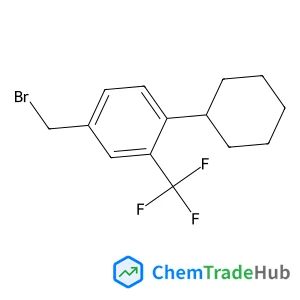
4-(Bromomethyl)-1-cyclohexyl-2-(trifluoromethyl)benzene
CAS Number:
800381-60-6
Molecular Formula:
C14H16BrF3
![6,6-Dimethylbicyclo[3.1.1]hept-2-ene-2-carbaldehyde structure](https://static.chemtradehub.com/structs/564/564-94-3-e746.webp "6,6-Dimethylbicyclo[3.1.1]hept-2-ene-2-carbaldehyde structure")
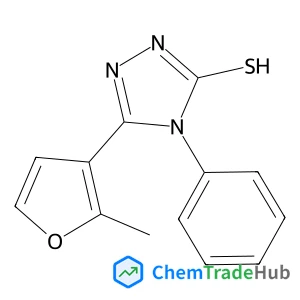
5-(2-Methyl-3-furyl)-4-phenyl-2,4-dihydro-3H-1,2,4-triazole-3-thione
CAS Number:
346464-59-3
Molecular Formula:
C13H11N3OS
Recommended Suppliers





Disclaimer
This page provides academic journal information for reference and research purposes only. We are not affiliated with any journal publishers and do not handle publication submissions. For publication-related inquiries, please contact the respective journal publishers directly.
If you notice any inaccuracies in the information displayed, please contact us at support@chemtradehub.com. We will promptly review and address your concerns.