













Effect of chain microstructure on self-assembly and emulsification of amphiphilic poly(acrylic acid)-polystyrene copolymers
Literature Information
Publication Date
2016-08-30
DOI
10.1039/C6CP04978H
Impact Factor
3.676
Authors
Ye Zhu, Chenglin Yi, Qiong Hu, Wei Wei, Xiaoya Liu
View Original
Abstract
In this study, a series of random copolymer poly(acrylic acid-co-styrene) (P(AA-co-St)) and block copolymer poly(acrylic acid)-b-polystyrene (PAA-b-PSt) with similar chemical composition but different chain microstructure were synthesized. The self-assembly behavior of random and block copolymers in selective solvent was investigated, and the structural evaluation of random and block copolymers micelles was carried out by transmission electron microscopy (TEM), dynamic light scattering (DLS) measurement, and X-ray photoelectron spectroscopy (XPS). Moreover, together with experimental characterization, the theoretical method dissipative particle dynamics (DPD) approach was applied to investigate the morphological structures of micelles composed from random and block copolymers. Results revealed that the structure of polymeric micelles is significantly affected by the distribution sequence of hydrophilic and hydrophobic monomers in copolymer chains. Furthermore, polymeric micelles based on P(AA-co-St) and PAA-b-PSt with about 50 mol% hydrophilic composition were chosen as the model to investigate the influence of micellar structure on emulsifying performance. For PAA-b-PSt micelles (B48), stable water-in-oil (w/o) emulsions could only obtained when the pH values were lower than 5. As a comparison, the P(AA-co-St) micelles (R49) had an excellent emulsification performance at 4–10 pH, and the pH-induced phase inversion derived from obtained emulsions observed at pH higher than 6. Preliminary results confirm that the micellar structure controlled by chain microstructure plays an important role in the interface behavior of polymer micelles. Compared with PAA-b-PSt micelles, P(AA-co-St) micelles have better interfacial performance and are more tailorable and controllable; thus they can be used as a model for further study of polymeric particulate emulsifiers. This paper provides new insight into the principles governing extremely high emulsifying efficiency of polymeric particulate emulsifiers and pH-responsive properties of the formed emulsions.
Related Literature
Large H2 storage capacity of a new polyhedron-based metal–organic framework with high thermal and hygroscopic stability
Seunghee Hong, Minhak Oh, Mira Park, Ji Woong Yoon, Jong-San Chang, Myoung Soo Lah
2009-07-24
Communication
DOI: 10.1039/B909250A
Reversible uptake of HgCl2 in a porous coordination polymer based on the dual functions of carboxylate and thioether
Xiao-Ping Zhou, Zhengtao Xu, Matthias Zeller, Allen D. Hunter
2009-08-05
Communication
DOI: 10.1039/B910265E
Platinum-catalysed aerobic 1,2-aminooxygenation of alkenes‡
Kilian Muñiz, Alvaro Iglesias, Yewen Fang
2009-08-28
Communication
DOI: 10.1039/B912139K
Metal–organic framework (MOF) aerogels with high micro- and macroporosity
Martin R. Lohe, Marcus Rose, Stefan Kaskel
2009-08-25
Communication
DOI: 10.1039/B910175F
Hierarchical γ-Al2O3 monoliths with highly ordered 2D hexagonal mesopores in macroporous walls
Le-Le Li, Wen-Tao Duan, Quan Yuan, Zhen-Xing Li, Hao-Hong Duan, Chun-Hua Yan
2009-09-10
Communication
DOI: 10.1039/B912495K
Polyoxometalate-based {MnIII2}–Schiff base composite materials exhibiting single-molecule magnet behaviour
Qiong Wu, Yang-Guang Li, Yong-Hui Wang, Ying Lu, En-Bo Wang
2009-09-03
Communication
DOI: 10.1039/B909246C
Building addressable libraries: a site-selective click-reaction strategy for rapidly assembling mass spectrometry cleavable linkers
Jennifer L. Bartels, Peng Lu, Amy Walker, Karl Maurer, Kevin D. Moeller
2009-08-17
Communication
DOI: 10.1039/B910577H
Direct assessment of molecular transport in mordenite: dominance of surface resistances
Lei Zhang, Christian Chmelik, Adri N. C. van Laak, Jörg Kärger, Petra E. de Jongh, Krijn P. de Jong
2009-09-08
Communication
DOI: 10.1039/B914391B
Centimetre scale assembly of vertically aligned and close packed semiconductor nanorods from solution
S. Ahmed
2009-09-08
Communication
DOI: 10.1039/B914478A
Living polymerization of ethylene and α-olefins using a nickel α-keto-β-diimine initiator
Jason D. Azoulay, Yanika Schneider, Griselda B. Galland, Guillermo C. Bazan
2009-09-10
Communication
DOI: 10.1039/B912743G
You might also like
Compound Q&A
What precautions should be taken when handling lithium chloride hydrate (1:1:1) (CAS: 16712-20-2)?
When handling lithium chloride hydrate (1:1:1) (CAS: 16712-20-2), it is importan...
16712-20-2Lithium chloride hyd...
Compound Q&A
Is 4-(4H-1,2,4-Triazol-4-yl)piperidine (CAS: 690261-92-8) safe?
4-(4H-1,2,4-Triazol-4-yl)piperidine is generally considered safe for use in phar...
690261-92-84-(4H-1,2,4-Triazol-...
Compound Q&A
How should waste containing 1,3-Thiazole-2-carboxamide (CAS: 16733-85-0) be handled?
Waste containing 1,3-Thiazole-2-carboxamide (CAS: 16733-85-0) should be collecte...
16733-85-01,3-Thiazole-2-carbo...
Compound Q&A
What regulatory guidelines apply to 5-(Difluoromethyl)-2-fluorobenzonitrile (CAS: 934175-58-3)?
5-(Difluoromethyl)-2-fluorobenzonitrile (CAS: 934175-58-3) is subject to regulat...
934175-58-35-(Difluoromethyl)-2...
Compound Q&A
How is Methyl 3-acetamido-2-thiophenecarboxylate (CAS: 22288-79-5) typically synthesized?
Methyl 3-acetamido-2-thiophenecarboxylate can be synthesized by the reaction of ...
22288-79-5Methyl 3-acetamido-2...
Compound Q&A
What is 4-Isoquinolinecarbonitrile (CAS: 34846-65-6)?
4-Isoquinolinecarbonitrile is a chemical compound with the CAS number 34846-65-6...
34846-65-64-Isoquinolinecarbon...
Compound Q&A
How should Methyl 1H-1,2,3-triazole-4-carboxylate (CAS: 877309-59-6) be stored?
Store Methyl 1H-1,2,3-triazole-4-carboxylate (CAS: 877309-59-6) in a cool, dry p...
877309-59-6Methyl 1H-1,2,3-tria...
Compound Q&A
What regulatory guidelines apply to 6-Bromo[1,3]thiazolo[5,4-b]pyridin-2-amine (CAS: 1160791-13-8)?
6-Bromo[1,3]thiazolo[5,4-b]pyridin-2-amine (CAS: 1160791-13-8) is subject to the...
1160791-13-86-Bromo[1,3]thiazolo...
Compound Q&A
Is (2S,3S)-2-Ammonio-3-(3,4-dihydroxyphenyl)-3-hydroxypropanoate (CAS: 23651-95-8) safe?
(2S,3S)-2-Ammonio-3-(3,4-dihydroxyphenyl)-3-hydroxypropanoate (CAS: 23651-95-8) ...
23651-95-8(2S,3S)-2-Ammonio-3-...
Compound Q&A
What are the physical and chemical properties of 7-bromo-3-methyl-3,4-dihydroquinazolin-4-one (CAS: 1293987-84-4)?
7-Bromo-3-methyl-3,4-dihydroquinazolin-4-one is a solid with a crystalline form....
1293987-84-47-bromo-3-methyl-3,4...
Source Journal
Physical Chemistry Chemical Physics

CiteScore:
5.5
Self-citation Rate:
10.3%
Articles per Year:
3036
Physical Chemistry Chemical Physics (PCCP) is an international journal co-owned by 19 physical chemistry and physics societies from around the world. This journal publishes original, cutting-edge research in physical chemistry, chemical physics and biophysical chemistry. To be suitable for publication in PCCP, articles must include significant innovation and/or insight into physical chemistry; this is the most important criterion that reviewers and Editors will judge against when evaluating submissions. The journal has a broad scope and welcomes contributions spanning experiment, theory, computation and data science. Topical coverage includes spectroscopy, dynamics, kinetics, statistical mechanics, thermodynamics, electrochemistry, catalysis, surface science, quantum mechanics, quantum computing and machine learning. Interdisciplinary research areas such as polymers and soft matter, materials, nanoscience, energy, surfaces/interfaces, and biophysical chemistry are welcomed if they demonstrate significant innovation and/or insight into physical chemistry. Joined experimental/theoretical studies are particularly appreciated when complementary and based on up-to-date approaches.
Recommended Compounds
![6,6-Dimethylbicyclo[3.1.1]hept-2-ene-2-carbaldehyde structure](https://static.chemtradehub.com/structs/564/564-94-3-e746.webp "6,6-Dimethylbicyclo[3.1.1]hept-2-ene-2-carbaldehyde structure")

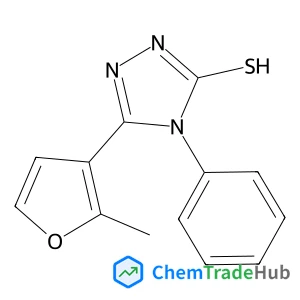
5-(2-Methyl-3-furyl)-4-phenyl-2,4-dihydro-3H-1,2,4-triazole-3-thione
CAS Number:
346464-59-3
Molecular Formula:
C13H11N3OS
![Benzeneacetic acid, 2-bromo-α-[[(1,1-dimethylethoxy)carbonyl]amino]-, (αS)- structure](https://static.chemtradehub.com/structs/122/1228547-87-2-f296.webp "Benzeneacetic acid, 2-bromo-α-[[(1,1-dimethylethoxy)carbonyl]amino]-, (αS)- structure")
Benzeneacetic acid, 2-bromo-α-[[(1,1-dimethylethoxy)carbonyl]amino]-, (αS)-
CAS Number:
1228547-87-2
Molecular Formula:
C13H16BrNO4
Recommended Suppliers




Disclaimer
This page provides academic journal information for reference and research purposes only. We are not affiliated with any journal publishers and do not handle publication submissions. For publication-related inquiries, please contact the respective journal publishers directly.
If you notice any inaccuracies in the information displayed, please contact us at support@chemtradehub.com. We will promptly review and address your concerns.