












Reversible circularization of an anthracene-modified DNA conjugate through bimolecular triplex formation and its analytical application
Literature Information
Publication Date
2010-08-24
DOI
10.1039/C0OB00282H
Impact Factor
3.876
Authors
Pelin Arslan, Akinori Jyo
View Original
Abstract
We prepared an oligodeoxyribonucleotide conjugate (5-3ant218) carrying two anthracenes, each of which was tethered to both ends of the conjugate through hexamethylene linker chains. The conjugate has a mirror repeat of two heptamer sequences, such that it forms a bimolecular triplex with the single stranded target, forming a two-fold U-shaped conformation. The conformation of the conjugate in its triplex structure could be frozen instantaneously by circularization through photodimerization of the anthracenes. Compared with the duplex formation of linear probes with relevant sequences, bimolecular triplex formation of 5-3ant218 shows a unique feature in its target recognition; it binds the target tightly, yet still retains high sequence selectivity. Circularization of 5-3ant218 by UV photoirradiation was verified as the probe reaction for a DNA assay. The probe reaction could be performed in a few seconds over a wide range of temperatures, at least between 0 and 25 °C. In addition, the reaction could be regarded as a reversible method for the preparation of circular DNA that shows higher affinity for the target.
Related Literature
Mixed solvent synthesis of polydopamine nanospheres for sustainable multilayer flame retardant nanocoating
Simone Lazar, Ruiqing Shen, Yufeng Quan, Bethany Palen, Qingsheng Wang, Christopher J. Ellison
2021-04-01
Paper
DOI: 10.1039/D1PY00111F
Facile construction of noncovalent graft copolymers with triple stimuli-responsiveness for triggered drug delivery
Lei Xu, Hairong Wang, Hongrui Tian, Mingzu Zhang, Jinlin He, Peihong Ni
2021-03-12
Paper
DOI: 10.1039/D1PY00135C
Detection and evaluation of polymer–polymer interactions in dilute solutions of associating polymers
Georges M. Pavlov, Anna A. Gosteva, Olga V. Okatova, Olga A. Dommes, Irina I. Gavrilova
2021-03-22
Paper
DOI: 10.1039/D0PY01725F
Toughened PLA-b-PCL-b-PLA triblock copolymer based biomaterials: effect of self-assembled nanostructure and stereocomplexation on the mechanical properties
Neha Mulchandani, Kazunari Masutani, Sachin Kumar, Hideki Yamane, Yoshiharu Kimura, Vimal Katiyar
2021-06-18
Paper
DOI: 10.1039/D1PY00429H
Supramolecular organogel formation behaviors of beads-on-string shaped poly(azomethine)s dependent on POSS structures in the main chains
Ayano Ishida, Shunichi Fujii, Akifumi Sumida, Tasuku Kamitani, Saori Minami, Kenji Urayama, Hiroaki Imoto
2021-05-03
Paper
DOI: 10.1039/D1PY00346A
Polyamides containing a biorenewable aromatic monomer based on coumalate esters: from synthesis to evaluation of the thermal and mechanical properties
Jurrie Noordijk, Bert Gebben, Monique H. M. Meeusen-Wierts, Katrien V. Bernaerts
2021-03-23
Paper
DOI: 10.1039/D1PY00005E
Chemical conjugation of nucleic acid aptamers and synthetic polymers
Maria Nerantzaki, Capucine Loth, Jean-François Lutz
2021-06-07
Minireview
DOI: 10.1039/D1PY00516B
Heterotellurium-containing macrocycles towards degradable tellurium-functionalized polymers
Jieni Hu, Chuanhao Sun, Siqi Li, Yuan Yuan
2021-07-20
Communication
DOI: 10.1039/D1PY00703C
You might also like
Compound Q&A
What industries use (1R,3S)-1,3-Cyclopentanediol (CAS: 16326-97-9)?
(1R,3S)-1,3-Cyclopentanediol finds applications in various industries. In the ph...
16326-97-9(1R,3S)-1,3-Cyclopen...
Compound Q&A
What precautions should be taken when handling N'-[4-(Dimethylamino)phenyl]-N,N-dimethyl-1,4-benzenediamine (CAS: 637-31-0)?
When handling N'-[4-(Dimethylamino)phenyl]-N,N-dimethyl-1,4-benzenediamine, it i...
637-31-0N'-[4-(Dimethylamino...
Compound Q&A
Are there alternatives to 5-(2,4-Difluorophenyl)-2-methoxypyrimidine (CAS: 1352318-16-1) in synthesis?
There are several alternatives to 5-(2,4-Difluorophenyl)-2-methoxypyrimidine in ...
1352318-16-15-(2,4-Difluoropheny...
Compound Q&A
What regulatory guidelines apply to 1-(3-Methoxyphenoxy)propan-2-ol (CAS: 382141-68-6)?
1-(3-Methoxyphenoxy)propan-2-ol (CAS: 382141-68-6) must comply with the Globally...
382141-68-61-(3-Methoxyphenoxy)...
Compound Q&A
Is Tetrodotoxin Citrate (CAS: 18660-81-6) safe?
Tetrodotoxin Citrate is extremely dangerous and should be handled with extreme c...
18660-81-6Tetrodotoxin Citrate
Compound Q&A
What are the main uses of 2-Methyl-2-propanyl [(1R,3S)-3-hydroxycyclopentyl]carbamate (CAS: 225641-84-9)?
2-Methyl-2-propanyl [(1R,3S)-3-hydroxycyclopentyl]carbamate (CAS: 225641-84-9) i...
225641-84-92-Methyl-2-propanyl ...
Compound Q&A
How should waste containing 4-(2-Hydroxyhexafluoroisopropyl)Benzoic Acid (CAS: 16261-80-6) be handled?
Waste containing 4-(2-Hydroxyhexafluoroisopropyl)Benzoic Acid (CAS: 16261-80-6) ...
16261-80-64-(2-Hydroxyhexafluo...
Compound Q&A
How is 2-Methyl-2-proanyl {(2S)-1-[(benzyloxy)amino]-3-hydroxy-3-methyl-1-oxo-2-butanyl}carbamate (CAS: 102507-19-7) typically synthesized?
2-Methyl-2-proanyl {(2S)-1-[(benzyloxy)amino]-3-hydroxy-3-methyl-1-oxo-2-butanyl...
102507-19-72-Methyl-2-propanyl ...
Compound Q&A
What is Benzeneethanamine, α-ethyl-, hydrochloride (1:1) (CAS: 20735-15-3)?
Benzeneethanamine, α-ethyl-, hydrochloride (1:1) is an organic compound with the...
20735-15-3Benzeneethanamine, α...
Compound Q&A
Are there alternatives to 3-{(E)-[4-(Dimethylamino)phenyl]diazenyl}benzoic acid (CAS: 20691-84-3) in synthesis?
In the synthesis of compounds similar to 3-{(E)-[4-(Dimethylamino)phenyl]diazeny...
20691-84-33-{(E)-[4-(Dimethyla...
Source Journal
Organic & Biomolecular Chemistry

CiteScore:
3.4
Self-citation Rate:
10.3%
Articles per Year:
1041
Organic & Biomolecular Chemistry (OBC) publishes original and high impact research and reviews in organic chemistry. We welcome research that shows new or significantly improved protocols or methodologies in total synthesis, synthetic methodology or physical and theoretical organic chemistry as well as research that shows a significant advance in the organic chemistry or molecular design aspects of chemical biology, catalysis, supramolecular and macromolecular chemistry, theoretical chemistry, mechanism-oriented physical organic chemistry, medicinal chemistry or natural products. Articles published in the journal should report new work which makes a highly-significant impact in the field. Routine and incremental work is generally not suitable for publication in the journal. More details about key areas of our scope are below. In all cases authors should include in their article clear rationale for why their research has been carried out.
Recommended Compounds
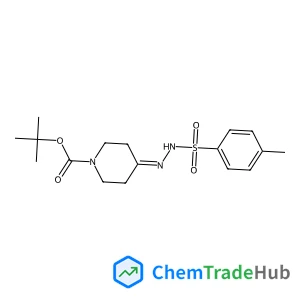
tert-Butyl 4-(2-(p-Tolylsulfonyl)hydrazono)piperidine-1-carboxylate
CAS Number:
1046478-89-0
Molecular Formula:
C17H25N3O4S
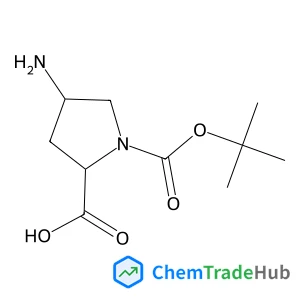
(2R,4R)-1-Boc-4-Aminopyrrolidine-2-carboxylic acid
CAS Number:
132622-98-1
Molecular Formula:
C10H18N2O4
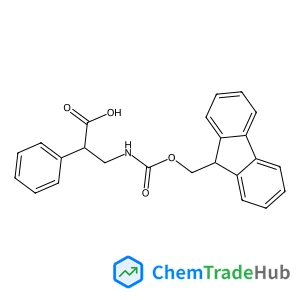
(S)-3-((((9H-Fluoren-9-yl)methoxy)carbonyl)amino)-2-phenylpropanoic acid
CAS Number:
1217663-60-9
Molecular Formula:
C24H21NO4
Recommended Suppliers





Disclaimer
This page provides academic journal information for reference and research purposes only. We are not affiliated with any journal publishers and do not handle publication submissions. For publication-related inquiries, please contact the respective journal publishers directly.
If you notice any inaccuracies in the information displayed, please contact us at support@chemtradehub.com. We will promptly review and address your concerns.