


Excimer formation by interstrand stacked pyrenes
Literature Information
Publication Date
2004-11-09
DOI
10.1039/B412831A
Impact Factor
6.222
Authors
Simon M. Langenegger, Robert Häner
View Original
Abstract
Non-nucleosidic, pyrene-derived base surrogates form excimers via interstrand stacking in duplex DNA.
Recommended Journals

Atomization and Sprays

Medicinal Chemistry Research

Critical Reviews in Solid State and Materials Sciences

Electroanalysis

Herald of the Russian Academy of Sciences

Topics in Catalysis

Journal of the Indian Institute of Science

Bioorganic & Medicinal Chemistry

Biocatalysis and Biotransformation

Polycyclic Aromatic Compounds
Related Literature
Investigating the autophagy pathway in silver@gold core–shell nanoparticles-treated cells using surface-enhanced Raman scattering
Yuqing Hou, Wen Zhang, Shengtao Li, Zhen Wang, Huiqing Zhong, Zhiming Liu, Zhouyi Guo
2018-06-15
Paper
DOI: 10.1039/C8AN00405F
Capillary electrophoresis-laser-induced fluorescence (CE-LIF)-based immunoassay for quantifying antibodies against cyclic citrullinated peptides
Young Sook Yoo
2018-05-16
Paper
DOI: 10.1039/C8AN00714D
Label-free tracking of nanosized graphene oxide cellular uptake by confocal Raman microscopy
Michal Bodík, Nikola Bugárová, Martina Labudová, Miriam Zaťovičová, Tibor Hianik, Mária Omastová, Matej Jergel, Silvia Pastoreková
2018-06-12
Paper
DOI: 10.1039/C8AN00225H
Vertical flow assays based on core–shell SERS nanotags for multiplex prostate cancer biomarker detection
Chengxin Luan
2019-05-13
Paper
DOI: 10.1039/C9AN00733D
A simple highly specific fluorescent probe for simultaneous discrimination of cysteine/homocysteine and glutathione/hydrogen sulfide in living cells and zebrafish using two separated fluorescence channels under single wavelength excitation
Hanchuang Zhu, Caiyun Liu, Ruifang Yuan, Ruikang Wang, Hanming Zhang, Zilu Li, Pan Jia, Baocun Zhu, Wenlong Sheng
2019-06-11
Paper
DOI: 10.1039/C9AN00818G
Hot off the press
Robert A. Hill, Marie Claire Parker
2002-01-09
Hot off the Press Article
DOI: 10.1039/B111219H
A dual-mode fluorometric/colorimetric sensor for Cu2+ detection based on hybridized carbon dots and gold–silver core–shell nanoparticles
Yuqing Chen, Yawen Lian, Mengna Huang, Lin Wei, Lehui Xiao
2019-06-03
Paper
DOI: 10.1039/C9AN00850K
You might also like
Compound Q&A
What industries use (1R,3S)-1,3-Cyclopentanediol (CAS: 16326-97-9)?
(1R,3S)-1,3-Cyclopentanediol finds applications in various industries. In the ph...
16326-97-9(1R,3S)-1,3-Cyclopen...
Compound Q&A
What precautions should be taken when handling N'-[4-(Dimethylamino)phenyl]-N,N-dimethyl-1,4-benzenediamine (CAS: 637-31-0)?
When handling N'-[4-(Dimethylamino)phenyl]-N,N-dimethyl-1,4-benzenediamine, it i...
637-31-0N'-[4-(Dimethylamino...
Compound Q&A
Are there alternatives to 5-(2,4-Difluorophenyl)-2-methoxypyrimidine (CAS: 1352318-16-1) in synthesis?
There are several alternatives to 5-(2,4-Difluorophenyl)-2-methoxypyrimidine in ...
1352318-16-15-(2,4-Difluoropheny...
Compound Q&A
What regulatory guidelines apply to 1-(3-Methoxyphenoxy)propan-2-ol (CAS: 382141-68-6)?
1-(3-Methoxyphenoxy)propan-2-ol (CAS: 382141-68-6) must comply with the Globally...
382141-68-61-(3-Methoxyphenoxy)...
Compound Q&A
Is Tetrodotoxin Citrate (CAS: 18660-81-6) safe?
Tetrodotoxin Citrate is extremely dangerous and should be handled with extreme c...
18660-81-6Tetrodotoxin Citrate
Compound Q&A
What are the main uses of 2-Methyl-2-propanyl [(1R,3S)-3-hydroxycyclopentyl]carbamate (CAS: 225641-84-9)?
2-Methyl-2-propanyl [(1R,3S)-3-hydroxycyclopentyl]carbamate (CAS: 225641-84-9) i...
225641-84-92-Methyl-2-propanyl ...
Compound Q&A
How should waste containing 4-(2-Hydroxyhexafluoroisopropyl)Benzoic Acid (CAS: 16261-80-6) be handled?
Waste containing 4-(2-Hydroxyhexafluoroisopropyl)Benzoic Acid (CAS: 16261-80-6) ...
16261-80-64-(2-Hydroxyhexafluo...
Compound Q&A
How is 2-Methyl-2-proanyl {(2S)-1-[(benzyloxy)amino]-3-hydroxy-3-methyl-1-oxo-2-butanyl}carbamate (CAS: 102507-19-7) typically synthesized?
2-Methyl-2-proanyl {(2S)-1-[(benzyloxy)amino]-3-hydroxy-3-methyl-1-oxo-2-butanyl...
102507-19-72-Methyl-2-propanyl ...
Compound Q&A
What is Benzeneethanamine, α-ethyl-, hydrochloride (1:1) (CAS: 20735-15-3)?
Benzeneethanamine, α-ethyl-, hydrochloride (1:1) is an organic compound with the...
20735-15-3Benzeneethanamine, α...
Compound Q&A
Are there alternatives to 3-{(E)-[4-(Dimethylamino)phenyl]diazenyl}benzoic acid (CAS: 20691-84-3) in synthesis?
In the synthesis of compounds similar to 3-{(E)-[4-(Dimethylamino)phenyl]diazeny...
20691-84-33-{(E)-[4-(Dimethyla...
Source Journal
Chemical Communications

CiteScore:
8.6
Self-citation Rate:
4.7%
Articles per Year:
2458
ChemComm publishes urgent research which is of outstanding significance and interest to experts in the field, while also appealing to the journal’s broad chemistry readership. Our communication format is ideally suited to short, urgent studies that are of such importance that they require accelerated publication. Our scope covers all topics in chemistry, and research at the interface of chemistry and other disciplines (such as materials science, nanoscience, physics, engineering and biology) where there is a significant novelty in the chemistry aspects. Major topic areas covered include: Analytical Chemistry Catalysis Chemical Biology and medicinal chemistry Computational Chemistry and Machine Learning Energy and sustainable chemistry Environmental Chemistry Green Chemistry Inorganic Chemistry Materials Chemistry Nanoscience Organic Chemistry Physical Chemistry Polymer Chemistry Supramolecular Chemistry
Recommended Compounds
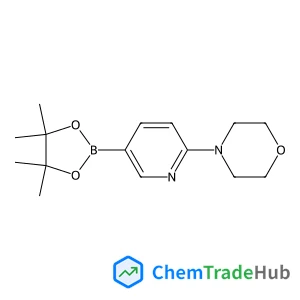
4-(5-(4,4,5,5-tetramethyl-1,3,2-dioxaborolan-2-yl)pyridin-2-yl)morpholine
CAS Number:
485799-04-0
Molecular Formula:
C15H23BN2O3
Recommended Suppliers




Disclaimer
This page provides academic journal information for reference and research purposes only. We are not affiliated with any journal publishers and do not handle publication submissions. For publication-related inquiries, please contact the respective journal publishers directly.
If you notice any inaccuracies in the information displayed, please contact us at support@chemtradehub.com. We will promptly review and address your concerns.