












Simultaneous determination of 12 antibacterial drugs in cream disinfection products with EMR-Lipid cleanup using ultra-high-performance liquid chromatography tandem mass spectrometry
Literature Information
Publication Date
2019-07-02
DOI
10.1039/C9AY00937J
Impact Factor
2.896
Authors
Feng Zhu, Xiaosong Wu, Fang Li, Wei Wang, Wenliang Ji, Zongli Huo, Yan Xu
View Original
Abstract
The use of antibiotics and their occurrence in environmental samples, biological samples, meat, dairy products and cosmetics have attracted worldwide attention in recent years owing to the spread of antibiotic resistance genes. However, analysis of antibacterial drugs in disinfection products was rarely realized. Hence, we herein reported the development and validation of an effective multiresidue method for the analysis of 12 antibacterial drugs in cream disinfection products, in which enhanced matrix removal-lipid (EMR-Lipid) hyphenated with ultra-high-performance liquid chromatography tandem mass spectrometry (UHPLC-MS/MS) was utilized. The method was optimized based on the extraction solvent composition and the amounts of EMR-Lipid for cleanup. Acceptable mean absolute recoveries were obtained at a spiked level of 20 μg kg−1 in blank matrix samples for all selected targets, ranging from 35.5% to 82.4%. The co-extractive removal rate (by weight) up to 69.4% with 1 g EMR-Lipid for cleanup resulted in an excellent matrix effect (60.6–113.7%). The method detection and quantification limits of 12 analytes were in the range of 0.02–0.9 μg kg−1 and 0.08–2.7 μg kg−1, respectively. The mean corrected recoveries using the isotopic labeled chemicals of blank matrix samples ranged from 84.6% to 121.4%, when spiked with 5, 20 and 50 μg kg−1 of 12 antibacterial drugs. The results of intra-day precision and inter-day precision for all antibacterial drugs showed excellent repeatability (relative standard deviation (RSD) < 9.96%). Finally, the optimized method was applied to analyze 12 antibacterial drugs in 15 cream disinfection samples, and ofloxacin at a concentration of 21.3 ± 1.8 mg kg−1 was found in one sample.
Related Literature
Coadsorption of the complementary base pair adenine–thymine at the mercury/electrolyte interface
S. Kirste, C. Donner
2001-09-05
Paper
DOI: 10.1039/B104007N
Kinetics of hydrogen abstraction reactions of CF3CHO, CF2ClCHO, CFCl2CHO and CCl3CHO with OH Radicals: An ab initio study
Tadafumi Uchimaru, Masaaki Sugie
Paper
DOI: 10.1039/B104904F
Dynamic colloidal interactions between protein-stabilised particles—experiment and simulation
Herley Casanova, Jianshe Chen, Eric Dickinson, Brent S. Murray, Phillip V. Nelson, Martin Whittle
2000-08-09
Paper
DOI: 10.1039/B004023L
Hydride shift in substituted phenyl glyoxals: Interpretation of experimental rate data using electronic structure and variational transition state theory calculations
Gary Tresadern, Julie Willis, Ian H. Hillier, C. Ian F. Watt
2001-08-28
Paper
DOI: 10.1039/B102330F
Mechanism of the laser initiated ultrafast intracluster reaction in Ba···FCH3 and Ba···FCD3
V. Stert, H.-H. Ritze, P. Farmanara, W. Radloff
2001-08-23
Paper
DOI: 10.1039/B104528H
Solvation of alkane and alcohol molecules. Energy contributions
A. A. C. C. Pais, A. Sousa, M. E. Eusébio, J. S. Redinha
2001-08-31
Paper
DOI: 10.1039/B104981J
Thermal and UV photo-induced decomposition of azomethane on Rh(111)
Attila Kis, Robert Barthos, Janos Kiss
2000-08-29
Paper
DOI: 10.1039/B003846F
Surface processes and electrocatalysis on the Pt(hkl )/Bi-solution interface
Thomas J. Schmidt, Vojislav R. Stamenkovic, Christopher A. Lucas, Nenad M. Markovic, Philip N. Ross Jr.
2001-08-30
Invited Article
DOI: 10.1039/B102388H
Structure and torsional potential of p-phenylthiophene: a theoretical comparative study
2000-07-10
Paper
DOI: 10.1039/B003806G
You might also like
Compound Q&A
What are the main uses of 1H-Indazole-6-carbonitrile (CAS: 141290-59-7)?
1H-Indazole-6-carbonitrile finds applications in pharmaceuticals, where it serve...
141290-59-71H-Indazole-6-carbon...
Compound Q&A
How should waste containing Dioctyl (2E)-2-butenedioate (CAS: 2997-85-5) be handled?
Waste containing Dioctyl (2E)-2-butenedioate (CAS: 2997-85-5) should be collecte...
2997-85-5Dioctyl (2E)-2-buten...
Compound Q&A
What industries use Sodium [(1,2-benzoxazol-3-ylmethyl)sulfonyl]azanide (CAS: 68291-98-5)?
Sodium [(1,2-benzoxazol-3-ylmethyl)sulfonyl]azanide is primarily used in pharmac...
68291-98-5Sodium [(1,2-benzoxa...
Compound Q&A
Are there alternatives to Dimethyl 4-(4,4,5,5-tetramethyl-1,3,2-dioxaborolan-2-yl)-2,6-pyridinedicarboxylate (CAS: 741709-66-0) in synthesis?
Dimethyl 4-(4,4,5,5-tetramethyl-1,3,2-dioxaborolan-2-yl)-2,6-pyridinedicarboxyla...
741709-66-0Dimethyl 4-(4,4,5,5-...
Compound Q&A
How should waste containing 2-Fluoro-6-hydrazinopyridine (CAS: 80714-39-2) be handled?
Waste containing 2-Fluoro-6-hydrazinopyridine (CAS: 80714-39-2) should be manage...
80714-39-22-Fluoro-6-hydrazino...
Compound Q&A
What is 6-Formyl-2-pyridinecarboxylic acid (CAS: 499214-11-8)?
6-Formyl-2-pyridinecarboxylic acid is an organic compound with the molecular for...
499214-11-86-Formyl-2-pyridinec...
Compound Q&A
What is the market or research trend for 3-(3,4-dimethoxyphenyl)-2,5-dimethyl-N-(2-morpholin-4-ylethyl)pyrazolo[1,5-a]pyrimidin-7-amine (CAS: 900874-91-1)?
Research trends for this compound indicate a focus on its potential applications...
900874-91-13-(3,4-dimethoxyphen...
Compound Q&A
How is 9H-Tribenzo[b,d,f]azepine (CAS: 29875-73-8) typically synthesized?
9H-Tribenzo[b,d,f]azepine is typically synthesized via a multi-step process invo...
29875-73-89H-Tribenzo[b,d,f]az...
Compound Q&A
How is 1-Cyclopropyl-7-ethoxy-6-fluoro-8-methoxy-4-oxo-1,4-dihydro-3-quinolinecarboxylic acid (CAS: 1797982-51-4) typically synthesized?
1-Cyclopropyl-7-ethoxy-6-fluoro-8-methoxy-4-oxo-1,4-dihydro-3-quinolinecarboxyli...
1797982-51-41-Cyclopropyl-7-etho...
Compound Q&A
How should waste containing Methyl 3-oxo-1,2,3,4-tetrahydro-6-quinoxalinecarboxylate (CAS: 671820-52-3) be handled?
Waste containing Methyl 3-oxo-1,2,3,4-tetrahydro-6-quinoxalinecarboxylate (CAS: ...
671820-52-3Methyl 3-oxo-1,2,3,4...
Source Journal
Analytical Methods
CiteScore:
5.1
Self-citation Rate:
3.7%
Articles per Year:
655
Analytical Methods welcomes early applications of new analytical and bioanalytical methods and technology demonstrating the potential for societal impact. We require that methods and technology reported in the journal are sufficiently innovative, robust, accurate, and compared to other available methods for the intended application. Developments with interdisciplinary approaches are particularly welcome. Systems should be proven with suitably complex and analytically challenging samples. We encourage developments within, but not limited to, the following technologies and applications: global health, point-of-care and molecular diagnostics biosensors and bioengineering drug development and pharmaceutical analysis applied microfluidics and nanotechnology omics studies, such as proteomics, metabolomics or glycomics environmental, agricultural and food science neuroscience biochemical and clinical analysis forensic analysis industrial process and method development
Recommended Compounds
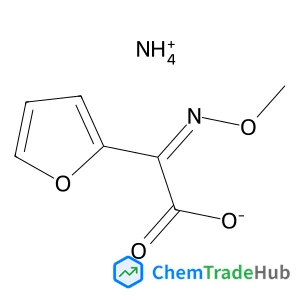
Ammonium (Z)-2-(furan-2-yl)-2-(methoxyimino)acetate
CAS Number:
97148-39-5
Molecular Formula:
C7H10N2O4
Recommended Suppliers






Disclaimer
This page provides academic journal information for reference and research purposes only. We are not affiliated with any journal publishers and do not handle publication submissions. For publication-related inquiries, please contact the respective journal publishers directly.
If you notice any inaccuracies in the information displayed, please contact us at support@chemtradehub.com. We will promptly review and address your concerns.