













Two-dimensional near-ultraviolet spectroscopy of aromatic residues in amyloid fibrils: a first principles study
Literature Information
Publication Date
2010-12-06
DOI
10.1039/C0CP02047H
Impact Factor
3.676
Authors
Jun Jiang, Shaul Mukamel
View Original
Abstract
We report a first principles study of two dimensional electronic spectroscopy of aromatic side chain transitions in the 32-residue β-amyloid (Aβ9–40) fibrils in the near ultraviolet (250–300 nm). An efficient exciton Hamiltonian with electrostatic fluctuations (EHEF) algorithm is used to compute the electronic excitations in the presence of environmental fluctuations. The through-space inter- and intra-molecular interactions are calculated with high level quantum mechanics (QM) approaches, and interfaced with molecular mechanics (MM) simulations. Distinct two dimensional near ultraviolet (2DNUV) spectroscopic signatures are identified for different aromatic transitions, and the couplings between them. 2DNUV signals associated with the transition couplings are shown to be very sensitive to the change of residue-residue interactions induced by residue mutations. Our simulations suggest that 2DNUV spectra could provide a useful local probe for the structure and kinetics of fibrils.
Related Literature
Sarocladione, a unique 5,10:8,9-diseco-steroid from the deep-sea-derived fungus Sarocladium kiliense
Chun-Lan Xie, Jin-Mei Xia, Cui-Ping Xing, Zhu-Hua Luo, Zongze Shao, Xiao-Jun Yan, Shan He, Xian-Wen Yang
2019-05-29
Communication
DOI: 10.1039/C9OB01159E
Antinociceptive activity of thiazole-containing cyclized DAMGO and Leu-(Met) enkephalin analogs
Hannah M. Harris, Shainnel O. Eans, Michelle L. Ganno, Jennifer C. Davis, Colette T. Dooley, Jay P. McLaughlin, Adel Nefzi
2019-05-09
Paper
DOI: 10.1039/C9OB00882A
6-Polyamino-substituted quinolines: synthesis and multiple metal (CuII, HgII and ZnII) monitoring in aqueous media
Anton S. Abel, Andrey V. Cheprakov, Vitaly A. Roznyatovsky, Franck Denat, Alla Bessmertnykh-Lemeune
2019-03-01
Paper
DOI: 10.1039/C9OB00259F
Recent advances in photocatalytic manipulations of Rose Bengal in organic synthesis
Shivani Sharma, Anuj Sharma
2019-03-22
Review Article
DOI: 10.1039/C9OB00092E
Organoboron synthesis via ring opening coupling reactions
Riccardo Gava, Elena Fernández
2019-06-03
Review Article
DOI: 10.1039/C9OB00989B
Metal-catalysed reactions enabled by guanidine-type ligands
Xi-Yang Cui, Choon-Hong Tan, Dasheng Leow
2019-04-16
Review Article
DOI: 10.1039/C8OB02240B
Substituent-controlled racemization of dissymmetric coordination capsules
Kentaro Harada, Ryo Sekiya, Takeshi Maehara, Takeharu Haino
2019-03-28
Paper
DOI: 10.1039/C9OB00388F
Metal-free POCl3 promoted stereoselective hydrochlorination of ethynylated azaheterocycles
Radhey M. Singh
2019-05-29
Paper
DOI: 10.1039/C9OB00841A
N-Hydroxyphthalimide/benzoquinone-catalyzed chlorination of hydrocarbon C–H bond using N-chlorosuccinimide
Zi-Hao Li, Biao-Lin Jiang, Jian-Wei Li
2019-02-26
Paper
DOI: 10.1039/C9OB00216B
Selective synthesis of (1H-benzo[d]imidazol-2-yl)(phenyl)methanone and quinoxaline from aromatic aldehyde and o-phenylenediamine
Zhenzhen Zhan, Haojie Ma, Xinfeng Cui, Pengbo Jiang, Jinghong Pu, Yixin Zhang, Guosheng Huang
2019-04-24
Paper
DOI: 10.1039/C9OB00531E
You might also like
Compound Q&A
What is 1-(2,4,6-Trifluorophenyl)ethanol (CAS: 1250113-83-7)?
1-(2,4,6-Trifluorophenyl)ethanol is an organic compound with the CAS number 1250...
1250113-83-71-(2,4,6-Trifluoroph...
Compound Q&A
Is 1-(2,4-Dimethoxybenzyl)-4-(hydroxymethyl)-2-pyrrolidinone (CAS: 919111-34-5) safe?
1-(2,4-Dimethoxybenzyl)-4-(hydroxymethyl)-2-pyrrolidinone (CAS: 919111-34-5) is ...
919111-34-51-(2,4-Dimethoxybenz...
Compound Q&A
What are the physical and chemical properties of (7S,15R)-6β,15-Diacetoxy-7α,20-epoxy-7-hydroxykaura-2,16-dien-1-one (CAS: 51419-51-3)?
(7S,15R)-6β,15-Diacetoxy-7α,20-epoxy-7-hydroxykaura-2,16-dien-1-one is a crystal...
51419-51-3(7S,15R)-6β,15-Diace...
Compound Q&A
What regulatory guidelines apply to rac-ethyl (1r,4r)-4-hydroxycyclohexane-1-carboxylate, trans (CAS: 3618-04-0)?
The compound rac-ethyl (1r,4r)-4-hydroxycyclohexane-1-carboxylate, trans (CAS: 3...
3618-04-0rac-ethyl (1r,4r)-4-...
Compound Q&A
What is the market or research trend for 2-(2,4-Difluorophenoxy)-3-nitropyridine (CAS: 175135-62-3)?
The market for 2-(2,4-Difluorophenoxy)-3-nitropyridine (CAS: 175135-62-3) is cur...
175135-62-32-(2,4-Difluoropheno...
Compound Q&A
What are the main uses of 6-Diazo-5-oxo-L-norleucine (CAS: 157-03-9)?
The main uses of 6-Diazo-5-oxo-L-norleucine (CAS: 157-03-9) include research in ...
157-03-96-Diazo-5-oxo-L-norl...
Compound Q&A
What precautions should be taken when handling 2-Aminoethyl-mono-amide-DOTA-tris(tBu ester) (CAS: 173308-19-5)?
When handling 2-Aminoethyl-mono-amide-DOTA-tris(tBu ester) (CAS: 173308-19-5), i...
173308-19-52-Aminoethyl-mono-am...
Compound Q&A
How is 5-Methylimidazo[1,2-a]pyridine-3-carbaldehyde (CAS: 178488-37-4) typically synthesized?
5-Methylimidazo[1,2-a]pyridine-3-carbaldehyde (CAS: 178488-37-4) can be synthesi...
178488-37-45-Methylimidazo[1,2-...
Compound Q&A
Are there alternatives to 2,4,6-Trihydroxyisophthalaldehyde (CAS: 4396-13-8) in synthesis?
There are alternative reagents that can be used in the synthesis of 2,4,6-Trihyd...
4396-13-82,4,6-Trihydroxyisop...
Compound Q&A
What is (2Z)-3-(5-Fluoro-1H-indol-3-yl)-2-sulfanylacrylic acid (CAS: 179461-52-0)?
(2Z)-3-(5-Fluoro-1H-indol-3-yl)-2-sulfanylacrylic acid is a chemical compound wi...
179461-52-0(2Z)-3-(5-Fluoro-1H-...
Source Journal
Physical Chemistry Chemical Physics

CiteScore:
5.5
Self-citation Rate:
10.3%
Articles per Year:
3036
Physical Chemistry Chemical Physics (PCCP) is an international journal co-owned by 19 physical chemistry and physics societies from around the world. This journal publishes original, cutting-edge research in physical chemistry, chemical physics and biophysical chemistry. To be suitable for publication in PCCP, articles must include significant innovation and/or insight into physical chemistry; this is the most important criterion that reviewers and Editors will judge against when evaluating submissions. The journal has a broad scope and welcomes contributions spanning experiment, theory, computation and data science. Topical coverage includes spectroscopy, dynamics, kinetics, statistical mechanics, thermodynamics, electrochemistry, catalysis, surface science, quantum mechanics, quantum computing and machine learning. Interdisciplinary research areas such as polymers and soft matter, materials, nanoscience, energy, surfaces/interfaces, and biophysical chemistry are welcomed if they demonstrate significant innovation and/or insight into physical chemistry. Joined experimental/theoretical studies are particularly appreciated when complementary and based on up-to-date approaches.
Recommended Compounds
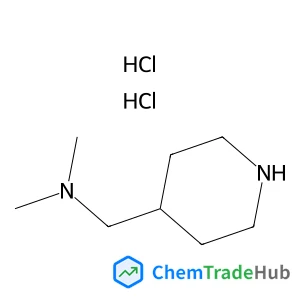
N,N-dimethyl(piperidin-4-yl)methanamine hydrochloride
CAS Number:
172281-72-0
Molecular Formula:
C8H20Cl2N2
![2-Methyl-2-propanyl 1,6-diazaspiro[3.4]octane-6-carboxylate structure](https://static.chemtradehub.com/structs/115/1158749-79-1-81ee.webp "2-Methyl-2-propanyl 1,6-diazaspiro[3.4]octane-6-carboxylate structure")
2-Methyl-2-propanyl 1,6-diazaspiro[3.4]octane-6-carboxylate
CAS Number:
1158749-79-1
Molecular Formula:
C11H20N2O2
![9H-Fluoren-9-ylmethyl [(2S)-1-hydroxy-3-(1H-indol-3-yl)-2-propanyl]carbamate structure](https://static.chemtradehub.com/structs/153/153815-60-2-a67d.webp "9H-Fluoren-9-ylmethyl [(2S)-1-hydroxy-3-(1H-indol-3-yl)-2-propanyl]carbamate structure")
9H-Fluoren-9-ylmethyl [(2S)-1-hydroxy-3-(1H-indol-3-yl)-2-propanyl]carbamate
CAS Number:
153815-60-2
Molecular Formula:
C26H24N2O3
Recommended Suppliers






Disclaimer
This page provides academic journal information for reference and research purposes only. We are not affiliated with any journal publishers and do not handle publication submissions. For publication-related inquiries, please contact the respective journal publishers directly.
If you notice any inaccuracies in the information displayed, please contact us at support@chemtradehub.com. We will promptly review and address your concerns.