












Substituent-controlled racemization of dissymmetric coordination capsules
Literature Information
Publication Date
2019-03-28
DOI
10.1039/C9OB00388F
Impact Factor
3.876
Authors
Kentaro Harada, Ryo Sekiya, Takeshi Maehara, Takeharu Haino
View Original
Abstract
We report the effect of substituents (methyl, isopropyl, methoxy, and methoxyphenyl) at the 6′-position of the 2,2′-bipyridyl arms on the racemization of dissymmetric coordination capsules 1a–d. When the capsules included (R)-4,4′-diacetoxy-2,2′-benzyloxycarboxyl-biphenyl ((R)-3), the (M)-helical conformer was enriched with a diastereomeric excess (de%) of >98% for 1a, 31% for 1b, 81% for 1c and 75% for 1d. The entrapped guests in 1a, 1c and 1d can be removed by washing the solid containing the host–guest complexes with diethyl ether. The rate of racemization in THF follows the order of 1c > 1d ≫ 1a. X-ray crystal structural analysis and density functional theory calculation of model complex 4c indicate a distorted tetrahedral coordination of the Cu(I) center, and UV-vis absorption spectroscopy indicates similar coordination environments in 1c and 4c. A series of experiments demonstrates that the racemization rate depends on the dihedral angles of the bipyridyl arms, and the angles are regulated by the substituents. The methoxy and methoxyphenyl substituents in 1c and 1d enlarge the dihedral angles of the bipyridyl arms. This facilitates the access of solvent molecules to the Cu(I) centers and promotes racemization. The slower racemization of 1d can be ascribed to the steric protection of the Cu(I) centers from incoming solvent molecules by the p-methoxyphenyl group.
Related Literature
Al atom on MoO3(010) surface: adsorption and penetration using density functional theory
Hong-Zhang Wu, Sateesh Bandaru, Da Wang, Jin Liu, Zhenling Wang, Li-Li Li
2016-02-10
Paper
DOI: 10.1039/C5CP07440A
SnO2(β-Bi2O3)/Bi2Sn2O7 nanohybrids doped with Pt and Pd nanoparticles: applications in visible light photocatalysis, electrical conductivity and dye-sensitized solar cells
M. Khairy, Mohamed Mokhtar Mohamed
2015-07-20
Paper
DOI: 10.1039/C5CP02066B
Multiscale modeling of the trihexyltetradecylphosphonium chloride ionic liquid
Sten Sarman, Bin Li, Aatto Laaksonen
2015-07-27
Paper
DOI: 10.1039/C5CP02586A
Activation of carbon dioxide by a terminal uranium–nitrogen bond in the gas-phase: a demonstration of the principle of microscopic reversibility
Phuong D. Dau, P. B. Armentrout, Maria C. Michelini, John K. Gibson
2016-02-15
Paper
DOI: 10.1039/C6CP00494F
Image molecular dipoles in surface enhanced Raman scattering
2015-01-28
Paper
DOI: 10.1039/C4CP05082G
DFT studies of the bonding mechanism of 8-hydroxyquinoline and derivatives on the (111) aluminum surface
Corinne Lacaze-Dufaure, Hao Tang, Nadine Pébère
2015-07-29
Paper
DOI: 10.1039/C5CP03095A
Etching of electrodeposited Cu2O films using ammonia solution for photovoltaic applications
Changqiong Zhu, Matthew J. Panzer
2016-02-09
Paper
DOI: 10.1039/C5CP06385J
Initial inhomogeneity-induced crazy-clock behavior in the iodate–arsenous acid reaction in a buffered medium under stirred batch conditions
László Valkai, György Csekő, Attila K. Horváth
2015-07-23
Paper
DOI: 10.1039/C5CP02572A
A general view on the reactivity of the oxygen-functionalized graphene basal plane
Ana S. Dobrota, Igor A. Pašti
2016-02-01
Paper
DOI: 10.1039/C5CP07612A
Activated mesoporous carbon nanofibers fabricated using water etching-assisted templating for high-performance electrochemical capacitors
Geon-Hyoung An, Bon-Ryul Koo, Hyo-Jin Ahn
2016-02-03
Paper
DOI: 10.1039/C6CP00035E
You might also like
Compound Q&A
What is 1-(2,4,6-Trifluorophenyl)ethanol (CAS: 1250113-83-7)?
1-(2,4,6-Trifluorophenyl)ethanol is an organic compound with the CAS number 1250...
1250113-83-71-(2,4,6-Trifluoroph...
Compound Q&A
Is 1-(2,4-Dimethoxybenzyl)-4-(hydroxymethyl)-2-pyrrolidinone (CAS: 919111-34-5) safe?
1-(2,4-Dimethoxybenzyl)-4-(hydroxymethyl)-2-pyrrolidinone (CAS: 919111-34-5) is ...
919111-34-51-(2,4-Dimethoxybenz...
Compound Q&A
What are the physical and chemical properties of (7S,15R)-6β,15-Diacetoxy-7α,20-epoxy-7-hydroxykaura-2,16-dien-1-one (CAS: 51419-51-3)?
(7S,15R)-6β,15-Diacetoxy-7α,20-epoxy-7-hydroxykaura-2,16-dien-1-one is a crystal...
51419-51-3(7S,15R)-6β,15-Diace...
Compound Q&A
What regulatory guidelines apply to rac-ethyl (1r,4r)-4-hydroxycyclohexane-1-carboxylate, trans (CAS: 3618-04-0)?
The compound rac-ethyl (1r,4r)-4-hydroxycyclohexane-1-carboxylate, trans (CAS: 3...
3618-04-0rac-ethyl (1r,4r)-4-...
Compound Q&A
What is the market or research trend for 2-(2,4-Difluorophenoxy)-3-nitropyridine (CAS: 175135-62-3)?
The market for 2-(2,4-Difluorophenoxy)-3-nitropyridine (CAS: 175135-62-3) is cur...
175135-62-32-(2,4-Difluoropheno...
Compound Q&A
What are the main uses of 6-Diazo-5-oxo-L-norleucine (CAS: 157-03-9)?
The main uses of 6-Diazo-5-oxo-L-norleucine (CAS: 157-03-9) include research in ...
157-03-96-Diazo-5-oxo-L-norl...
Compound Q&A
What precautions should be taken when handling 2-Aminoethyl-mono-amide-DOTA-tris(tBu ester) (CAS: 173308-19-5)?
When handling 2-Aminoethyl-mono-amide-DOTA-tris(tBu ester) (CAS: 173308-19-5), i...
173308-19-52-Aminoethyl-mono-am...
Compound Q&A
How is 5-Methylimidazo[1,2-a]pyridine-3-carbaldehyde (CAS: 178488-37-4) typically synthesized?
5-Methylimidazo[1,2-a]pyridine-3-carbaldehyde (CAS: 178488-37-4) can be synthesi...
178488-37-45-Methylimidazo[1,2-...
Compound Q&A
Are there alternatives to 2,4,6-Trihydroxyisophthalaldehyde (CAS: 4396-13-8) in synthesis?
There are alternative reagents that can be used in the synthesis of 2,4,6-Trihyd...
4396-13-82,4,6-Trihydroxyisop...
Compound Q&A
What is (2Z)-3-(5-Fluoro-1H-indol-3-yl)-2-sulfanylacrylic acid (CAS: 179461-52-0)?
(2Z)-3-(5-Fluoro-1H-indol-3-yl)-2-sulfanylacrylic acid is a chemical compound wi...
179461-52-0(2Z)-3-(5-Fluoro-1H-...
Source Journal
Organic & Biomolecular Chemistry

CiteScore:
3.4
Self-citation Rate:
10.3%
Articles per Year:
1041
Organic & Biomolecular Chemistry (OBC) publishes original and high impact research and reviews in organic chemistry. We welcome research that shows new or significantly improved protocols or methodologies in total synthesis, synthetic methodology or physical and theoretical organic chemistry as well as research that shows a significant advance in the organic chemistry or molecular design aspects of chemical biology, catalysis, supramolecular and macromolecular chemistry, theoretical chemistry, mechanism-oriented physical organic chemistry, medicinal chemistry or natural products. Articles published in the journal should report new work which makes a highly-significant impact in the field. Routine and incremental work is generally not suitable for publication in the journal. More details about key areas of our scope are below. In all cases authors should include in their article clear rationale for why their research has been carried out.
Recommended Compounds
![9H-Fluoren-9-ylmethyl [(2S)-1-hydroxy-3-(1H-indol-3-yl)-2-propanyl]carbamate structure](https://static.chemtradehub.com/structs/153/153815-60-2-a67d.webp "9H-Fluoren-9-ylmethyl [(2S)-1-hydroxy-3-(1H-indol-3-yl)-2-propanyl]carbamate structure")
9H-Fluoren-9-ylmethyl [(2S)-1-hydroxy-3-(1H-indol-3-yl)-2-propanyl]carbamate
CAS Number:
153815-60-2
Molecular Formula:
C26H24N2O3
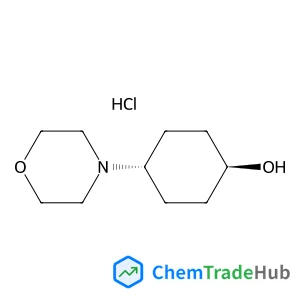
trans-4-(4-Morpholinyl)cyclohexanol hydrochloride (1:1)
CAS Number:
1588441-09-1
Molecular Formula:
C10H20ClNO2
Recommended Suppliers




Disclaimer
This page provides academic journal information for reference and research purposes only. We are not affiliated with any journal publishers and do not handle publication submissions. For publication-related inquiries, please contact the respective journal publishers directly.
If you notice any inaccuracies in the information displayed, please contact us at support@chemtradehub.com. We will promptly review and address your concerns.