











![Imidazo[1,5-a]pyrazine structure](https://static.chemtradehub.com/structs/274/274-49-7-d749.webp "Imidazo[1,5-a]pyrazine structure")
Antinociceptive activity of thiazole-containing cyclized DAMGO and Leu-(Met) enkephalin analogs
Literature Information
Publication Date
2019-05-09
DOI
10.1039/C9OB00882A
Impact Factor
3.876
Authors
Hannah M. Harris, Shainnel O. Eans, Michelle L. Ganno, Jennifer C. Davis, Colette T. Dooley, Jay P. McLaughlin, Adel Nefzi
View Original
Abstract
Numerous studies demonstrate the promise of opioid peptides as analgesics, but poor oral bioavailability has limited their therapeutic development. This study sought to increase the oral bioavailability of opioid peptides by cyclization, using Hantzsch-based macrocyclization strategies to produce two new series of cyclized DAMGO and Leu/Met-enkephalin analogs. Opioid receptor affinity and selectivity for compounds in each series were assessed in vitro with radioligand competition binding assays. Compounds demonstrated modest affinity but high selectivity for the mu, delta, and kappa opioid receptors (MOR, DOR and KOR), while selectivity for mu opioid receptors varied by structure. Antinociceptive activity of each compound was initially screened in vivo following intracerebroventricular (i.c.v.) administration and testing in the mouse 55 °C warm-water tail-withdrawal test. The four most active compounds were then evaluated for dose- and time-dependent antinociception, and opioid receptor selectivity in vivo. Cyclic compounds 1924-10, 1936-1, 1936-7, and 1936-9 produced robust and long- lasting antinociception with ED50 values ranging from 0.32–0.75 nmol following i.c.v. administration mediated primarily by mu- and delta-opioid receptor agonism. Compounds 1924-10, 1936-1 and 1936-9 further displayed significant time-dependent antinociception after oral (10 mg kg−1, p.o.) administration. A higher oral dose (30 mg kg−1. p.o.) of all four cyclic peptides also reduced centrally-mediated respiration, suggesting successful penitration into the CNS. Overall, these data suggest cyclized opioid peptides synthesized by a Hantzsch-based macrocyclization strategy can retain opioid agonist activity to produce potent antinociception in vivo while conveying improved bioavailability following oral administration.
Related Literature
The promotional effect of surface defects on the catalytic performance of supported nickel-based catalysts
Yizhen Li, Jiaying Yu, Wei Li, Guoli Fan, Lan Yang, Feng Li
2016-01-29
Paper
DOI: 10.1039/C5CP07371E
Charge-transfer interactions between TCNQ and silver clusters Ag20 and Ag13
Jing Chen, Hanyu Zhang, Xianhu Liu, Chengqian Yuan, Meiye Jia, Zhixun Luo, Jiannian Yao
2016-01-26
Paper
DOI: 10.1039/C5CP06892D
Etching of electrodeposited Cu2O films using ammonia solution for photovoltaic applications
Changqiong Zhu, Matthew J. Panzer
2016-02-09
Paper
DOI: 10.1039/C5CP06385J
Promoting ethylene epoxidation on gold nanoclusters: self and CO induced O2 activation
Hsin-Tsung Chen, Chen-Wei Chan
2015-07-24
Paper
DOI: 10.1039/C5CP02809D
Exploiting orientation-selective DEER: determining molecular structure in systems containing Cu(ii) centres
Michael W. Jones, Thembanikosi G. Gaule, Michael J. McPherson, Jonathan R. Dilworth, Christiane R. Timmel
2016-02-03
Paper
DOI: 10.1039/C5CP06096F
Electrochemical ‘bubble swarm’ enhancement of ultrasonic surface cleaning
P. R. Birkin, D. G. Offin, C. J. B. Vian, T. G. Leighton
2015-08-03
Paper
DOI: 10.1039/C5CP02933C
Local environments of boron heteroatoms in non-crystalline layered borosilicates
Mounesha N. Garaga, Ming-Feng Hsieh, Zalfa Nour, Michael Deschamps, Dominique Massiot, Bradley F. Chmelka, Sylvian Cadars
2015-07-15
Paper
DOI: 10.1039/C5CP03448E
Novel porphyrin-preparation, characterization, and applications in solar energy conversion
Jianfeng Lu, Hao Li, Shuangshuang Liu, Yu-Cheng Chang, Hui-Ping Wu, Eric Wei-Guang Diau, Mingkui Wang
2016-02-04
Paper
DOI: 10.1039/C5CP05658F
Computational design of faster rotating second-generation light-driven molecular motors by control of steric effects
Baswanth Oruganti, Bo Durbeej
2015-07-22
Paper
DOI: 10.1039/C5CP02303C
Solid-state NMR as a probe of anion binding: molecular dynamics and associations in a [5]polynorbornane bisurea host complexed with terephthalate
Aditya Rawal, James M. Hook, Ryan N. Robson, Daniel Gunzelmann, Frederick M. Pfeffer, Luke A. O'Dell
2015-07-28
Paper
DOI: 10.1039/C5CP03628C
You might also like
Compound Q&A
What is 1-(2,4,6-Trifluorophenyl)ethanol (CAS: 1250113-83-7)?
1-(2,4,6-Trifluorophenyl)ethanol is an organic compound with the CAS number 1250...
1250113-83-71-(2,4,6-Trifluoroph...
Compound Q&A
Is 1-(2,4-Dimethoxybenzyl)-4-(hydroxymethyl)-2-pyrrolidinone (CAS: 919111-34-5) safe?
1-(2,4-Dimethoxybenzyl)-4-(hydroxymethyl)-2-pyrrolidinone (CAS: 919111-34-5) is ...
919111-34-51-(2,4-Dimethoxybenz...
Compound Q&A
What are the physical and chemical properties of (7S,15R)-6β,15-Diacetoxy-7α,20-epoxy-7-hydroxykaura-2,16-dien-1-one (CAS: 51419-51-3)?
(7S,15R)-6β,15-Diacetoxy-7α,20-epoxy-7-hydroxykaura-2,16-dien-1-one is a crystal...
51419-51-3(7S,15R)-6β,15-Diace...
Compound Q&A
What regulatory guidelines apply to rac-ethyl (1r,4r)-4-hydroxycyclohexane-1-carboxylate, trans (CAS: 3618-04-0)?
The compound rac-ethyl (1r,4r)-4-hydroxycyclohexane-1-carboxylate, trans (CAS: 3...
3618-04-0rac-ethyl (1r,4r)-4-...
Compound Q&A
What is the market or research trend for 2-(2,4-Difluorophenoxy)-3-nitropyridine (CAS: 175135-62-3)?
The market for 2-(2,4-Difluorophenoxy)-3-nitropyridine (CAS: 175135-62-3) is cur...
175135-62-32-(2,4-Difluoropheno...
Compound Q&A
What are the main uses of 6-Diazo-5-oxo-L-norleucine (CAS: 157-03-9)?
The main uses of 6-Diazo-5-oxo-L-norleucine (CAS: 157-03-9) include research in ...
157-03-96-Diazo-5-oxo-L-norl...
Compound Q&A
What precautions should be taken when handling 2-Aminoethyl-mono-amide-DOTA-tris(tBu ester) (CAS: 173308-19-5)?
When handling 2-Aminoethyl-mono-amide-DOTA-tris(tBu ester) (CAS: 173308-19-5), i...
173308-19-52-Aminoethyl-mono-am...
Compound Q&A
How is 5-Methylimidazo[1,2-a]pyridine-3-carbaldehyde (CAS: 178488-37-4) typically synthesized?
5-Methylimidazo[1,2-a]pyridine-3-carbaldehyde (CAS: 178488-37-4) can be synthesi...
178488-37-45-Methylimidazo[1,2-...
Compound Q&A
Are there alternatives to 2,4,6-Trihydroxyisophthalaldehyde (CAS: 4396-13-8) in synthesis?
There are alternative reagents that can be used in the synthesis of 2,4,6-Trihyd...
4396-13-82,4,6-Trihydroxyisop...
Compound Q&A
What is (2Z)-3-(5-Fluoro-1H-indol-3-yl)-2-sulfanylacrylic acid (CAS: 179461-52-0)?
(2Z)-3-(5-Fluoro-1H-indol-3-yl)-2-sulfanylacrylic acid is a chemical compound wi...
179461-52-0(2Z)-3-(5-Fluoro-1H-...
Source Journal
Organic & Biomolecular Chemistry

CiteScore:
3.4
Self-citation Rate:
10.3%
Articles per Year:
1041
Organic & Biomolecular Chemistry (OBC) publishes original and high impact research and reviews in organic chemistry. We welcome research that shows new or significantly improved protocols or methodologies in total synthesis, synthetic methodology or physical and theoretical organic chemistry as well as research that shows a significant advance in the organic chemistry or molecular design aspects of chemical biology, catalysis, supramolecular and macromolecular chemistry, theoretical chemistry, mechanism-oriented physical organic chemistry, medicinal chemistry or natural products. Articles published in the journal should report new work which makes a highly-significant impact in the field. Routine and incremental work is generally not suitable for publication in the journal. More details about key areas of our scope are below. In all cases authors should include in their article clear rationale for why their research has been carried out.
Recommended Compounds
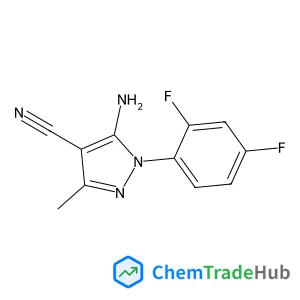
5-Amino-1-(2,4-difluorophenyl)-3-methyl-1H-pyrazole-4-carbonitrile
CAS Number:
1020057-92-4
Molecular Formula:
C11H8F2N4
![4-[(1-Methyl-1H-pyrrol-2-yl)methylene]-1,3(2H,4H)-isoquinolinedione structure](https://static.chemtradehub.com/structs/110/1104546-89-5-a600.webp "4-[(1-Methyl-1H-pyrrol-2-yl)methylene]-1,3(2H,4H)-isoquinolinedione structure")
4-[(1-Methyl-1H-pyrrol-2-yl)methylene]-1,3(2H,4H)-isoquinolinedione
CAS Number:
1104546-89-5
Molecular Formula:
C15H12N2O2
Recommended Suppliers







Disclaimer
This page provides academic journal information for reference and research purposes only. We are not affiliated with any journal publishers and do not handle publication submissions. For publication-related inquiries, please contact the respective journal publishers directly.
If you notice any inaccuracies in the information displayed, please contact us at support@chemtradehub.com. We will promptly review and address your concerns.