











N-Hydroxyphthalimide/benzoquinone-catalyzed chlorination of hydrocarbon C–H bond using N-chlorosuccinimide
Literature Information
Publication Date
2019-02-26
DOI
10.1039/C9OB00216B
Impact Factor
3.876
Authors
Zi-Hao Li, Biao-Lin Jiang, Jian-Wei Li
View Original
Abstract
The direct chlorination of C–H bonds has received considerable attention in recent years. In this work, a metal-free protocol for hydrocarbon C–H bond chlorination with commercially available N-chlorosuccinimide (NCS) catalyzed by N-hydroxyphthalimide (NHPI) with 2,3-dicyano-5,6-dichlorobenzoquinone (DDQ) functioning as an external radical initiator is presented. Aliphatic and benzylic substituents and also heteroaromatic ones were found to be well tolerated. Both the experiments and theoretical analysis indicate that the reaction goes through a process wherein NHPI functions as a catalyst rather than as an initiator. On the other hand, the hydrogen abstraction of the C–H bond conducted by a PINO species rather than the highly reactive N-centered radicals rationalizes the high chemoselectivity of the monochlorination obtained by this protocol as the latter is reactive towards the C(sp3)–H bonds of the monochlorides. The present results could hold promise for further development of a nitroxy-radical system for the highly selective functionalization of the aliphatic and benzylic hydrocarbon C–H.
Related Literature
The evaporation behavior of sessile droplets from aqueous saline solutions
Stefan Karpitschka, Florence Lequien, Philippe Prené, Thomas Zemb, Helmuth Moehwald, Hans Riegler
2015-07-27
Paper
DOI: 10.1039/C5CP02444G
Reaction kinetics for the solid state synthesis of the AlH3/MgCl2 nano-composite by mechanical milling
C. W. Duan, L. X. Hu, Y. Sun, H. P. Zhou, H. Yu
2015-07-28
Paper
DOI: 10.1039/C5CP03768A
Magneto-thermally activated spin-state transition in La0.95Ca0.05CoO3: magnetically-tunable dipolar glass and giant magneto-electricity
Suchita Pandey, Jitender Kumar, A. M. Awasthi
2016-01-18
Paper
DOI: 10.1039/C5CP06932G
Density functional theory calculations of the hydrazine decomposition mechanism on the planar and stepped Cu(111) surfaces
Saeedeh S. Tafreshi
2015-07-17
Paper
DOI: 10.1039/C5CP03204K
Initial inhomogeneity-induced crazy-clock behavior in the iodate–arsenous acid reaction in a buffered medium under stirred batch conditions
László Valkai, György Csekő, Attila K. Horváth
2015-07-23
Paper
DOI: 10.1039/C5CP02572A
SnO2(β-Bi2O3)/Bi2Sn2O7 nanohybrids doped with Pt and Pd nanoparticles: applications in visible light photocatalysis, electrical conductivity and dye-sensitized solar cells
M. Khairy, Mohamed Mokhtar Mohamed
2015-07-20
Paper
DOI: 10.1039/C5CP02066B
A near field optical image of a gold surface: a luminescence study
A. Merlen, J. Plathier, A. Ruediger
2014-12-10
Paper
DOI: 10.1039/C4CP05000B
Soft X-ray absorption spectroscopy of Ar2 and ArNe dimers and small Ar clusters
Ghazal Jabbari, Tsveta Miteva, Vasili Stumpf, Kirill Gokhberg, Patrick O'Keeffe, Alessandra Ciavardini, Paola Bolognesi, Marcello Coreno, Lorenzo Avaldi, Elham Keshavarz, Maryam Ghandehari, Manijeh Tozihi, Carlo Callegari, Michele Alagia, Antti Kivimäki, Robert Richter
2015-07-22
Paper
DOI: 10.1039/C5CP03276H
Theoretical and experimental studies on the atmospheric degradation of 2-bromo-3,3,3-trifluoropropene
Weiwang Chen, Xiaomeng Zhou, Yajun Han
2015-07-08
Paper
DOI: 10.1039/C5CP01457C
You might also like
Compound Q&A
What is 1-(2,4,6-Trifluorophenyl)ethanol (CAS: 1250113-83-7)?
1-(2,4,6-Trifluorophenyl)ethanol is an organic compound with the CAS number 1250...
1250113-83-71-(2,4,6-Trifluoroph...
Compound Q&A
Is 1-(2,4-Dimethoxybenzyl)-4-(hydroxymethyl)-2-pyrrolidinone (CAS: 919111-34-5) safe?
1-(2,4-Dimethoxybenzyl)-4-(hydroxymethyl)-2-pyrrolidinone (CAS: 919111-34-5) is ...
919111-34-51-(2,4-Dimethoxybenz...
Compound Q&A
What are the physical and chemical properties of (7S,15R)-6β,15-Diacetoxy-7α,20-epoxy-7-hydroxykaura-2,16-dien-1-one (CAS: 51419-51-3)?
(7S,15R)-6β,15-Diacetoxy-7α,20-epoxy-7-hydroxykaura-2,16-dien-1-one is a crystal...
51419-51-3(7S,15R)-6β,15-Diace...
Compound Q&A
What regulatory guidelines apply to rac-ethyl (1r,4r)-4-hydroxycyclohexane-1-carboxylate, trans (CAS: 3618-04-0)?
The compound rac-ethyl (1r,4r)-4-hydroxycyclohexane-1-carboxylate, trans (CAS: 3...
3618-04-0rac-ethyl (1r,4r)-4-...
Compound Q&A
What is the market or research trend for 2-(2,4-Difluorophenoxy)-3-nitropyridine (CAS: 175135-62-3)?
The market for 2-(2,4-Difluorophenoxy)-3-nitropyridine (CAS: 175135-62-3) is cur...
175135-62-32-(2,4-Difluoropheno...
Compound Q&A
What are the main uses of 6-Diazo-5-oxo-L-norleucine (CAS: 157-03-9)?
The main uses of 6-Diazo-5-oxo-L-norleucine (CAS: 157-03-9) include research in ...
157-03-96-Diazo-5-oxo-L-norl...
Compound Q&A
What precautions should be taken when handling 2-Aminoethyl-mono-amide-DOTA-tris(tBu ester) (CAS: 173308-19-5)?
When handling 2-Aminoethyl-mono-amide-DOTA-tris(tBu ester) (CAS: 173308-19-5), i...
173308-19-52-Aminoethyl-mono-am...
Compound Q&A
How is 5-Methylimidazo[1,2-a]pyridine-3-carbaldehyde (CAS: 178488-37-4) typically synthesized?
5-Methylimidazo[1,2-a]pyridine-3-carbaldehyde (CAS: 178488-37-4) can be synthesi...
178488-37-45-Methylimidazo[1,2-...
Compound Q&A
Are there alternatives to 2,4,6-Trihydroxyisophthalaldehyde (CAS: 4396-13-8) in synthesis?
There are alternative reagents that can be used in the synthesis of 2,4,6-Trihyd...
4396-13-82,4,6-Trihydroxyisop...
Compound Q&A
What is (2Z)-3-(5-Fluoro-1H-indol-3-yl)-2-sulfanylacrylic acid (CAS: 179461-52-0)?
(2Z)-3-(5-Fluoro-1H-indol-3-yl)-2-sulfanylacrylic acid is a chemical compound wi...
179461-52-0(2Z)-3-(5-Fluoro-1H-...
Source Journal
Organic & Biomolecular Chemistry

CiteScore:
3.4
Self-citation Rate:
10.3%
Articles per Year:
1041
Organic & Biomolecular Chemistry (OBC) publishes original and high impact research and reviews in organic chemistry. We welcome research that shows new or significantly improved protocols or methodologies in total synthesis, synthetic methodology or physical and theoretical organic chemistry as well as research that shows a significant advance in the organic chemistry or molecular design aspects of chemical biology, catalysis, supramolecular and macromolecular chemistry, theoretical chemistry, mechanism-oriented physical organic chemistry, medicinal chemistry or natural products. Articles published in the journal should report new work which makes a highly-significant impact in the field. Routine and incremental work is generally not suitable for publication in the journal. More details about key areas of our scope are below. In all cases authors should include in their article clear rationale for why their research has been carried out.
Recommended Compounds
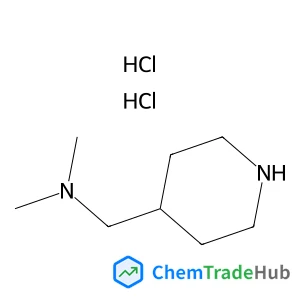
N,N-dimethyl(piperidin-4-yl)methanamine hydrochloride
CAS Number:
172281-72-0
Molecular Formula:
C8H20Cl2N2
Recommended Suppliers






Disclaimer
This page provides academic journal information for reference and research purposes only. We are not affiliated with any journal publishers and do not handle publication submissions. For publication-related inquiries, please contact the respective journal publishers directly.
If you notice any inaccuracies in the information displayed, please contact us at support@chemtradehub.com. We will promptly review and address your concerns.