



Kinetics and dynamics in physisorption of CH3Cl on HOPG: surface temperature and molecular orientation dependence
Literature Information
Publication Date
2011-03-07
DOI
10.1039/C0CP02014A
Impact Factor
3.676
Authors
Michihiro Hashinokuchi, Tetsuya Fukuyama, Toshio Kasai
View Original
Abstract
We report a study of kinetics and dynamics in physisorption of CH3Cl on a highly-oriented pyrolytic graphite (HOPG). Thermal energy atom scattering (TEAS) was used to probe the kinetics of thermal CH3Cl adsorption on HOPG during the coverage evolution. The desorption energy of CH3Cl on HOPG changes from 0.25 to 0.30 eV with increasing surface coverage, suggesting the attractive interaction between CH3Cl molecules on the surface. On the other hand, the oriented molecular beam scattering was used to monitor the dynamical interaction of CH3Cl with HOPG at zero coverage, demonstrating that the CH3Cl scattering intensity depends on the molecular orientation of the incident CH3Cl. The observed steric preference is not sensitive to the surface temperature. These results suggest that the moderate anisotropy in the interaction potential induces the molecular-orientation dependence of energy dissipation during the transient trapping into the physisorption well.
Recommended Journals

Russian Chemical Reviews

Journal of Organometallic Chemistry

Science

Proceedings of the National Academy of Sciences of the United States of America

Organic Preparations and Procedures International

Journal of Medicinal Chemistry

Israel Journal of Chemistry

Journal of Physics and Chemistry of Solids

European Journal of Wood and Wood Products

Science Progress
Related Literature
Mechanism of one-electron oxidation of metformin in aqueous solution
C. Marchetti, R. Lazzaroni, D. Jore, M. Gardès-Albert
2013-04-22
Paper
DOI: 10.1039/C3CP50602A
Deuterium isotope effects in the polyatomic reaction of O(1D2) + CH4 → OH + CH3
Yoshihiro Ogi, Hiroshi Kohguchi
2013-07-01
Paper
DOI: 10.1039/C3CP51680F
A versatile electrochemical cell for the preparation and characterisation of model electrocatalytic systems
Aliaksandr S. Bandarenka
2013-06-05
Paper
DOI: 10.1039/C3CP51998H
Orientation control of liquid crystals using carbon-nanotube–magnetic particle hybrid materials
Hyeon Su Jeong, Sang Cheon Youn, Yun Ho Kim, Hee-Tae Jung
2013-04-24
Communication
DOI: 10.1039/C3CP00052D
Preparation and characterization of titania-entrapped silica hollow particles: effective dye removal and evidence of selectivity
Kritapas Laohhasurayotin, Duangkamon Viboonratanasri
2013-04-05
Paper
DOI: 10.1039/C3CP50872B
Radially aligned microchannels prepared from ordered arrays of cracks on colloidal films
Hongmin Ma, Picheng Gao, Dawei Fan, Guobao Li, Dan Wu, Bin Du, Qin Wei
2013-04-22
Paper
DOI: 10.1039/C3CP50341K
Self-assembly of binary molecular nanostructure arrays on graphite
Jia Lin Zhang, Tian Chao Niu, Andrew T. S. Wee
2013-04-15
Perspective
DOI: 10.1039/C3CP00023K
Large excited state two photon absorptions in the near infrared region of surprisingly stable radical cations of (ferrocenyl)indenes
Laura Orian, Stefano Scuppa, Saverio Santi, Moreno Meneghetti
2013-06-03
Paper
DOI: 10.1039/C3CP51257F
In situ surface-enhanced Raman spectroscopic study of formic acid electrooxidation on spontaneously deposited platinum on gold
Ranjani Muralidharan, Michael McIntosh, Xiao Li
2013-04-18
Paper
DOI: 10.1039/C3CP51128F
You might also like
Compound Q&A
How is Ethyl 4-chlorothieno[2,3-b]pyridine-5-carboxylate (CAS: 59713-58-5) typically synthesized?
Ethyl 4-chlorothieno[2,3-b]pyridine-5-carboxylate (CAS: 59713-58-5) can be synth...
59713-58-5Ethyl 4-chlorothieno...
Compound Q&A
What regulatory guidelines apply to 5-Methyl-1H-indole-3-carbaldehyde (CAS: 52562-50-2)?
5-Methyl-1H-indole-3-carbaldehyde (CAS: 52562-50-2) is subject to various regula...
52562-50-25-Methyl-1H-indole-3...
Compound Q&A
What are the physical and chemical properties of (1,3-Dimethyl-2,4-dioxo-1,2,3,4-tetrahydro-5-pyrimidinyl)boronic acid (CAS: 223418-73-3)?
(1,3-Dimethyl-2,4-dioxo-1,2,3,4-tetrahydro-5-pyrimidinyl)boronic acid is a white...
223418-73-3(1,3-Dimethyl-2,4-di...
Compound Q&A
How should waste containing Sulfocostunolide A (CAS: 1016983-51-9) be handled?
Waste containing Sulfocostunolide A (CAS: 1016983-51-9) should be handled with c...
1016983-51-9Sulfocostunolide A
Compound Q&A
What precautions should be taken when handling Murraxocin (CAS: 88478-44-8)?
When handling Murraxocin (CAS: 88478-44-8), ensure proper personal protective eq...
88478-44-8Murraxocin
Compound Q&A
What are the physical and chemical properties of Formvar (CAS: 63148-64-1)?
Formvar (CAS: 63148-64-1) is an alkyd resin characterized by a high molecular we...
63148-64-1Formvar(R)
Compound Q&A
Is (S)-4-benzyl-2-((benzyloxy)methyl)morpholine (CAS: 205242-66-6) safe?
(S)-4-benzyl-2-((benzyloxy)methyl)morpholine is generally safe when handled with...
205242-66-6(S)-4-benzyl-2-((ben...
Compound Q&A
What industries use Methyl 1-(5-bromo-2-pyrimidinyl)cyclopropanecarboxylate (CAS: 1447607-69-3)?
Methyl 1-(5-bromo-2-pyrimidinyl)cyclopropanecarboxylate (CAS: 1447607-69-3) is p...
1447607-69-3Methyl 1-(5-bromo-2-...
Compound Q&A
Is 2-Methyl-1-phenyl-1-propanamine hydrochloride (CAS: 24290-47-9) safe?
2-Methyl-1-phenyl-1-propanamine hydrochloride (CAS: 24290-47-9) is generally con...
24290-47-92-Methyl-1-phenyl-1-...
Compound Q&A
How is 3-(4-Bromophenyl)-2-methylpropanoic acid (CAS: 66735-01-1) typically synthesized?
3-(4-Bromophenyl)-2-methylpropanoic acid is synthesized through a multi-step pro...
66735-01-13-(4-Bromophenyl)-2-...
Source Journal
Physical Chemistry Chemical Physics

CiteScore:
5.5
Self-citation Rate:
10.3%
Articles per Year:
3036
Physical Chemistry Chemical Physics (PCCP) is an international journal co-owned by 19 physical chemistry and physics societies from around the world. This journal publishes original, cutting-edge research in physical chemistry, chemical physics and biophysical chemistry. To be suitable for publication in PCCP, articles must include significant innovation and/or insight into physical chemistry; this is the most important criterion that reviewers and Editors will judge against when evaluating submissions. The journal has a broad scope and welcomes contributions spanning experiment, theory, computation and data science. Topical coverage includes spectroscopy, dynamics, kinetics, statistical mechanics, thermodynamics, electrochemistry, catalysis, surface science, quantum mechanics, quantum computing and machine learning. Interdisciplinary research areas such as polymers and soft matter, materials, nanoscience, energy, surfaces/interfaces, and biophysical chemistry are welcomed if they demonstrate significant innovation and/or insight into physical chemistry. Joined experimental/theoretical studies are particularly appreciated when complementary and based on up-to-date approaches.
Recommended Compounds
![4-[(1-Methyl-1H-pyrrol-2-yl)methylene]-1,3(2H,4H)-isoquinolinedione structure](https://static.chemtradehub.com/structs/110/1104546-89-5-a600.webp "4-[(1-Methyl-1H-pyrrol-2-yl)methylene]-1,3(2H,4H)-isoquinolinedione structure")
4-[(1-Methyl-1H-pyrrol-2-yl)methylene]-1,3(2H,4H)-isoquinolinedione
CAS Number:
1104546-89-5
Molecular Formula:
C15H12N2O2
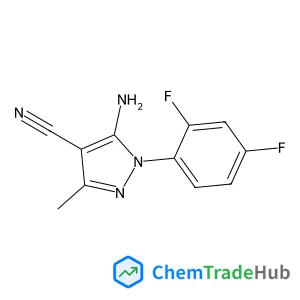
5-Amino-1-(2,4-difluorophenyl)-3-methyl-1H-pyrazole-4-carbonitrile
CAS Number:
1020057-92-4
Molecular Formula:
C11H8F2N4


Recommended Suppliers




Disclaimer
This page provides academic journal information for reference and research purposes only. We are not affiliated with any journal publishers and do not handle publication submissions. For publication-related inquiries, please contact the respective journal publishers directly.
If you notice any inaccuracies in the information displayed, please contact us at support@chemtradehub.com. We will promptly review and address your concerns.