












Large excited state two photon absorptions in the near infrared region of surprisingly stable radical cations of (ferrocenyl)indenes
Literature Information
Publication Date
2013-06-03
DOI
10.1039/C3CP51257F
Impact Factor
3.676
Authors
Laura Orian, Stefano Scuppa, Saverio Santi, Moreno Meneghetti
View Original
Abstract
Multiphoton absorptions are important non-linear optical processes which allow us to explore excited states with low energy photons giving rise to new possibilities for photoinduced processes. Among these processes, multiphoton absorptions from excited states are particularly interesting because of the large susceptibilities characteristic of excited states. Here we explore the nonlinear transmission measurements recorded with 9 ns laser pulses at 1064 nm of the radical cations of (2-ferrocenyl)indene and of (2-ferrocenyl)-hexamethylindene, two interesting very stable molecules. The non-linear transmission data can be interpreted with a multiphoton sequence of three photon absorptions, the first being a one photon absorption related to the intramolecular charge transfer and the second a two photon absorption from the excited state created with the first process. The two photon absorption cross section is found to be several orders of magnitude larger than those usually found for two photon absorbing systems excited from the ground state.
Related Literature
Self-assembly and stimuli-responsive behaviours of side-chain liquid crystalline copolymers: a dissipative particle dynamics simulation approach
Yisheng Lv, Liquan Wang, Fangsheng Wu, Shuting Gong, Jie Wei, Shaoliang Lin
2019-03-13
Paper
DOI: 10.1039/C9CP00400A
Electronic and structural features of octa-coordinated yttrium–ammonia complexes: the first neutral solvated electron precursor with eight ligands and three outer electrons
Nuno M. S. Almeida, Evangelos Miliordos
2019-01-16
Paper
DOI: 10.1039/C8CP07663D
Macroscopic defects upon decomposition of CO2 clathrate hydrate crystals
Nima Rahmatian, Alexander Ostermann, Bernhard Massani, Thomas Loerting, Jörg Petrasch
2019-04-26
Paper
DOI: 10.1039/C8CP07871H
Formation of homochiral helical nanostructures in diblock copolymers under the confinement of nanopores
Haiyan Xue, Ruifang Cao, Weihua Li
2019-03-07
Paper
DOI: 10.1039/C9CP00227H
Excited state properties of a series of molecular photocatalysts investigated by time dependent density functional theory
Miłosz Martynow, Stephan Kupfer, Sven Rau, Julien Guthmuller
2019-02-12
Paper
DOI: 10.1039/C9CP00335E
The interplay between structural perfectness and CO oxidation catalysis on aluminum, phosphorous and silicon complexes of corroles
Afshan Mohajeri, Nasim Hassani
2019-03-26
Paper
DOI: 10.1039/C8CP07372D
Tetrel bonds and conformational equilibria in the formamide–CO2 complex: a rotational study
Shuang Gao, Daniel A. Obenchain, Juncheng Lei, Gang Feng, Sven Herbers, Qian Gou, Jens-Uwe Grabow
2019-02-27
Paper
DOI: 10.1039/C9CP00055K
Water flow in carbon nanotubes: the role of tube chirality
Alan Sam, Vishnu Prasad K., Sarith P. Sathian
2019-02-26
Paper
DOI: 10.1039/C9CP00429G
Studies of competing evaporation rates of multiple volatile components from a single binary-component aerosol droplet
F. K. A. Gregson, M. Ordoubadi, R. E. H. Miles, A. E. Haddrell, D. Barona, D. Lewis, T. Church, R. Vehring, J. P. Reid
2019-04-23
Paper
DOI: 10.1039/C9CP01158G
You might also like
Compound Q&A
How is Ethyl 4-chlorothieno[2,3-b]pyridine-5-carboxylate (CAS: 59713-58-5) typically synthesized?
Ethyl 4-chlorothieno[2,3-b]pyridine-5-carboxylate (CAS: 59713-58-5) can be synth...
59713-58-5Ethyl 4-chlorothieno...
Compound Q&A
What regulatory guidelines apply to 5-Methyl-1H-indole-3-carbaldehyde (CAS: 52562-50-2)?
5-Methyl-1H-indole-3-carbaldehyde (CAS: 52562-50-2) is subject to various regula...
52562-50-25-Methyl-1H-indole-3...
Compound Q&A
What are the physical and chemical properties of (1,3-Dimethyl-2,4-dioxo-1,2,3,4-tetrahydro-5-pyrimidinyl)boronic acid (CAS: 223418-73-3)?
(1,3-Dimethyl-2,4-dioxo-1,2,3,4-tetrahydro-5-pyrimidinyl)boronic acid is a white...
223418-73-3(1,3-Dimethyl-2,4-di...
Compound Q&A
How should waste containing Sulfocostunolide A (CAS: 1016983-51-9) be handled?
Waste containing Sulfocostunolide A (CAS: 1016983-51-9) should be handled with c...
1016983-51-9Sulfocostunolide A
Compound Q&A
What precautions should be taken when handling Murraxocin (CAS: 88478-44-8)?
When handling Murraxocin (CAS: 88478-44-8), ensure proper personal protective eq...
88478-44-8Murraxocin
Compound Q&A
What are the physical and chemical properties of Formvar (CAS: 63148-64-1)?
Formvar (CAS: 63148-64-1) is an alkyd resin characterized by a high molecular we...
63148-64-1Formvar(R)
Compound Q&A
Is (S)-4-benzyl-2-((benzyloxy)methyl)morpholine (CAS: 205242-66-6) safe?
(S)-4-benzyl-2-((benzyloxy)methyl)morpholine is generally safe when handled with...
205242-66-6(S)-4-benzyl-2-((ben...
Compound Q&A
What industries use Methyl 1-(5-bromo-2-pyrimidinyl)cyclopropanecarboxylate (CAS: 1447607-69-3)?
Methyl 1-(5-bromo-2-pyrimidinyl)cyclopropanecarboxylate (CAS: 1447607-69-3) is p...
1447607-69-3Methyl 1-(5-bromo-2-...
Compound Q&A
Is 2-Methyl-1-phenyl-1-propanamine hydrochloride (CAS: 24290-47-9) safe?
2-Methyl-1-phenyl-1-propanamine hydrochloride (CAS: 24290-47-9) is generally con...
24290-47-92-Methyl-1-phenyl-1-...
Compound Q&A
How is 3-(4-Bromophenyl)-2-methylpropanoic acid (CAS: 66735-01-1) typically synthesized?
3-(4-Bromophenyl)-2-methylpropanoic acid is synthesized through a multi-step pro...
66735-01-13-(4-Bromophenyl)-2-...
Source Journal
Physical Chemistry Chemical Physics

CiteScore:
5.5
Self-citation Rate:
10.3%
Articles per Year:
3036
Physical Chemistry Chemical Physics (PCCP) is an international journal co-owned by 19 physical chemistry and physics societies from around the world. This journal publishes original, cutting-edge research in physical chemistry, chemical physics and biophysical chemistry. To be suitable for publication in PCCP, articles must include significant innovation and/or insight into physical chemistry; this is the most important criterion that reviewers and Editors will judge against when evaluating submissions. The journal has a broad scope and welcomes contributions spanning experiment, theory, computation and data science. Topical coverage includes spectroscopy, dynamics, kinetics, statistical mechanics, thermodynamics, electrochemistry, catalysis, surface science, quantum mechanics, quantum computing and machine learning. Interdisciplinary research areas such as polymers and soft matter, materials, nanoscience, energy, surfaces/interfaces, and biophysical chemistry are welcomed if they demonstrate significant innovation and/or insight into physical chemistry. Joined experimental/theoretical studies are particularly appreciated when complementary and based on up-to-date approaches.
Recommended Compounds

![9H-Fluoren-9-ylmethyl [(2S)-1-hydroxy-3-(1H-indol-3-yl)-2-propanyl]carbamate structure](https://static.chemtradehub.com/structs/153/153815-60-2-a67d.webp "9H-Fluoren-9-ylmethyl [(2S)-1-hydroxy-3-(1H-indol-3-yl)-2-propanyl]carbamate structure")
9H-Fluoren-9-ylmethyl [(2S)-1-hydroxy-3-(1H-indol-3-yl)-2-propanyl]carbamate
CAS Number:
153815-60-2
Molecular Formula:
C26H24N2O3
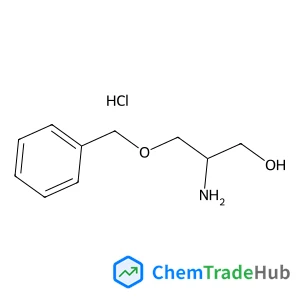
(R)-2-amino-3-(benzyloxy)propan-1-ol hydrochloride
CAS Number:
58577-95-0
Molecular Formula:
C10H16ClNO2
Recommended Suppliers





Disclaimer
This page provides academic journal information for reference and research purposes only. We are not affiliated with any journal publishers and do not handle publication submissions. For publication-related inquiries, please contact the respective journal publishers directly.
If you notice any inaccuracies in the information displayed, please contact us at support@chemtradehub.com. We will promptly review and address your concerns.