


Mechanical properties of liquid-filled shellac composite capsules
Literature Information
Publication Date
2010-12-10
DOI
10.1039/C0CP01803A
Impact Factor
3.676
Authors
Sabine Leick, Maureen Kott, Patrick Degen, Stefan Henning, Tobias Päsler, Dieter Suter, Heinz Rehage
View Original
Abstract
This paper describes the mechanical properties of thin-walled, liquid-filled composite capsules consisting of calcium pectinate and shellac. In a series of experiments we measured the deformation of these particles in a spinning drop apparatus. For different pH-values we studied the elastic properties of these particles and compared the obtained results with the mechanical response measured by squeezing capsule experiments. In analogy to these experiments, we also investigated liquid-filled unloaded calcium pectinate capsules without the addition of shellac. The deformation properties of these experiments and the surface Young moduli were in good agreement. Furthermore we investigated the liquid-filled calcium pectinate and the composite capsules by NMR microscopy. These experiments allowed investigations of the membrane thickness and the kinetics of membrane growing. Additional characterizations by stress controlled small amplitude surface shear experiments of similar composed gel layers provided coherent results for the surface Young modulus.
Recommended Journals

Russian Chemical Bulletin

Drug Discovery Today

Journal of Natural Medicines

Acta Materialia

Organic Process Research & Development

Russian Journal of Bioorganic Chemistry

Current Opinion in Solid State & Materials Science

Russian Journal of Coordination Chemistry

Russian Journal of Organic Chemistry

Chemical Communications
Related Literature
Quantum spin Hall insulators and topological Rashba-splitting edge states in two-dimensional CX3 (X = Sb, Bi)
Shan-Shan Wang, Wencong Sun, Shuai Dong
2020-12-21
Paper
DOI: 10.1039/D0CP05374K
First-principles study of carbon nanothreads derived from five-membered heterocyclic rings: thiophene, furan and pyrrole
Pedro G. Demingos, André R. Muniz
2020-12-24
Paper
DOI: 10.1039/D0CP05847E
Collaboration between a Pt-dimer and neighboring Co–Pd atoms triggers efficient pathways for oxygen reduction reaction
Sheng Dai, Dinesh Bhalothia, Jyh-Pin Chou
2020-12-09
Paper
DOI: 10.1039/D0CP05205A
Photoelectron spectroscopy and theoretical study of AlnC5−/0 (n = 1–5) clusters: structural evolution, relative stability of star-like clusters, and planar tetracoordinate carbon structures
Peng Wang
2021-01-05
Paper
DOI: 10.1039/D0CP06081J
Photoinduced electron transfer in nano-Saturn complexes of fullerene
O. A. Stasyuk, A. J. Stasyuk, M. Solà
2020-12-21
Paper
DOI: 10.1039/D0CP05919F
Computational analysis of binding free energies, hotspots and the binding mechanism of Bcl-xL/Bcl-2 binding to Bad/Bax
Lili Duan, Shuheng Dong, Kaifang Huang, Yalong Cong, Song Luo
2021-01-11
Paper
DOI: 10.1039/D0CP04693K
The low energy phonon modes of the hydrogenated and deuterated π-conjugated system 7,7,8,8-tetracyanoquinodimethane: an inelastic neutron scattering study
Hamish Cavaye
2021-01-12
Paper
DOI: 10.1039/D0CP06253G
Machine learning approaches to understand and predict rate constants for organic processes in mixtures containing ionic liquids
Tamar L. Greaves, Karin S. Schaffarczyk McHale, Raphael F. Burkart-Radke, Jason B. Harper, Tu C. Le
2021-01-14
Paper
DOI: 10.1039/D0CP04227G
On the physicochemical origin of nanoscale friction: the polarizability and electronegativity relationship tailoring nanotribology
Leonardo M. Leidens, Marcelo E. H. Maia da Costa, Neileth S. Figueroa, Rodrigo A. Barbieri, Fernando Alvarez, Alexandre F. Michels
2021-01-02
Paper
DOI: 10.1039/D0CP06436J
Transport mechanisms in Co-doped ZnO (ZCO) and H-irradiated ZCO polycrystalline thin films
A. Di Trolio, A. Amore Bonapasta, A. Leo, G. Carapella, A. Polimeni, A. M. Testa
2021-01-11
Paper
DOI: 10.1039/D0CP06401G
You might also like
Compound Q&A
How is Ethyl 4-chlorothieno[2,3-b]pyridine-5-carboxylate (CAS: 59713-58-5) typically synthesized?
Ethyl 4-chlorothieno[2,3-b]pyridine-5-carboxylate (CAS: 59713-58-5) can be synth...
59713-58-5Ethyl 4-chlorothieno...
Compound Q&A
What regulatory guidelines apply to 5-Methyl-1H-indole-3-carbaldehyde (CAS: 52562-50-2)?
5-Methyl-1H-indole-3-carbaldehyde (CAS: 52562-50-2) is subject to various regula...
52562-50-25-Methyl-1H-indole-3...
Compound Q&A
What are the physical and chemical properties of (1,3-Dimethyl-2,4-dioxo-1,2,3,4-tetrahydro-5-pyrimidinyl)boronic acid (CAS: 223418-73-3)?
(1,3-Dimethyl-2,4-dioxo-1,2,3,4-tetrahydro-5-pyrimidinyl)boronic acid is a white...
223418-73-3(1,3-Dimethyl-2,4-di...
Compound Q&A
How should waste containing Sulfocostunolide A (CAS: 1016983-51-9) be handled?
Waste containing Sulfocostunolide A (CAS: 1016983-51-9) should be handled with c...
1016983-51-9Sulfocostunolide A
Compound Q&A
What precautions should be taken when handling Murraxocin (CAS: 88478-44-8)?
When handling Murraxocin (CAS: 88478-44-8), ensure proper personal protective eq...
88478-44-8Murraxocin
Compound Q&A
What are the physical and chemical properties of Formvar (CAS: 63148-64-1)?
Formvar (CAS: 63148-64-1) is an alkyd resin characterized by a high molecular we...
63148-64-1Formvar(R)
Compound Q&A
Is (S)-4-benzyl-2-((benzyloxy)methyl)morpholine (CAS: 205242-66-6) safe?
(S)-4-benzyl-2-((benzyloxy)methyl)morpholine is generally safe when handled with...
205242-66-6(S)-4-benzyl-2-((ben...
Compound Q&A
What industries use Methyl 1-(5-bromo-2-pyrimidinyl)cyclopropanecarboxylate (CAS: 1447607-69-3)?
Methyl 1-(5-bromo-2-pyrimidinyl)cyclopropanecarboxylate (CAS: 1447607-69-3) is p...
1447607-69-3Methyl 1-(5-bromo-2-...
Compound Q&A
Is 2-Methyl-1-phenyl-1-propanamine hydrochloride (CAS: 24290-47-9) safe?
2-Methyl-1-phenyl-1-propanamine hydrochloride (CAS: 24290-47-9) is generally con...
24290-47-92-Methyl-1-phenyl-1-...
Compound Q&A
How is 3-(4-Bromophenyl)-2-methylpropanoic acid (CAS: 66735-01-1) typically synthesized?
3-(4-Bromophenyl)-2-methylpropanoic acid is synthesized through a multi-step pro...
66735-01-13-(4-Bromophenyl)-2-...
Source Journal
Physical Chemistry Chemical Physics

CiteScore:
5.5
Self-citation Rate:
10.3%
Articles per Year:
3036
Physical Chemistry Chemical Physics (PCCP) is an international journal co-owned by 19 physical chemistry and physics societies from around the world. This journal publishes original, cutting-edge research in physical chemistry, chemical physics and biophysical chemistry. To be suitable for publication in PCCP, articles must include significant innovation and/or insight into physical chemistry; this is the most important criterion that reviewers and Editors will judge against when evaluating submissions. The journal has a broad scope and welcomes contributions spanning experiment, theory, computation and data science. Topical coverage includes spectroscopy, dynamics, kinetics, statistical mechanics, thermodynamics, electrochemistry, catalysis, surface science, quantum mechanics, quantum computing and machine learning. Interdisciplinary research areas such as polymers and soft matter, materials, nanoscience, energy, surfaces/interfaces, and biophysical chemistry are welcomed if they demonstrate significant innovation and/or insight into physical chemistry. Joined experimental/theoretical studies are particularly appreciated when complementary and based on up-to-date approaches.
Recommended Compounds
![4-{1-[4-(4,4,5,5-Tetramethyl-1,3,2-dioxaborolan-2-yl)phenyl]cyclopropyl}morpholine structure](https://static.chemtradehub.com/structs/120/1206594-08-2-7afb.webp "4-{1-[4-(4,4,5,5-Tetramethyl-1,3,2-dioxaborolan-2-yl)phenyl]cyclopropyl}morpholine structure")
4-{1-[4-(4,4,5,5-Tetramethyl-1,3,2-dioxaborolan-2-yl)phenyl]cyclopropyl}morpholine
CAS Number:
1206594-08-2
Molecular Formula:
C19H28BNO3
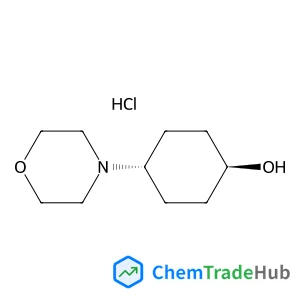
trans-4-(4-Morpholinyl)cyclohexanol hydrochloride (1:1)
CAS Number:
1588441-09-1
Molecular Formula:
C10H20ClNO2

Recommended Suppliers




Disclaimer
This page provides academic journal information for reference and research purposes only. We are not affiliated with any journal publishers and do not handle publication submissions. For publication-related inquiries, please contact the respective journal publishers directly.
If you notice any inaccuracies in the information displayed, please contact us at support@chemtradehub.com. We will promptly review and address your concerns.