












![19-[Chloro(dideuterio)methyl]-19-deuterio-20,20-dideuteriooxyoctatriacontane-18,21-dione structure](https://static.chemtradehub.com/structs/124/1246818-85-8-6244.webp "19-[Chloro(dideuterio)methyl]-19-deuterio-20,20-dideuteriooxyoctatriacontane-18,21-dione structure")
19-[Chloro(dideuterio)methyl]-19-deuterio-20,20-dideuteriooxyoctatriacontane-18,21-dione
CAS Number:
1246818-85-8
Molecular Formula:
C39H75ClO4
Itay Gdor, Jingyi Zhu, Boris Loevsky, Elena Smolensky, Noga Friedman, Mordechai Sheves, Sanford Ruhman
Excited state dynamics of native Xanthorhodopsin (XR), of an XR sample with a reduced prosthetic group, and of the associated Carotenoid (CAR) salinixanthin (SX) in ethanol were investigated by hyperspectral Near Infrared (NIR) probing. Global kinetic analysis shows that: (1) unlike the transient spectra recorded in the visible, fitting of the NIR data requires only two phases of exponential spectral evolution, assigned to internal conversion from S2 → S1 and from S1 → S0 of the carotene. (2) The rate of the internal conversion from S2 → S1 in the reduced sample is well fit with a decay time of 130 fs, significantly longer than in XR and in SX, both of which are well fit with τ ≈ 100 fs. This increased lifetime is consistent with a ∼30% efficiency of ET from SX to retinal in XR. (3) S1 of salinixanthin is verified to lie ∼12 700 cm−1 above the ground electronic surface, excluding its involvement in the retinal sensitization in XR. (4) The oscillator strength of the S1 → S2 transition is determined to be no more than 0.16, despite its symmetry allowedness. (5) No long lived NIR absorbance decay assignable to the carotenoid S* state was detected in any of the samples. Inconsistencies concerning previously determined S2 lifetimes and kinetic schemes used to model these data are discussed.
Yinlong Du, Ningning Dong, Menghan Zhang, Kai Zhu, Ruiqi Na, Shuling Zhang, Ningwei Sun, Guibin Wang, Jun Wang
DOI: 10.1039/C6CP05920A
Roberto Russo, Lorenzo Cupellini, Benedetta Mennucci
DOI: 10.1039/C6CP07458H
Otoniel Denis-Alpizar, Raymond J. Bemish
DOI: 10.1039/C6CP07142B
V. K. Sharma, E. Mamontov, M. Ohl
DOI: 10.1039/C6CP06202D
Kazuhiko Matsumoto, Ryojun Nonaka, Yushen Wang, Gleb Veryasov, Rika Hagiwara
DOI: 10.1039/C6CP07992J
Hongqin Li, Haijun Ye, Zheng Xu, Chuanyi Wang, Jiao Yin
DOI: 10.1039/C6CP07569J
Jan-Michael Mewes, Kyle T. Harris, David Lee Phillips, Andreas Dreuw
DOI: 10.1039/C6CP05499D
Manuel Šarić, Jan Rossmeisl, Poul Georg Moses
DOI: 10.1039/C6CP06881B
Daniel Bellinger, Christoph Brüning, Volker Engel, Bernd Engels
DOI: 10.1039/C6CP07673D
2-(2-Chloroacetamido)-3-phenylpropanoic acid (CAS: 7765-11-9) is generally consi...
2-(Benzyloxy)-5-bromobenzoic acid can be handled safely if appropriate precautio...
(4-Methyl-1,2,5-oxadiazol-3-yl)methanamine hydrochloride is a chemical compound ...
2-(5-Hexylthiophen-2-yl)-4,4,5,5-tetramethyl-1,3,2-dioxaborolane (CAS: 917985-54...
While 4-(8-Methyl-9H-1,3-dioxolo[4,5-h][2,3]benzodiazepin-5-yl)benzenamine (CAS:...
The market for tert-butyl 3-hydroxy-4,5,7,8-tetrahydro-2H-pyrazolo[3,4-d]azepine...
Waste containing 3,5-Diamino-1H-pyrazole-4-carbonitrile (CAS: 6844-58-2) should ...
(6-Fluoro-3-pyridinyl)boronic acid can be synthesized through the reaction of 6-...
Dibenzyl carbonimidoylbiscarbamate (CAS: 10065-79-9) finds applications in vario...
The market for (beta,beta,2,3,4,5,6-~2~H_7_)Phenylalanine (CAS: 74228-83-4) is g...

Physical Chemistry Chemical Physics (PCCP) is an international journal co-owned by 19 physical chemistry and physics societies from around the world. This journal publishes original, cutting-edge research in physical chemistry, chemical physics and biophysical chemistry. To be suitable for publication in PCCP, articles must include significant innovation and/or insight into physical chemistry; this is the most important criterion that reviewers and Editors will judge against when evaluating submissions. The journal has a broad scope and welcomes contributions spanning experiment, theory, computation and data science. Topical coverage includes spectroscopy, dynamics, kinetics, statistical mechanics, thermodynamics, electrochemistry, catalysis, surface science, quantum mechanics, quantum computing and machine learning. Interdisciplinary research areas such as polymers and soft matter, materials, nanoscience, energy, surfaces/interfaces, and biophysical chemistry are welcomed if they demonstrate significant innovation and/or insight into physical chemistry. Joined experimental/theoretical studies are particularly appreciated when complementary and based on up-to-date approaches.
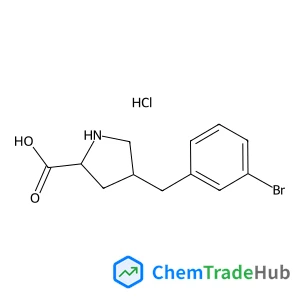
![Ethyl ({[(2-methyl-2-propanyl)oxy]carbonyl}amino)(2-pyridinyl)acetate structure](https://static.chemtradehub.com/structs/313/313490-90-3-dd15.webp "Ethyl ({[(2-methyl-2-propanyl)oxy]carbonyl}amino)(2-pyridinyl)acetate structure")
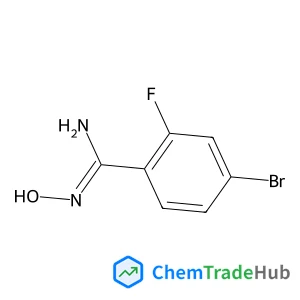
![(1S)-1,5-Anhydro-2-O-alpha-L-arabinopyranosyl-1-[5-hydroxy-7-({6-O-[3-(4-hydroxy-3-methoxyphenyl)propanoyl]-beta-D-glucopyranosyl}oxy)-2-(4-hydroxyphenyl)-4-oxo-4H-chromen-6-yl]-D-glucitol structure](https://static.chemtradehub.com/structs/225/2252345-81-4-bcff.webp "(1S)-1,5-Anhydro-2-O-alpha-L-arabinopyranosyl-1-[5-hydroxy-7-({6-O-[3-(4-hydroxy-3-methoxyphenyl)propanoyl]-beta-D-glucopyranosyl}oxy)-2-(4-hydroxyphenyl)-4-oxo-4H-chromen-6-yl]-D-glucitol structure")







