













Structure and binding of the H4 histone tail and the effects of lysine 16 acetylation
Literature Information
Publication Date
2010-12-15
DOI
10.1039/C0CP01487G
Impact Factor
3.676
Authors
Darren Yang, Gaurav Arya
View Original
Abstract
The H4 histone tail plays a critical role in chromatin folding and regulation—it mediates strong interactions with the acidic patch of proximal nucleosomes and its acetylation at lysine 16 (K16) leads to partial unfolding of chromatin. The molecular mechanism associated with the H4 tail/acidic patch interactions and its modulation viaK16 acetylation remains unknown. Here we employ a combination of molecular dynamics simulations, molecular docking calculations, and free energy computations to investigate the structure of the H4 tail in solution, the binding of the H4 tail with the acidic patch, and the effects of K16 acetylation. The H4 tail exhibits a disordered configuration except in the region Ala15–Lys20, where it exhibits a strong propensity for an α-helical structure. This α-helical region is found to dock very favorably into the acidic patch groove of a nucleosome with a binding free energy of approximately −7 kcal mol−1. We have identified the specific interactions that stabilize this binding as well as the associated energetics. The acetylation of K16 is found to reduce the α-helix forming propensity of the H4 tail and K16's accessibility for mediating external interactions. More importantly, K16 acetylation destabilizes the binding of the H4 tail at the acidic patch by mitigating specific salt bridges and longer-ranged electrostatic interactions mediated by K16. Our study thus provides new microscopic insights into the compaction of chromatin and its regulation viaposttranslational modifications of histone tails, which could be of interest to chromatin biology, cancer, epigenetics, and drug design.
Related Literature
Low-temperature PROX (preferential oxidation) on novel CeO2-supported Cu-cluster catalysts under fuel-cell operating conditions
Mizuki Tada, Rajaram Bal, Xindong Mu, Rudy Coquet, Seitaro Namba, Yasuhiro Iwasawa
2007-08-31
Communication
DOI: 10.1039/B709176A
Controlling energy and charge transfer in linear chlorophyll dimers
Richard F. Kelley, Michael J. Tauber, Thea M. Wilson, Michael R. Wasielewski
2007-08-14
Communication
DOI: 10.1039/B708318A
A single component ratiometric pH probe with long wavelength excitation of europium emission
Robert Pal, David Parker
2006-12-13
Communication
DOI: 10.1039/B616665B
Synthesis of the bis-potassium salts of 5-hydroxy-3-oxopent-4-enoic acids and their use for the efficient preparation of 4-hydroxy-2H-pyran-2-ones and other heterocycles
Dietmar Schmidt, Jürgen Conrad, Iris Klaiber, Uwe Beifuss
2006-09-27
Communication
DOI: 10.1039/B611105J
A remote valency control technique: catalytic reduction of uranium(vi) to uranium(iv) by external ultrasound irradiation
Takashi Toraishi, Takaumi Kimura, Makoto Arisaka
2006-11-23
Communication
DOI: 10.1039/B611573J
Extensive spectral tuning of the proton transfer emission from 550 to 675 nm via a rational derivatization of 10-hydroxybenzo[h]quinoline
Kew-Yu Chen, Cheng-Chih Hsieh, Yi-Ming Cheng, Chin-Hung Lai, Pi-Tai Chou
2006-09-15
Communication
DOI: 10.1039/B610274C
Geometric self-sorting in DNA self-assembly
Yu He, Ye Tian, Yi Chen, Alexander E. Ribbe, Chengde Mao
2006-10-24
Communication
DOI: 10.1039/B611984K
Magnetic Fe nanoparticle functionalized water-soluble multi-walled carbon nanotubules towards the preparation of sorbent for aromatic compounds removal
Jun Jin, Rong Li, Huanling Wang, Hangning Chen, Kun Liang, Jiantai Ma
2006-12-14
Communication
DOI: 10.1039/B610842C
Enhancing the reactivity of 1,2,3-triazoles in “click” macrocycles by face-to-face dibenzylammonium ion binding
Yi Liu, Xiyun Zhang, Liana M. Klivansky
2007-10-23
Communication
DOI: 10.1039/B711505A
Fluorescent CXCR4 chemokine receptor antagonists: metal activated binding
Abid Khan, Jon D. Silversides, Leigh Madden, John Greenman, Stephen J. Archibald
2006-12-04
Communication
DOI: 10.1039/B614557D
You might also like
Compound Q&A
How is Ethyl 4-chlorothieno[2,3-b]pyridine-5-carboxylate (CAS: 59713-58-5) typically synthesized?
Ethyl 4-chlorothieno[2,3-b]pyridine-5-carboxylate (CAS: 59713-58-5) can be synth...
59713-58-5Ethyl 4-chlorothieno...
Compound Q&A
What regulatory guidelines apply to 5-Methyl-1H-indole-3-carbaldehyde (CAS: 52562-50-2)?
5-Methyl-1H-indole-3-carbaldehyde (CAS: 52562-50-2) is subject to various regula...
52562-50-25-Methyl-1H-indole-3...
Compound Q&A
What are the physical and chemical properties of (1,3-Dimethyl-2,4-dioxo-1,2,3,4-tetrahydro-5-pyrimidinyl)boronic acid (CAS: 223418-73-3)?
(1,3-Dimethyl-2,4-dioxo-1,2,3,4-tetrahydro-5-pyrimidinyl)boronic acid is a white...
223418-73-3(1,3-Dimethyl-2,4-di...
Compound Q&A
How should waste containing Sulfocostunolide A (CAS: 1016983-51-9) be handled?
Waste containing Sulfocostunolide A (CAS: 1016983-51-9) should be handled with c...
1016983-51-9Sulfocostunolide A
Compound Q&A
What precautions should be taken when handling Murraxocin (CAS: 88478-44-8)?
When handling Murraxocin (CAS: 88478-44-8), ensure proper personal protective eq...
88478-44-8Murraxocin
Compound Q&A
What are the physical and chemical properties of Formvar (CAS: 63148-64-1)?
Formvar (CAS: 63148-64-1) is an alkyd resin characterized by a high molecular we...
63148-64-1Formvar(R)
Compound Q&A
Is (S)-4-benzyl-2-((benzyloxy)methyl)morpholine (CAS: 205242-66-6) safe?
(S)-4-benzyl-2-((benzyloxy)methyl)morpholine is generally safe when handled with...
205242-66-6(S)-4-benzyl-2-((ben...
Compound Q&A
What industries use Methyl 1-(5-bromo-2-pyrimidinyl)cyclopropanecarboxylate (CAS: 1447607-69-3)?
Methyl 1-(5-bromo-2-pyrimidinyl)cyclopropanecarboxylate (CAS: 1447607-69-3) is p...
1447607-69-3Methyl 1-(5-bromo-2-...
Compound Q&A
Is 2-Methyl-1-phenyl-1-propanamine hydrochloride (CAS: 24290-47-9) safe?
2-Methyl-1-phenyl-1-propanamine hydrochloride (CAS: 24290-47-9) is generally con...
24290-47-92-Methyl-1-phenyl-1-...
Compound Q&A
How is 3-(4-Bromophenyl)-2-methylpropanoic acid (CAS: 66735-01-1) typically synthesized?
3-(4-Bromophenyl)-2-methylpropanoic acid is synthesized through a multi-step pro...
66735-01-13-(4-Bromophenyl)-2-...
Source Journal
Physical Chemistry Chemical Physics

CiteScore:
5.5
Self-citation Rate:
10.3%
Articles per Year:
3036
Physical Chemistry Chemical Physics (PCCP) is an international journal co-owned by 19 physical chemistry and physics societies from around the world. This journal publishes original, cutting-edge research in physical chemistry, chemical physics and biophysical chemistry. To be suitable for publication in PCCP, articles must include significant innovation and/or insight into physical chemistry; this is the most important criterion that reviewers and Editors will judge against when evaluating submissions. The journal has a broad scope and welcomes contributions spanning experiment, theory, computation and data science. Topical coverage includes spectroscopy, dynamics, kinetics, statistical mechanics, thermodynamics, electrochemistry, catalysis, surface science, quantum mechanics, quantum computing and machine learning. Interdisciplinary research areas such as polymers and soft matter, materials, nanoscience, energy, surfaces/interfaces, and biophysical chemistry are welcomed if they demonstrate significant innovation and/or insight into physical chemistry. Joined experimental/theoretical studies are particularly appreciated when complementary and based on up-to-date approaches.
Recommended Compounds
![4-{1-[4-(4,4,5,5-Tetramethyl-1,3,2-dioxaborolan-2-yl)phenyl]cyclopropyl}morpholine structure](https://static.chemtradehub.com/structs/120/1206594-08-2-7afb.webp "4-{1-[4-(4,4,5,5-Tetramethyl-1,3,2-dioxaborolan-2-yl)phenyl]cyclopropyl}morpholine structure")
4-{1-[4-(4,4,5,5-Tetramethyl-1,3,2-dioxaborolan-2-yl)phenyl]cyclopropyl}morpholine
CAS Number:
1206594-08-2
Molecular Formula:
C19H28BNO3
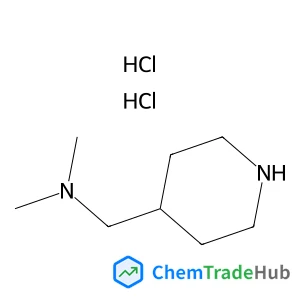
N,N-dimethyl(piperidin-4-yl)methanamine hydrochloride
CAS Number:
172281-72-0
Molecular Formula:
C8H20Cl2N2
Recommended Suppliers





Disclaimer
This page provides academic journal information for reference and research purposes only. We are not affiliated with any journal publishers and do not handle publication submissions. For publication-related inquiries, please contact the respective journal publishers directly.
If you notice any inaccuracies in the information displayed, please contact us at support@chemtradehub.com. We will promptly review and address your concerns.