












A single component ratiometric pH probe with long wavelength excitation of europium emission
Literature Information
Publication Date
2006-12-13
DOI
10.1039/B616665B
Impact Factor
6.222
Authors
Robert Pal, David Parker
View Original
Abstract
Following excitation in the range 370–405 nm, the emission spectrum of a cell permeable macrocyclic Eu(III) complex incorporating an N-methylsulfonamide moiety changes form with pH, allowing ratiometric pH measurements in the range 6 to 8.
Related Literature
Is formamide a geochemically plausible prebiotic solvent?
Jeffrey L. Bada, John H. Chalmers
2016-05-24
Perspective
DOI: 10.1039/C6CP03290G
Relationships between the solution and solid-state properties of solution-cast low-k silica thin films
Chao-Ching Chiang, Chien-You Su, An-Chih Yang, Ting-Yu Wang, Wen-Ya Lee, Chi-Chung Hua, Dun-Yen Kang
2016-06-29
Paper
DOI: 10.1039/C6CP04166C
Possible interstellar formation of glycine through a concerted mechanism: a computational study on the reaction of CH2NH, CO2 and H2
Zanele P. Nhlabatsi, Priya Bhasi, Sanyasi Sitha
2016-03-22
Paper
DOI: 10.1039/C5CP07124K
Hydrogen bonding induced distortion of CO3 units and kinetic stabilization of amorphous calcium carbonate: results from 2D 13C NMR spectroscopy
Sabyasachi Sen, Derrick C. Kaseman, Bruno Colas, Dorrit E. Jacob, Simon M. Clark
2016-06-01
Paper
DOI: 10.1039/C6CP02729F
How far can a single hydrogen bond tune the spectral properties of the GFP chromophore?
Hjalte V. Kiefer, Elie Lattouf, Natascha W. Persen, Lars H. Andersen
2015-06-23
Communication
DOI: 10.1039/C5CP02764K
Cysteine containing dipeptides show a metal specificity that matches the composition of seawater
Luca Belmonte, Daniele Rossetto, Michele Forlin, Simone Scintilla, Claudia Bonfio, Sheref S. Mansy
2016-05-10
Communication
DOI: 10.1039/C6CP00608F
Reverse solvatochromism in solvent binary mixtures: a case study using a 4-(nitrostyryl)phenolate as a probe
Rafaela I. Stock, Adriana D. S. Schramm, Marcos C. Rezende, Vanderlei G. Machado
2016-07-05
Communication
DOI: 10.1039/C6CP03875A
Transition from exohedral to endohedral structures of AuGen− (n = 2–12) clusters: photoelectron spectroscopy and ab initio calculations
Sheng-Jie Lu, Lian-Rui Hu, Xi-Ling Xu, Hong-Guang Xu, Hui Chen, Wei-Jun Zheng
2016-03-24
Paper
DOI: 10.1039/C6CP00373G
Photochemistry of nitrate chemisorbed on various metal oxide surfaces
Daniel M. B. Lesko, Ellen M. Coddens, Hannah D. Swomley, Rachel M. Welch, Jaya Borgatta, Juan G. Navea
2015-07-22
Paper
DOI: 10.1039/C5CP02903A
You might also like
Compound Q&A
What is 1-(2,4,6-Trifluorophenyl)ethanol (CAS: 1250113-83-7)?
1-(2,4,6-Trifluorophenyl)ethanol is an organic compound with the CAS number 1250...
1250113-83-71-(2,4,6-Trifluoroph...
Compound Q&A
Is 1-(2,4-Dimethoxybenzyl)-4-(hydroxymethyl)-2-pyrrolidinone (CAS: 919111-34-5) safe?
1-(2,4-Dimethoxybenzyl)-4-(hydroxymethyl)-2-pyrrolidinone (CAS: 919111-34-5) is ...
919111-34-51-(2,4-Dimethoxybenz...
Compound Q&A
What are the physical and chemical properties of (7S,15R)-6β,15-Diacetoxy-7α,20-epoxy-7-hydroxykaura-2,16-dien-1-one (CAS: 51419-51-3)?
(7S,15R)-6β,15-Diacetoxy-7α,20-epoxy-7-hydroxykaura-2,16-dien-1-one is a crystal...
51419-51-3(7S,15R)-6β,15-Diace...
Compound Q&A
What regulatory guidelines apply to rac-ethyl (1r,4r)-4-hydroxycyclohexane-1-carboxylate, trans (CAS: 3618-04-0)?
The compound rac-ethyl (1r,4r)-4-hydroxycyclohexane-1-carboxylate, trans (CAS: 3...
3618-04-0rac-ethyl (1r,4r)-4-...
Compound Q&A
What is the market or research trend for 2-(2,4-Difluorophenoxy)-3-nitropyridine (CAS: 175135-62-3)?
The market for 2-(2,4-Difluorophenoxy)-3-nitropyridine (CAS: 175135-62-3) is cur...
175135-62-32-(2,4-Difluoropheno...
Compound Q&A
What are the main uses of 6-Diazo-5-oxo-L-norleucine (CAS: 157-03-9)?
The main uses of 6-Diazo-5-oxo-L-norleucine (CAS: 157-03-9) include research in ...
157-03-96-Diazo-5-oxo-L-norl...
Compound Q&A
What precautions should be taken when handling 2-Aminoethyl-mono-amide-DOTA-tris(tBu ester) (CAS: 173308-19-5)?
When handling 2-Aminoethyl-mono-amide-DOTA-tris(tBu ester) (CAS: 173308-19-5), i...
173308-19-52-Aminoethyl-mono-am...
Compound Q&A
How is 5-Methylimidazo[1,2-a]pyridine-3-carbaldehyde (CAS: 178488-37-4) typically synthesized?
5-Methylimidazo[1,2-a]pyridine-3-carbaldehyde (CAS: 178488-37-4) can be synthesi...
178488-37-45-Methylimidazo[1,2-...
Compound Q&A
Are there alternatives to 2,4,6-Trihydroxyisophthalaldehyde (CAS: 4396-13-8) in synthesis?
There are alternative reagents that can be used in the synthesis of 2,4,6-Trihyd...
4396-13-82,4,6-Trihydroxyisop...
Compound Q&A
What is (2Z)-3-(5-Fluoro-1H-indol-3-yl)-2-sulfanylacrylic acid (CAS: 179461-52-0)?
(2Z)-3-(5-Fluoro-1H-indol-3-yl)-2-sulfanylacrylic acid is a chemical compound wi...
179461-52-0(2Z)-3-(5-Fluoro-1H-...
Source Journal
Chemical Communications

CiteScore:
8.6
Self-citation Rate:
4.7%
Articles per Year:
2458
ChemComm publishes urgent research which is of outstanding significance and interest to experts in the field, while also appealing to the journal’s broad chemistry readership. Our communication format is ideally suited to short, urgent studies that are of such importance that they require accelerated publication. Our scope covers all topics in chemistry, and research at the interface of chemistry and other disciplines (such as materials science, nanoscience, physics, engineering and biology) where there is a significant novelty in the chemistry aspects. Major topic areas covered include: Analytical Chemistry Catalysis Chemical Biology and medicinal chemistry Computational Chemistry and Machine Learning Energy and sustainable chemistry Environmental Chemistry Green Chemistry Inorganic Chemistry Materials Chemistry Nanoscience Organic Chemistry Physical Chemistry Polymer Chemistry Supramolecular Chemistry
Recommended Compounds
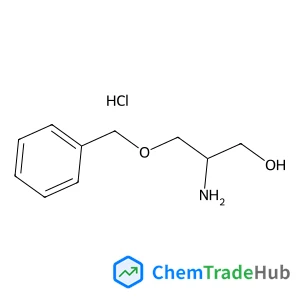
(R)-2-amino-3-(benzyloxy)propan-1-ol hydrochloride
CAS Number:
58577-95-0
Molecular Formula:
C10H16ClNO2
Recommended Suppliers






Disclaimer
This page provides academic journal information for reference and research purposes only. We are not affiliated with any journal publishers and do not handle publication submissions. For publication-related inquiries, please contact the respective journal publishers directly.
If you notice any inaccuracies in the information displayed, please contact us at support@chemtradehub.com. We will promptly review and address your concerns.