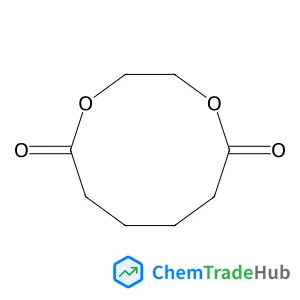
![1-Benzyl-1,7-diazaspiro[4.4]nonane dihydrochloride structure](https://static.chemtradehub.com/structs/115/1159822-71-5-0320.webp "1-Benzyl-1,7-diazaspiro[4.4]nonane dihydrochloride structure")
1-Benzyl-1,7-diazaspiro[4.4]nonane dihydrochloride
CAS Number:
1159822-71-5
Molecular Formula:
C14H22Cl2N2
Li Jiang, Marta Krasowska, Daniel Fornasiero, Peter Koh, John Ralston
The contact between fine hydrophilic α-Al2O3 particles and nitrogen bubbles was studied as a function of solution composition in single bubble capture experiments, where the bubble collection efficiency was measured. The surface charges of both bubble and particle were controlled by varying the electrolyte concentration and pH of the solution. In all experiments the bubbles were negatively charged while the α-Al2O3 particles were either negatively (above pH of the isoelectric point, pHIEP) or positively (below pHIEP) charged. The collection efficiency was found to be strongly influenced by the surface charge of the particles. The maximum collection efficiency occurred when the bubble and particle were oppositely charged (at low pH values) and at low salt concentration, i.e. when a long range attractive electrostatic interaction is present. In the case where both bubble and particle were of the same charge, the collection efficiency was near to zero within experimental error and was not influenced by either salt concentration or pH. This is the first experimental proof of the concept of ‘contactless flotation’, first proposed by Derjaguin and Dukhin in 1960, with far reaching implications from minerals processing to biology.

NDT & E International

Critical Reviews in Solid State and Materials Sciences

Biocatalysis and Biotransformation

Atomization and Sprays

Journal of the Indian Institute of Science

Journal of Asian Natural Products Research

Medicinal Chemistry Research

Bioorganic & Medicinal Chemistry

Polycyclic Aromatic Compounds

Heteroatom Chemistry
Juan J. Díaz-Mochón, Laurent Bialy, Jon Watson, Rosario M. Sánchez-Martín, Mark Bradley
DOI: 10.1039/B503777H
Sylvestre Bonnet, Jean-Paul Collin, Jean-Pierre Sauvage
DOI: 10.1039/B503411F
Jean-Paul Amoureux, Alexandrine Flambard, Laurent Delevoye, Lionel Montagne
DOI: 10.1039/B502840J
David Parker, Junhua Yu
DOI: 10.1039/B502553B
Lei Zhang, Jianzhong Yang, Christopher L. Edwards, Lawrence B. Alemany, Valery N. Khabashesku, Andrew R. Barron
DOI: 10.1039/B500125K
Masayuki Endo, Shinsuke Uegaki, Tetsuro Majima
DOI: 10.1039/B503247D
Carmen M. López, Kyoung-Shin Choi
DOI: 10.1039/B502238J
Yusuke Fujii, Yasuchika Hasegawa, Shozo Yanagida, Yuji Wada
DOI: 10.1039/B502991K
Kwang Jin Kim, Han Young Choi, Soon Ho Hwang, Yil Sung Park, Eun Kyung Kwueon, Doo Seong Choi, Choong Eui Song
DOI: 10.1039/B504223B
Koji Fuji, Tsumoru Morimoto, Ken Tsutsumi, Kiyomi Kakiuchi
DOI: 10.1039/B503816B
2-Methylbenzene-1,4-diamine dihydrochloride (CAS: 615-45-2) should be stored in ...
(1S,4S)-2,5-Diazabicyclo[2.2.1]heptane dihydrobromide is generally considered sa...
(6-Chloropyridazin-3-YL)methanamine finds applications in the pharmaceutical ind...
2-Fluoro-3-methylphenol is primarily used in the synthesis of pharmaceuticals, p...
When handling 3-Methoxy-4-nitrobenzonitrile, it is important to wear appropriate...
When handling 1,3-Oxazolo[4,5-b]pyridine-2(3H)-thione (CAS: 211949-57-4), it is ...
4-Ethynylbenzamide (CAS: 90347-86-7) falls under various regulatory guidelines i...
3-(2-Ethylphenyl)-2-thioxo-4-imidazolidinone is primarily used as an intermediat...
(2-Fluoro-6-methoxyphenyl)acetic acid, also known as 4-fluoro-3-methoxybenzoic a...
Market trends for 2-[4-(Hydroxymethyl)phenoxy]ethanol (CAS: 102196-18-9) indicat...

Physical Chemistry Chemical Physics (PCCP) is an international journal co-owned by 19 physical chemistry and physics societies from around the world. This journal publishes original, cutting-edge research in physical chemistry, chemical physics and biophysical chemistry. To be suitable for publication in PCCP, articles must include significant innovation and/or insight into physical chemistry; this is the most important criterion that reviewers and Editors will judge against when evaluating submissions. The journal has a broad scope and welcomes contributions spanning experiment, theory, computation and data science. Topical coverage includes spectroscopy, dynamics, kinetics, statistical mechanics, thermodynamics, electrochemistry, catalysis, surface science, quantum mechanics, quantum computing and machine learning. Interdisciplinary research areas such as polymers and soft matter, materials, nanoscience, energy, surfaces/interfaces, and biophysical chemistry are welcomed if they demonstrate significant innovation and/or insight into physical chemistry. Joined experimental/theoretical studies are particularly appreciated when complementary and based on up-to-date approaches.
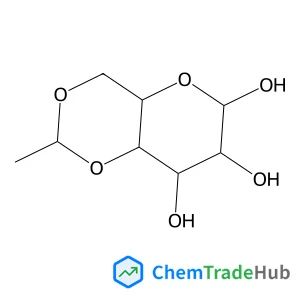

![(3R,4aR,7aS,9aR,10S,11R,13aR,13bS,15aS,15bR)-3,11-Dihydroxy-10-(hydroxymethyl)-4,4,7a,10,13a,15b-hexamethyl-1,2,3,4,4a,7,7a,8,9,9a,10,11,12,13,13a,13b,14,15,15a,15b-icosahydro-5H-naphtho[2',1':4,5]cyc
lohepta[1,2-a]naphthalen-5-one structure](https://static.chemtradehub.com/structs/538/53800-21-8-9f18.webp "(3R,4aR,7aS,9aR,10S,11R,13aR,13bS,15aS,15bR)-3,11-Dihydroxy-10-(hydroxymethyl)-4,4,7a,10,13a,15b-hexamethyl-1,2,3,4,4a,7,7a,8,9,9a,10,11,12,13,13a,13b,14,15,15a,15b-icosahydro-5H-naphtho[2',1':4,5]cyc
lohepta[1,2-a]naphthalen-5-one structure")