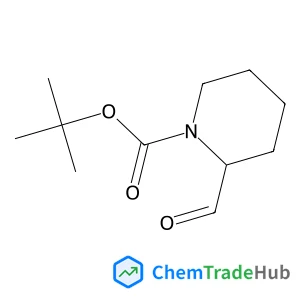
2-Methyl-2-propanyl (2R)-2-formyl-1-piperidinecarboxylate
CAS Number:
134526-69-5
Molecular Formula:
C11H19NO3
Fen Li
One of the key issues in lithium sulfur batteries is the fast capacity fade induced by the lithium polysulfide (LiPS) migration. Hence, a series of three-dimensional (3D) porous SiC materials with active sp2 Si atoms have been designed for lithium polysulfide entrapping in Li–S batteries. The ZGM-SiC-1 and AGM-SiC-3 have been confirmed to be thermodynamically and dynamically stable from the formation energy and phonon dispersion spectrum, meanwhile showing good mechanical properties. The moderate band gaps suggest fast electron transport during the charge–discharge cycles of the Li–S batteries, especially in ZGM-SiC-1. The 3D porous ZGM-SiC-1 and AGM-SiC-3 display strong affinity to S8 and LiPS with the direct Si–S and Li–C interactions, which are comparable to the case of the N doped carbon host. As compared to the 3D pristine graphene monoliths and two dimensional SiC nanosheet, the entrapping of LiPS in the 3D porous SiC host is much stronger (ca. 2.5 eV to 3.5 eV), which is effective in inhibiting the shutter effect in Li–S batteries. Most interestingly, the extraordinarily strong adsorption of the S8 molecule indicates high sulfur loading in the 3D porous SiC host.
Bai Pan, Xianshang Meng, Yidong Xia, Haiming Lu, Hui Li
DOI: 10.1039/C9CP06989E
Michaela K. Jahn, Daniel A. Obenchain, K. P. Rajappan Nair, Jens-Uwe Grabow, Jean Demaison, Peter D. Godfrey, Don McNaughton
DOI: 10.1039/C9CP06775B
Fabian Düll, Manuel Meusel, Florian Späth, Simon Schötz, Udo Bauer, Philipp Bachmann, Johann Steinhauer, Hans-Peter Steinrück, Andreas Bayer, Christian Papp
DOI: 10.1039/C9CP04095A
Debkumar Rana, Patrice Donfack, Vladislav Jovanov, Veit Wagner, Arnulf Materny
DOI: 10.1039/C9CP03736E
Yin-Feng Wang, Tian Qin, Jia-Min Tang, Yan-Jiao Liu, Miao Xie, Jia Li, Jiangen Huang, Zhi-Ru Li
DOI: 10.1039/C9CP06848A
Leonardo Silva-Dias, Alejandro Lopez-Castillo
DOI: 10.1039/D0CP00650E
Yuefeng Zhang, Yong Zhao, Caiyun Wang, Zengxi Wei, Junliang Yang
DOI: 10.1039/C9CP03692J
Martin A. Schroer, Verena Markmann, Johannes Möller
DOI: 10.1039/C9CP04658E
Misong Ju, Ouk Hyun Cho, Jaehun Lee, Mani Balamurugan, Ki Tae Nam
DOI: 10.1039/C9CP05581A
6-(3-Fluorophenyl)picolinic acid is generally considered safe for laboratory use...
(3R)-3-Pyrrolidinol is used in the pharmaceutical industry as a precursor for dr...
When handling (4R,5R)-4,5-Diethoxycarbonyl-2,2-dimethyldioxolane (CAS: 59779-75-...
1-(6-Chloroimidazo[1,2-b]pyridazin-3-yl)ethanone is often synthesized via a mult...
The market for N-Ethyl-3,4-dimethylbenzylamine (CAS: 39180-83-1) remains steady,...
Tert-butyl 3-(pyrrolidin-1-yl)azetidine-1-carboxylate is a chemical compound wit...
1-Bromo-3-chloro-2,4-dimethoxybenzene (CAS: 1228956-93-1) falls under the classi...
The safety of 8-Bromo-2-methyl-3,4-dihydroisoquinolin-1(2H)-one (CAS: 1368622-07...
Benzyl [(3S)-2,6-dioxo-3-piperidinyl]carbamate is generally safe when handled wi...
1-{[4-(4,4,5,5-Tetramethyl-1,3,2-dioxaborolan-2-yl)phenyl]sulfonyl}pyrrolidine s...

Physical Chemistry Chemical Physics (PCCP) is an international journal co-owned by 19 physical chemistry and physics societies from around the world. This journal publishes original, cutting-edge research in physical chemistry, chemical physics and biophysical chemistry. To be suitable for publication in PCCP, articles must include significant innovation and/or insight into physical chemistry; this is the most important criterion that reviewers and Editors will judge against when evaluating submissions. The journal has a broad scope and welcomes contributions spanning experiment, theory, computation and data science. Topical coverage includes spectroscopy, dynamics, kinetics, statistical mechanics, thermodynamics, electrochemistry, catalysis, surface science, quantum mechanics, quantum computing and machine learning. Interdisciplinary research areas such as polymers and soft matter, materials, nanoscience, energy, surfaces/interfaces, and biophysical chemistry are welcomed if they demonstrate significant innovation and/or insight into physical chemistry. Joined experimental/theoretical studies are particularly appreciated when complementary and based on up-to-date approaches.