












Biomimetic antimicrobial polymers: recent advances in molecular design
Literature Information
Publication Date
2018-04-23
DOI
10.1039/C8PY00012C
Impact Factor
5.582
Authors
Cansu Ergene, Kazuma Yasuhara, Edmund F. Palermo
View Original
Abstract
The increasing prevalence of antibiotic-resistant bacterial infections, coupled with the decline in the number of new antibiotic drug approvals, has created a therapeutic gap that portends an emergent public health crisis. Since the 1980s, host defense peptides (HDPs) have been recognized as antibacterial compounds that do not induce resistance, but are hampered by their high cost and lack of synthetic scalability. Starting in the early 2000s, synthetic (co)polymers have been designed to mimic the salient physiochemical features of HDPs. These polymers have shown broad-spectrum antimicrobial activity, rapid bactericidal kinetics, and a very low propensity to induce resistance. Systematic optimization of the (co)polymer composition, chain length, hydrophobicity, and cationic charge has generated select examples that are also highly biocompatible (non-hemolytic and non-cytotoxic in vitro). These polymers are derived from inexpensive feedstocks and are produced using cost-effective, scalable processes. Accordingly, such polymers may be viewed as early stage pre-clinical candidates for potential use in pharmaceutical or therapeutic applications. In this review, we focus on the key macromolecular design principles that have been gleaned from more than a decade of structure–activity relationship (SAR) studies, as well as some key mechanistic investigations, across this multidisciplinary field. A fundamental understanding of these functional (co)polymers has arisen from a convergence of ideas in polymer chemistry, microbiology, and biophysics. In this context, we emphasize the recent advances from the past few years and emerging opportunities surrounding the rapidly growing field of HDP-mimetic antimicrobial polymers.
Related Literature
A fluorescence nanosensor for Cu2+ on silica particles
Elena Brasola, Fabrizio Mancin, Enrico Rampazzo, Paolo Tecilla, Umberto Tonellato
2003-11-03
Communication
DOI: 10.1039/B310582B
The colourful fluorescence from readily-synthesised 3,4-diaryl-substituted maleimide fluorophores
Hsiu-Chih Yeh, Wei-Ching Wu, Chin-Ti Chen
2002-12-20
Communication
DOI: 10.1039/B211537A
Ammoximation of ketones catalyzed by titanium-containing ethane bridged hybrid mesoporous silsesquioxane
Asim Bhaumik, Mahendra P. Kapoor, Shinji Inagaki
2003-01-28
Communication
DOI: 10.1039/B212680J
Designed layer assembly: a three-dimensional framework with 74% extra-framework volume by connection of infinite two-dimensional sheets
T. J. Prior, D. Bradshaw, S. J. Teat, M. J. Rosseinsky
2003-01-28
Communication
DOI: 10.1039/B211124C
Crown-ether functionalised second coordination sphere palladiumcatalysts by molecular imprinting
Florian Viton, Peter S. White, Michel R. Gagné
2003-10-20
Communication
DOI: 10.1039/B309072H
Synthesis and field emission of carbon nanotubular fibers doped with high nitrogen content
Chengchun Tang, Dmitri Golberg, Yoshio Bando, FangFang Xu, Baodan Liu
2003-11-04
Communication
DOI: 10.1039/B311807J
A 2,3-butanedione protected chiral glycine equivalent—a new building block for the stereoselective synthesis of enantiopure N-protected α-amino acids
Darren J. Dixon, Christopher I. Harding, Steven V. Ley, D. Matthew G. Tilbrook
2003-01-20
Communication
DOI: 10.1039/B210673F
Improved transparency–nonlinearity trade-off with boroxine-based octupolar molecules
Gilles Alcaraz, Lisenn Euzenat, Olivier Mongin, Claudine Katan, Isabelle Ledoux, Joseph Zyss, Mireille Blanchard-Desce, Michel Vaultier
2003-10-09
Communication
DOI: 10.1039/B308664J
A bilayer to monolayer phase transition in liquid crystal glycolipids
Valérie Molinier, Paul H. J. Kouwer, Yves Queneau, Juliette Fitremann, Grahame Mackenzie, John W. Goodby
2003-10-23
Communication
DOI: 10.1039/B308880D
Tandem reactions, cascade sequences, and biomimetic strategies in total synthesis
2003-01-16
Feature Article
DOI: 10.1039/B209440C
You might also like
Compound Q&A
What precautions should be taken when handling lithium chloride hydrate (1:1:1) (CAS: 16712-20-2)?
When handling lithium chloride hydrate (1:1:1) (CAS: 16712-20-2), it is importan...
16712-20-2Lithium chloride hyd...
Compound Q&A
Is 4-(4H-1,2,4-Triazol-4-yl)piperidine (CAS: 690261-92-8) safe?
4-(4H-1,2,4-Triazol-4-yl)piperidine is generally considered safe for use in phar...
690261-92-84-(4H-1,2,4-Triazol-...
Compound Q&A
How should waste containing 1,3-Thiazole-2-carboxamide (CAS: 16733-85-0) be handled?
Waste containing 1,3-Thiazole-2-carboxamide (CAS: 16733-85-0) should be collecte...
16733-85-01,3-Thiazole-2-carbo...
Compound Q&A
What regulatory guidelines apply to 5-(Difluoromethyl)-2-fluorobenzonitrile (CAS: 934175-58-3)?
5-(Difluoromethyl)-2-fluorobenzonitrile (CAS: 934175-58-3) is subject to regulat...
934175-58-35-(Difluoromethyl)-2...
Compound Q&A
How is Methyl 3-acetamido-2-thiophenecarboxylate (CAS: 22288-79-5) typically synthesized?
Methyl 3-acetamido-2-thiophenecarboxylate can be synthesized by the reaction of ...
22288-79-5Methyl 3-acetamido-2...
Compound Q&A
What is 4-Isoquinolinecarbonitrile (CAS: 34846-65-6)?
4-Isoquinolinecarbonitrile is a chemical compound with the CAS number 34846-65-6...
34846-65-64-Isoquinolinecarbon...
Compound Q&A
How should Methyl 1H-1,2,3-triazole-4-carboxylate (CAS: 877309-59-6) be stored?
Store Methyl 1H-1,2,3-triazole-4-carboxylate (CAS: 877309-59-6) in a cool, dry p...
877309-59-6Methyl 1H-1,2,3-tria...
Compound Q&A
What regulatory guidelines apply to 6-Bromo[1,3]thiazolo[5,4-b]pyridin-2-amine (CAS: 1160791-13-8)?
6-Bromo[1,3]thiazolo[5,4-b]pyridin-2-amine (CAS: 1160791-13-8) is subject to the...
1160791-13-86-Bromo[1,3]thiazolo...
Compound Q&A
Is (2S,3S)-2-Ammonio-3-(3,4-dihydroxyphenyl)-3-hydroxypropanoate (CAS: 23651-95-8) safe?
(2S,3S)-2-Ammonio-3-(3,4-dihydroxyphenyl)-3-hydroxypropanoate (CAS: 23651-95-8) ...
23651-95-8(2S,3S)-2-Ammonio-3-...
Compound Q&A
What are the physical and chemical properties of 7-bromo-3-methyl-3,4-dihydroquinazolin-4-one (CAS: 1293987-84-4)?
7-Bromo-3-methyl-3,4-dihydroquinazolin-4-one is a solid with a crystalline form....
1293987-84-47-bromo-3-methyl-3,4...
Source Journal
Polymer Chemistry

CiteScore:
8.6
Self-citation Rate:
7.3%
Articles per Year:
457
Polymer Chemistry welcomes submissions in all areas of polymer science that have a strong focus on macromolecular chemistry. Manuscripts may cover a broad range of fields, yet no direct application focus is required.
Recommended Compounds
![6-(Benzyloxy)-8-(2-bromoacetyl)-2H-benzo[b][1,4]oxazin-3(4H)-one structure](https://static.chemtradehub.com/structs/926/926319-53-1-2287.webp "6-(Benzyloxy)-8-(2-bromoacetyl)-2H-benzo[b][1,4]oxazin-3(4H)-one structure")
6-(Benzyloxy)-8-(2-bromoacetyl)-2H-benzo[b][1,4]oxazin-3(4H)-one
CAS Number:
926319-53-1
Molecular Formula:
C17H14BrNO4
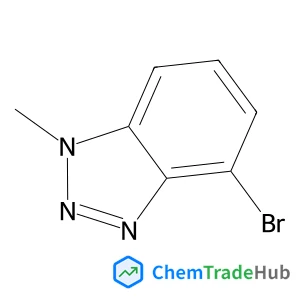
![N-[2-(2-Pyridinyl)ethyl]-1-propanamine structure](https://static.chemtradehub.com/structs/554/55496-57-6-22b4.webp "N-[2-(2-Pyridinyl)ethyl]-1-propanamine structure")
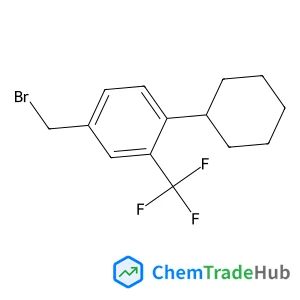
4-(Bromomethyl)-1-cyclohexyl-2-(trifluoromethyl)benzene
CAS Number:
800381-60-6
Molecular Formula:
C14H16BrF3
Recommended Suppliers




Disclaimer
This page provides academic journal information for reference and research purposes only. We are not affiliated with any journal publishers and do not handle publication submissions. For publication-related inquiries, please contact the respective journal publishers directly.
If you notice any inaccuracies in the information displayed, please contact us at support@chemtradehub.com. We will promptly review and address your concerns.